
I still remember the sharp, sickening pop in my left joint during a heavy sprawl in an amateur wrestling circuit years ago. I spent months chasing expensive physical therapy gadgets and “miracle” mobility routines, only to realize I was treating the symptoms instead of the actual problem. Most people think shoulder stability is something you just “get” through a few random band pull-aparts, but they’re dead wrong. It isn’t about having flexible joints; it’s about teaching your nervous system to actually control the weight you’re moving when things get chaotic.
I’m not here to sell you a complex, twenty-step mobility flow that takes an hour of your life. Instead, I’m going to give you the practical, science-backed blueprint I use with my own athletes to build a foundation that won’t buckle under a barbell or a heavy opponent. We’re going to focus on functional, repeatable strength that turns your shoulders into a reliable anchor rather than a liability. You aren’t training to look a certain way; you’re training to be unbreakable.
Table of Contents
- Mastering Glenohumeral Joint Mechanics for Real Capability
- Understanding Shoulder Mobility vs Stability in Training
- Stop Guessing and Start Stabilizing: 5 Ways to Build a Bulletproof Shoulder
- The Bottom Line on Building Bulletproof Shoulders
- Stability Over Ego
- Building the Foundation for Long-Term Strength
- Frequently Asked Questions
Mastering Glenohumeral Joint Mechanics for Real Capability
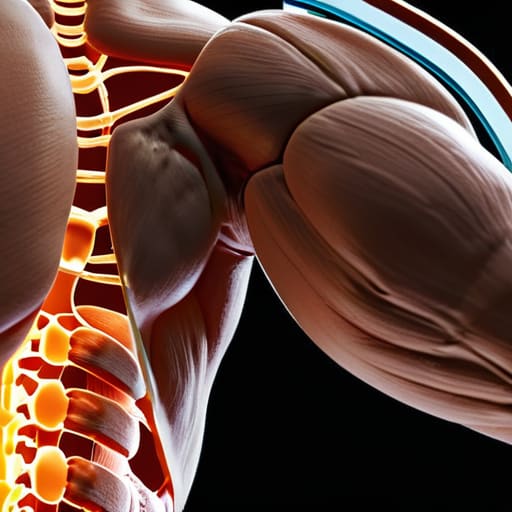
To get real results, you have to stop thinking about your shoulder as a single unit and start looking at how the pieces actually move together. The magic happens within the glenohumeral joint mechanics, where the ball of your humerus needs to sit perfectly centered in the socket while you move. If that connection is off, you aren’t just losing power; you’re asking for trouble. I’ve seen too many athletes in the wrestling room try to muscle through a heavy snatch or a sprawl while their joint is essentially sliding around loosely.
You can’t just chase range of motion and call it a day. There is a massive difference between shoulder mobility vs stability, and if you have the flexibility to reach behind your back but lack the control to hold a heavy overhead press, you’re a liability to yourself. This is where scapular muscle activation becomes non-negotiable. If your shoulder blade isn’t moving in sync with your arm, your rotator cuff is going to take the brunt of the force, and that’s a fast track to chronic pain. We train to build a foundation that actually holds up when the pressure is on.
Understanding Shoulder Mobility vs Stability in Training

I see this mistake all the time in the gym: people obsess over how much they can reach or how “flexible” they are, completely ignoring whether they can actually control that range. There is a massive difference between shoulder mobility vs stability, and confusing the two is a fast track to a plateau—or worse, an injury. Mobility is your ability to move through a range of motion, but stability is the ability to hold that joint steady under tension. If you have all the mobility in the world but zero control, you aren’t “flexible”; you’re just unstable.
In my wrestling days, I saw plenty of athletes who could move beautifully but would crumble the second they hit a heavy sprawl because their joints lacked structural integrity. To fix this, we have to prioritize scapular muscle activation. If your shoulder blade isn’t moving correctly, your humerus has no solid foundation to work from. We aren’t just chasing “stretchy” muscles here; we are training the nervous system to keep the joint centered and secure. Think of it this way: mobility gets you into position, but stability is what allows you to stay there when the weight gets heavy.
Stop Guessing and Start Stabilizing: 5 Ways to Build a Bulletproof Shoulder
- Prioritize the rotator cuff before you chase PRs; if those small stabilizer muscles aren’t firing correctly, your big movers like the delts and pecs are just going to pull your joint out of alignment.
- Stop neglecting your scapular control; a stable shoulder is nothing without a rock-solid foundation provided by a moving, controlled shoulder blade.
- Incorporate unilateral work to kill imbalances; training one arm at a time forces your core and stabilizers to actually do their jobs instead of letting your dominant side take over the load.
- Slow down the eccentric phase of your lifts; controlling the weight on the way down isn’t just about muscle growth, it’s about teaching your nervous system how to maintain joint integrity under tension.
- Use proprioceptive drills like rhythmic stabilization; holding a weight steady while I apply light, unpredictable pressure forces your stabilizers to react in real-time, which is exactly how they need to function in a live wrestling match or a heavy lift.
The Bottom Line on Building Bulletproof Shoulders
Stop prioritizing weight over control; if you can’t stabilize the joint through a full range of motion, that heavy press is just ego lifting that’s begging for an injury.
View stability as a skill that requires dedicated practice, much like a wrestling takedown—you don’t just “get” it, you build it through consistent, intentional movement patterns.
Balance your mobility work with targeted stability drills to ensure your shoulders aren’t just flexible, but actually strong enough to support your body when things get heavy.
Stability Over Ego
Stop trying to max out your overhead press if your shoulder feels like it’s rattling in the socket; you aren’t building strength if you don’t have the stability to actually control the movement first.
Tamsin Broadhurst
Building the Foundation for Long-Term Strength

At the end of the day, shoulder stability isn’t some mystical concept you either have or you don’t; it is a functional skill that requires deliberate practice. We’ve looked at why you can’t just ignore glenohumeral mechanics and why you need to stop confusing sheer range of motion with actual, usable stability. If you keep chasing heavy overhead presses without first ensuring your rotator cuff and scapular stabilizers are actually doing their jobs, you aren’t building strength—you’re just inviting an injury that will sideline you for months. Focus on the mechanics, respect the difference between mobility and stability, and treat your foundational work with the same respect you give your top sets.
I know it can feel tedious to spend time on the “boring” stability drills when you just want to get under a barbell or get back on the mats, but remember why we train. We train to be capable, resilient, and ready for whatever movement comes our way. Don’t let a lack of foundational control be the thing that holds you back from your true potential. Build that base, stay consistent with your accessory work, and trust the process. Strength is built in the details, and those details are what will allow you to keep lifting, wrestling, and moving for years to come.
Frequently Asked Questions
How do I know if my shoulder issue is actually a stability problem or just a mobility restriction?
Here’s the litmus test: if you can reach a position easily but feel like your joint is “slipping” or “loose” once you get there, that’s a stability issue. You have the range, but you lack the control to hold it. On the flip side, if you feel a physical “block” or sharp tension that prevents you from moving into a position at all, you’re dealing with a mobility restriction. One is about control; the other is about reach.
Can I still train heavy overhead presses if my rotator cuff feels a bit unstable?
Look, I’ll give it to you straight: stop chasing heavy weights if your shoulder feels unstable. If that rotator cuff is acting up, forcing a heavy overhead press is just asking for an injury that could sideline you for months. You need to dial back the load and focus on building that foundational stability first. Treat stability like a skill you have to earn; once your mechanics are solid, the heavy weight will follow.
What are some specific, non-negotiable movements I should add to my warm-up to prep my shoulders for a lifting session?
Don’t just swing your arms around and hope for the best. If you want your shoulders to actually show up for your heavy sets, you need to prime the stabilizers. I never skip face pulls to wake up the rear delts, or band pull-aparts to get that scapular control dialed in. Throw in some controlled Y-raises to prep your rotator cuff. It’s not about getting a sweat going; it’s about building the foundational stability required to move heavy weight safely.
