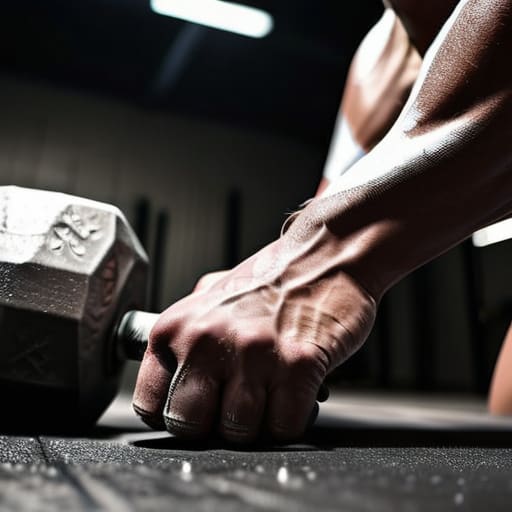
I still remember the smell of stale sweat and old mats in that cramped basement gym where I spent my early twenties, staring at a rack of weights and feeling completely out of place. Back then, I thought training for combat sports meant endless high-rep circuits and “burning calories” until I felt like a zombie. I was told that heavy lifting would make me too stiff to move on the mat, a myth that almost cost me my progress. But I quickly learned that the truth is the exact opposite: heavy weightlifting for wrestlers isn’t about building bulk or looking a certain way; it’s about building the raw, explosive power you need when you’re fighting for position in the third period.
I’m not here to sell you a complicated, thirty-step supplement routine or a flashy, “influencer” workout that looks great on camera but fails in a scramble. Instead, I’m giving you the straight-up science and the grit-tested methods I’ve used throughout my career as a coach. We are going to focus on how to pick up the heavy iron to become more capable, more resilient, and more dominant on the mat. This is about training for functional capability, not aesthetics.
Table of Contents
- Compound Movements for Grapplers Training for Real World Control
- Developing Explosive Power for Combat Sports Through Intentional Load
- Stop Guessing, Start Loading: 5 Rules for the Mat and the Rack
- The Bottom Line: Training for Capability
- Strength is Your Best Defense
- The Long Game: From the Weight Room to the Mat
- Frequently Asked Questions
Compound Movements for Grapplers Training for Real World Control
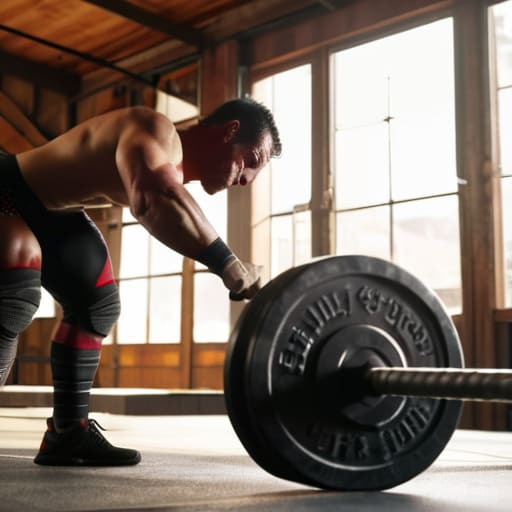
If you’re spending your time on isolation machines, you’re wasting your time on the mats. To actually control an opponent, you need to move your body as a single, cohesive unit. This is where compound movements for grapplers become your best friend. I always tell my athletes to prioritize the big lifts—deadlifts, squats, and cleans—because these movements mimic the chaotic, multi-planar demands of a match. When you’re fighting for a single leg or trying to finish a takedown, you aren’t using a single muscle in a vacuum; you’re using your entire posterior chain to drive through resistance.
Focusing on these lifts isn’t just about raw force; it’s about developing functional strength for mat performance. A heavy trap bar deadlift builds that foundational pulling power you need when someone is trying to sprawl on you, while overhead presses translate directly to hand fighting and controlling ties. We aren’t training for aesthetics here. We are training to ensure that when you hit that third period and fatigue starts to set in, your body has the structural integrity to keep fighting.
Developing Explosive Power for Combat Sports Through Intentional Load
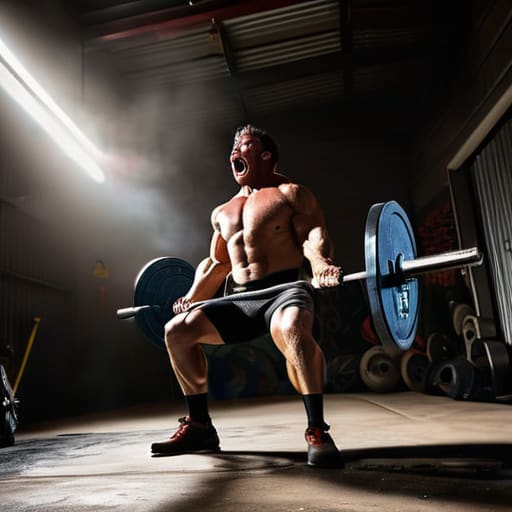
If you’re just moving weight from point A to point B, you’re missing the most critical part of the equation: intent. In wrestling, you don’t need slow, grinding strength; you need the ability to go from zero to a hundred in a split second to finish a takedown or defend a shot. This is where we focus on developing explosive power for combat sports by applying maximal force as quickly as possible. I’m talking about moving the bar with violent intent. Whether it’s a heavy power clean or a dynamic snatch, the goal isn’t just to complete the rep, but to attack the weight with everything you’ve got.
However, you can’t just redline your central nervous system every single day. To avoid burnout, we have to talk about periodization for wrestling season. During the off-season, we build that raw, foundational force, but as you get closer to competition, we shift toward more velocity-based movements. We want to translate that gym strength into mat speed without draining the tank before the first whistle blows. It’s about being sharp, not just heavy.
Stop Guessing, Start Loading: 5 Rules for the Mat and the Rack
- Prioritize the big lifts over the shiny stuff. If you aren’t squatting, deadlifting, or pressing, you’re leaving strength on the table. These aren’t just exercises; they are the foundation of your ability to control an opponent.
- Treat your heavy sets like a technical drill. Don’t just move the weight from A to B; move it with intention. If your form breaks down because you’re chasing a number, you aren’t getting stronger, you’re just practicing how to get injured.
- Respect the recovery as much as the rep. You don’t build muscle on the platform; you build it while you sleep and eat. If you’re redlining your CNS with heavy triples every single day without adjusting your nutrition, you’re going to burn out before you even hit the mats.
- Periodize your intensity. You can’t stay at 95% of your max year-round. Use heavy lifting to build a base in the off-season, then transition to more explosive, sport-specific movements as you get closer to your competition dates.
- Stop training for aesthetics and start training for capability. If a movement doesn’t translate to a sprawl, a shot, or a clinch, it better be damn good at building your structural integrity. Every ounce of effort should serve your performance on the mat.
The Bottom Line: Training for Capability
Stop chasing a pump and start chasing performance; if your lifting program doesn’t translate to better control on the mat, you’re just wasting time in the weight room.
Prioritize heavy, intentional loads to build a foundation of strength that won’t buckle under pressure when you’re deep in a scramble.
Treat your nutrition as the fuel that powers your recovery and your sessions, not as a math problem to be solved or a way to shrink your body.
Strength is Your Best Defense
Stop chasing a pump and start chasing capability; in the wrestling room, a heavy barbell isn’t about aesthetics—it’s about building the raw, functional leverage you need to control an opponent when the match gets heavy.
Tamsin Broadhurst
The Long Game: From the Weight Room to the Mat

At the end of the day, heavy lifting isn’t about chasing a specific physique or hitting a PR just for the sake of the numbers on the bar. It’s about translating that force into the clinch, the takedown, and the scramble. We’ve covered why you need to prioritize compound movements to build a foundation of control and why intentional, heavy loading is what actually bridges the gap between being “gym strong” and mat strong. If you aren’t training with the intent to move heavy loads through space, you’re leaving your performance on the table. Remember, every heavy rep is a deposit into your functional movement bank, paying dividends when you’re deep in the third period and need that extra bit of leverage to finish a shot.
Don’t let the intimidation of the heavy iron stop you from stepping up. Strength is a skill, and like any skill you’ll ever learn in wrestling, it requires a massive amount of consistency and patience. There will be days when the weights feel heavier than they should, and days when you feel like a powerhouse, but the goal is to show up regardless. Stop looking for shortcuts or “magic” supplements and start focusing on the fundamental work. Build your engine, fuel your body properly, and trust the process. You aren’t just lifting weights; you are building a more capable version of yourself that won’t break when the pressure is on.
Frequently Asked Questions
How do I balance heavy lifting sessions with a high-intensity wrestling practice schedule without burning out?
Listen, you can’t redline every single day without snapping. If you’re hitting a heavy squat session and a high-intensity mat practice in the same window, you have to treat your recovery like a training session itself. Prioritize sleep, nail your electrolyte intake—keep that shaker bottle handy—and don’t be afraid to scale back the lifting volume when your wrestling intensity spikes. Train to be capable, not just exhausted. Listen to your body before it screams.
Should I be focusing on maximal strength (low reps) or more hypertrophy-based training to stay effective on the mats?
Look, if you’re trying to decide between chasing a pump or chasing a PR, lean toward maximal strength. Hypertrophy has its place for building a foundation, but on the mats, you need the ability to move heavy resistance with precision. I want you training for neurological efficiency—teaching your nervous system to recruit every fiber when you’re fighting for a takedown. Focus on those low-rep, high-intensity sets. Train to be capable, not just bigger.
How much protein and total caloric intake do I actually need to recover from both heavy lifting and live wrestling sessions?
Stop treating your nutrition like an afterthought. If you’re crushing heavy sessions and then hitting the mats for live wrestling, you’re burning through fuel at an elite rate. Aim for roughly 0.8 to 1 gram of protein per pound of body weight to repair that muscle tissue. As for calories, don’t fear the scale; you need a surplus to recover. If you feel sluggish or your lifts stall, you aren’t eating enough to support the work.
