
I still remember the smell of stale sweat and old mats in that basement gym where I spent my early twenties, feeling completely helpless when a heavier opponent finally closed the distance. I wasn’t losing because I lacked cardio; I was losing because I had no idea how to manage the space once we were chest-to-chest. Most people think you need some magical, high-priced seminar to master clinch fighting skills, but that’s a load of crap. You don’t need a “secret system” or expensive gear; you need to understand how to use leverage and body mechanics to turn a position of vulnerability into a position of total control.
I’m not here to sell you on some flashy, choreographed nonsense that only works in a controlled drill. My goal is to give you the raw, science-backed reality of how to actually fight in the pocket. We’re going to strip away the fluff and focus on the repeatable, functional movements that build genuine capability. I’ll show you how to integrate strength training with tactical positioning so that when you finally lock up, you aren’t just reacting—you’re dictating the terms of the engagement.
Table of Contents
- Mastering Muay Thai Clinch Mechanics for Functional Stability
- Developing Reliable Grappling Control Techniques in Close Quarters
- 5 Ways to Turn the Clinch Into Your Strongest Weapon
- Building the Foundation: My Three Non-Negotiables
- Strength is Your Best Clinch Defense
- Putting the Work into Practice
- Frequently Asked Questions
Mastering Muay Thai Clinch Mechanics for Functional Stability

When you step into the pocket, it’s not just about who has the bigger arms; it’s about who has the better center of gravity. Mastering muay thai clinch mechanics requires you to stop thinking about your hands as just tools for grabbing and start seeing your entire frame as a lever. You need to find that connection where your hips and core work in unison to negate your opponent’s power. If you’re just pulling with your biceps, you’re going to burn out in two minutes and leave yourself wide open.
Instead, focus on improving clinch strength by engaging your posterior chain and using your head position to create space or pressure. I tell my athletes all the time: your posture is your primary defense. If your spine is rounded, you’ve already lost the battle for control. You want to drive your weight through your stance, using subtle shifts in your hips to dictate the rhythm. This isn’t about brute force; it’s about functional stability and using your skeletal structure to make every movement feel effortless and efficient.
Developing Reliable Grappling Control Techniques in Close Quarters
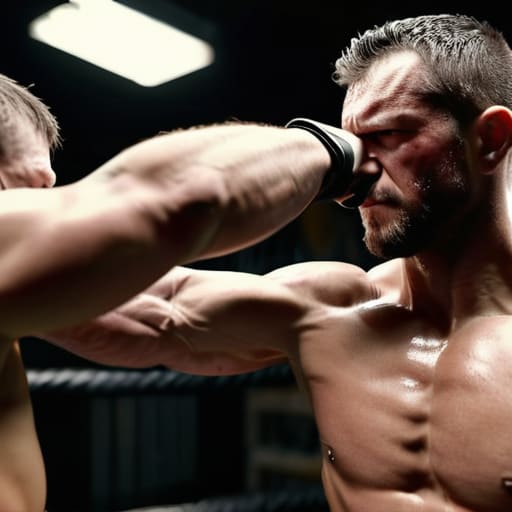
When you’re deep in the pocket, everything changes. You lose the space needed for long-range strikes, and suddenly, it’s all about how you manage proximity. Developing reliable grappling control techniques isn’t just about having strong arms; it’s about how you use your entire body to manipulate your opponent’s center of gravity. In my experience training wrestlers and strikers alike, the biggest mistake I see is people trying to “muscle” their way through a tie-up. If you’re just pulling with your biceps, you’re going to gas out in three minutes. Instead, focus on using your hips and core to create a frame that dictates where they can move.
True control comes from understanding leverage and weight distribution. You want to be able to break their posture without breaking your own rhythm. This is where neck wrestling strategies become vital—if you can control the head, you control the spine, and if you control the spine, the rest of the body follows. I tell my athletes to treat the clinch like a chess match of pressure: find the angle, apply the weight, and never let them find their footing.
5 Ways to Turn the Clinch Into Your Strongest Weapon
- Stop fighting with just your arms. Your power in the clinch comes from your hips and your core. If you aren’t driving through your legs and rotating your torso, you’re just a stationary target. Use your entire body weight to create that pressure.
- Focus on head control, not just neck grabbing. If you can control where their head goes, you control where their body follows. Use your forearms to create a frame against their chin or temple to dictate the rhythm of the exchange.
- Keep your posture upright and your center of gravity low. The second you hunch over or let your weight drift backward, you’ve lost the leverage battle. Stay grounded so you can absorb impact and counter-drive instantly.
- Prioritize constant hand fighting to find your openings. Don’t just wait for a perfect moment to strike; use your hands to strip their defenses, clear their grips, and create the space you need to establish your own control.
- Train your grip endurance like it’s a primary lift. You can have the best technique in the world, but if your hands fail halfway through a round, your strategy goes out the window. Treat your forearm strength as a non-negotiable part of your conditioning.
Building the Foundation: My Three Non-Negotiables
Stop treating the clinch like a static position; it’s dynamic movement. You need to use your core and hips to create constant, active pressure that forces your opponent to react to you, rather than just hanging on.
Strength is your primary tool for control. Don’t just rely on technique alone—build the functional, isometric strength required to maintain those grips and hold your ground when the pressure ramps up.
Consistency over intensity. You won’t master these mechanics in a single heavy session. It’s the repetitive, focused drilling of these small adjustments that eventually turns a complex movement into an instinctive skill.
Strength is Your Best Clinch Defense
The clinch isn’t just a moment of proximity; it’s a test of your structural integrity. If your core is weak and your breathing is shallow, you’re just a passenger in someone else’s game. You don’t win the clinch by being bigger—you win it by being more stable, more disciplined, and more prepared to use your entire body as a single, unbreakable unit.
Tamsin Broadhurst
Putting the Work into Practice
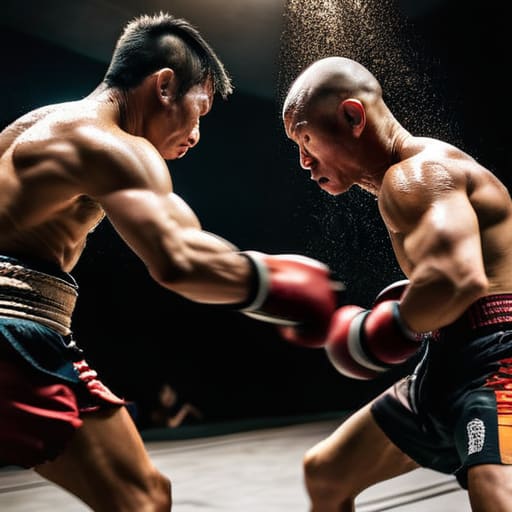
At the end of the day, mastering the clinch isn’t about memorizing a list of moves you saw on a highlight reel; it’s about the intersection of mechanical stability and relentless repetition. We’ve covered how to stabilize your core through Muay Thai mechanics and how to apply that pressure to dictate movement during close-quarters grappling. Whether you are working on your posture to prevent being snapped down or refining your grip to control an opponent’s center of gravity, remember that these are highly technical skills that require both physical strength and mental presence. You can’t shortcut the process of learning how to feel an opponent’s weight shift, so focus on the nuances of the contact rather than just the brute force.
Don’t get discouraged if you feel clumsy or overwhelmed when you first start drilling these transitions in live sparring. Strength and control are built in the trenches, through the slow, often frustrating process of consistent, intentional practice. My goal for you isn’t just to teach you how to win a scramble, but to help you build a body that is fundamentally capable and resilient. Keep showing up to the mats, keep fueling your body properly, and trust that the technical proficiency will follow the work you put in. You aren’t just training to fight; you are training to be unstoppable in your own skin.
Frequently Asked Questions
How do I balance the need for explosive clinch entries with the steady, isometric strength required to maintain control once I'm there?
Think of it like a heavy squat: the entry is your explosive drive, but the hold is your bracing. You need to train both. To bridge that gap, I use contrast training. Pair an explosive movement, like a medicine ball slam or a dynamic sprawl, immediately with an isometric hold, like a heavy sandbag clinch or a timed neck bridge. You’re teaching your nervous system to switch from high-velocity engagement to rock-solid stability without losing tension.
When am I training for functional clinch strength versus just building general hypertrophy in the gym?
Think of it this way: hypertrophy is about the size of the engine, but functional clinch strength is about how that engine actually delivers power under pressure. If you’re just chasing a pump in the gym, you’re building aesthetics. But when you’re training for the clinch, you’re training your nervous system to maintain isometric tension while someone is actively trying to break your posture. We lift to build the capacity, but we drill to build the skill.
How can I use my nutrition and electrolyte intake to prevent that mid-round mental fog when the clinch work gets particularly grueling?
That mental fog isn’t a lack of willpower; it’s your brain running on empty. When you’re grinding through heavy clinch exchanges, your nervous system is redlining. Don’t wait until you feel the crash to hydrate. I always keep my electrolytes handy because sodium and magnesium are non-negotiable for neural firing. Pair that with slow-burning carbs an hour before training to keep your blood sugar steady. Fuel for the work, not just the aesthetic.
