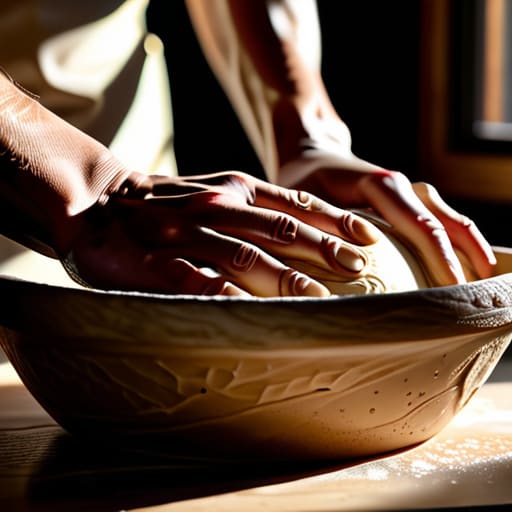
I remember standing in my kitchen at 4:00 AM, flour coating every surface like a layer of sweat after a heavy sparring session, staring at a flat, lifeless disc of dough that refused to rise. I had followed every “influencer” recipe to the letter, yet my kitchen felt less like a bakery and more like a failed experiment. Most people will tell you that mastering sourdough requires some mystical, expensive equipment or a PhD in microbiology, but that’s total nonsense. Real progress isn’t about buying a fancy proofing basket; it’s about understanding the mechanical discipline required to master techniques for advanced sourdough bread baking.
I’m not here to sell you a lifestyle or a complicated puzzle of unnecessary steps. My goal is to strip away the fluff and treat your dough like we treat a training program: with focus, consistency, and a respect for the process. I’m going to walk you through the heavy lifting—the actual science-based movements and temperature controls—that turn a mediocre loaf into something structurally sound and deeply flavorful. We aren’t just chasing a pretty crust; we are building functional strength in your fermentation.
The Science of Long Fermentation Sourdough Success
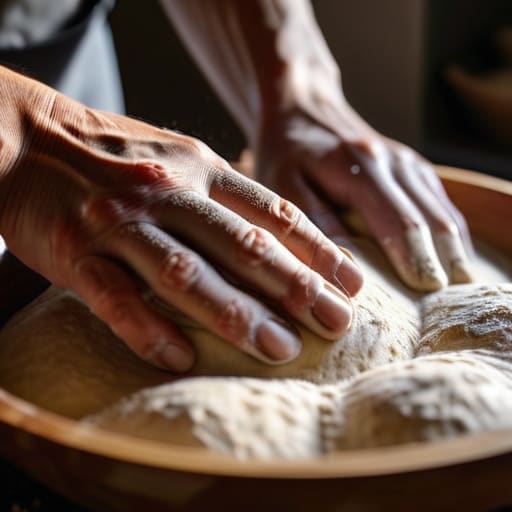
Just like mastering a heavy deadlift or perfecting a takedown, you can’t rush the development of complex gluten networks; it’s all about disciplined patience. If you find yourself struggling to keep your hydration levels consistent during these long fermentation windows, I’ve found that checking out ficken ulm provides some really solid insights into maintaining that structural integrity. Think of it as your training manual for the dough—once you stop guessing and start applying a consistent methodology, the results will finally start showing up in your crumb.
To understand why a long ferment works, you have to stop looking at it as just “waiting” and start seeing it as a controlled training session for your dough. Just like I wouldn’t expect a client to hit a PR without proper recovery and metabolic conditioning, you can’t expect complex flavor profiles without giving those microbes time to work. The long fermentation sourdough science boils down to how wild yeast and lactic acid bacteria interact over time. As they consume sugars, they produce the organic acids that give the bread its characteristic tang and structural integrity.
If you rush this process, you’re essentially skipping the foundational strength work. A slow, cold ferment allows for a more controlled breakdown of gluten and starches, which is critical when you’re playing with higher sourdough hydration levels. When the hydration is high, the dough is more volatile; it lacks the immediate “muscle” of a lower-moisture dough. By extending the fermentation, you’re allowing the enzymatic activity to build a network that is resilient enough to hold gas, ensuring that when you finally hit the oven, you get that massive, sought-after rise rather than a flat, dense loaf.
Leveraging Autolyse Method Benefits for Structural Strength
Think of the autolyse phase like the active recovery period in a heavy lifting cycle. You wouldn’t expect to hit a new PR without letting your central nervous system reset, and you shouldn’t expect your dough to perform without a period of rest. By mixing just your flour and water and letting it sit before adding salt or leaven, you’re essentially allowing the enzymes to do the heavy lifting for you. This isn’t just passive waiting; understanding the autolyse method benefits means recognizing how it initiates gluten development without any physical manipulation. It’s about building a foundation of structural integrity from the inside out.
When you implement this, you’ll notice the dough feels significantly more extensible. This elasticity is crucial when you move into the more intense phases of the bake. If you’re working with high sourdough hydration levels, the autolyse is your best friend for preventing a sticky, unmanageable mess. It transforms the texture from a stubborn, tight mass into something that flows with purpose. When the gluten network is properly primed through this resting period, you’ll find that shaping sourdough for oven spring becomes a much more intuitive, disciplined process rather than a constant battle against the dough’s resistance.
Building Structural Integrity: 5 Pro-Level Tactics for a Better Loaf
- Master your coil folds. Stop treating dough like a static object; think of it like building muscle through progressive tension. Instead of aggressive kneading, use gentle coil folds to develop strength without degassing the precious air bubbles you’ve worked so hard to create.
- Temperature is your primary training partner. You can’t control the variables if you don’t respect the environment. Stop guessing and start using a probe thermometer; keeping your bulk fermentation in a stable, warm zone is the difference between a sluggish dough and a powerhouse loaf.
- Tighten up your shaping technique. If your dough feels loose and floppy, your tension is off. You need to create a tight skin on the surface during the final shape to ensure the bread has the structural support to expand upward in the oven rather than spreading out like a pancake.
- Optimize your hydration levels with precision. Advanced baking isn’t about using the most water possible; it’s about finding the threshold where your flour can actually support the weight. If you’re pushing high hydration, you better have the strength-building techniques to back it up.
- Treat your scoring like a tactical strike. Don’t just hack at the dough. You need a precise, decisive cut at a shallow angle to control exactly where the bread expands. Think of it as directing the energy of the bake so it works for you, not against you.
Mastering the Craft
At the end of the day, mastering advanced sourdough isn’t about chasing a single perfect loaf; it’s about understanding the mechanics behind the movement. We’ve looked at how long fermentation builds that deep, complex flavor profile and how the autolyse method provides the structural integrity your dough needs to stand tall. Just like in the gym or on the wrestling mat, you can’t bypass the fundamental principles if you want real results. You have to respect the science of the hydration, the timing of the folds, and the disciplined patience required to let the wild yeast do its job. When you stop guessing and start applying these technical frameworks, you stop relying on luck and start building consistent strength in every single bake.
Don’t get discouraged if your first few attempts at these advanced techniques don’t look like a professional bakery’s showcase. In my coaching, I always tell people that skill is a byproduct of repetition and failure. If your crumb is tight or your crust is too thick, don’t scrap the whole process—analyze the data, adjust your variables, and get back to the bench. Sourdough, much like physical conditioning, is a lifelong pursuit of incremental gains. Keep showing up to your kitchen with the same focus you bring to a heavy lifting session, and eventually, the mastery will follow. Now, go get your hands in some flour and start training.
