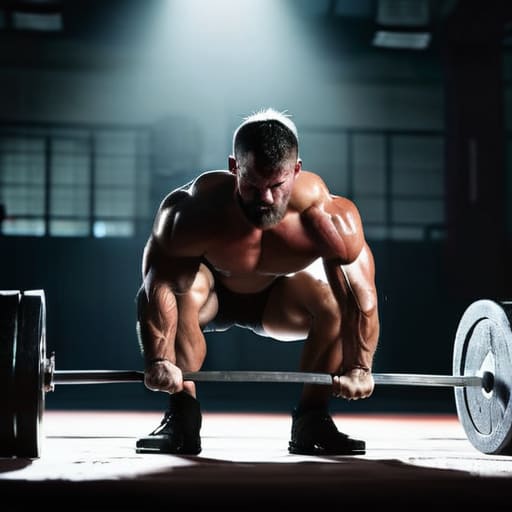
I remember being stuck in a humid, basement-level gym during my early twenties, staring at a bodybuilding program that promised “maximum mass” but left me feeling completely useless the second I stepped onto the mat. I was getting bigger, sure, but I was also getting slow and clumsy. Most people will tell you that wrestling hypertrophy training is just about adding more volume and chasing a massive pump in the mirror, but that’s a lie that’ll get you snapped in a single takedown. If you’re just training to look good in a lifting singlet without considering how that muscle actually functions under tension, you aren’t building strength—you’re just adding dead weight.
I’m not here to sell you on some overpriced, complicated split or a “secret” supplement stack. My goal is to give you a straight-up, science-backed approach to wrestling hypertrophy training that prioritizes functional capability over pure aesthetics. We’re going to focus on building the kind of dense, resilient muscle that helps you control an opponent and stay explosive through the third period. No fluff, no nonsense—just the tools you need to become a more dangerous athlete.
Table of Contents
- Functional Hypertrophy for Combat Sports Fueling Your Movement
- Resistance Training for Grappling Building Strength That Lasts
- Stop Chasing the Pump: 5 Ways to Build Wrestling-Specific Mass
- The Bottom Line: Training with Intent
- Strength Beyond the Mirror
- The Long Game of Strength
- Frequently Asked Questions
Functional Hypertrophy for Combat Sports Fueling Your Movement

When we talk about building muscle for the mat, we have to move past the idea of just “getting big.” If you’re training for the singlet, every extra pound of mass needs to earn its keep. I’ve seen too many athletes chase a bodybuilding physique only to find themselves gasping for air during a heavy scramble or feeling sluggish during a shot. True functional hypertrophy for combat sports isn’t about how much you can bench in a controlled environment; it’s about whether that new muscle helps you maintain a heavy top pressure or pull an opponent out of a sprawl.
The goal is to build muscle mass without losing agility. You want the kind of density that makes you feel immovable, but you need to stay light on your feet to react to every movement. This means focusing on compound lifts and movements that mimic the chaotic nature of a match. We aren’t just training for aesthetics; we are implementing resistance training for grappling to ensure that your strength translates directly to the contact, the tension, and the grind of a real bout.
Resistance Training for Grappling Building Strength That Lasts
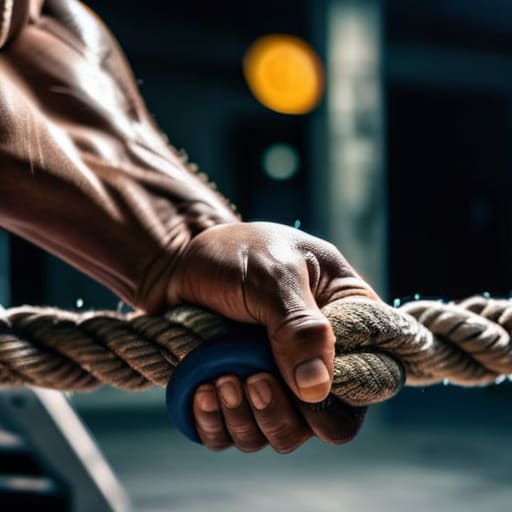
When you’re deep in a third period and your lungs are burning, you don’t need “show muscle”—you need structural integrity. Effective resistance training for grappling isn’t about how much you can bench press in a vacuum; it’s about how that force translates when you’re fighting for position. I always tell my athletes that we aren’t just lifting weights to hit a number on a plate; we are building the ability to maintain tension through awkward angles and unpredictable movements.
The real challenge is finding that sweet spot where you’re adding enough volume to drive growth, but not so much that you feel sluggish on the mats. You want to build muscle mass without losing agility, ensuring your power-to-weight ratio remains optimized for your weight class. This means prioritizing compound movements that mimic the demands of a match—think heavy pulls, explosive drives, and isometric holds that challenge your stability. If you can’t use that strength to snap an opponent down or hold a clinch, it’s just wasted effort. We train for capability and durability, making sure your body is a tool that won’t break under pressure.
Stop Chasing the Pump: 5 Ways to Build Wrestling-Specific Mass
- Prioritize compound movements over isolation work. While a bicep curl looks good in the mirror, a heavy weighted pull-up or a bent-over row is what actually builds the pulling power you need to snap an opponent down or control a collar tie.
- Focus on time under tension, but keep it functional. Don’t just slow down the tempo for the sake of it; use controlled eccentrics to build the structural integrity your joints need to survive a grueling season on the mats.
- Don’t neglect your posterior chain. If you want to be unmovable in a sprawl, your glutes and hamstrings need to be massive. Heavy Romanian deadlifts and kettlebell swings are non-negotiable for building that foundational drive.
- Train for explosive hypertrophy. Muscle is useless in wrestling if it’s slow. Mix your hypertrophy blocks with explosive movements—think heavy goblet squats followed immediately by jumps—so your new muscle mass actually translates to power.
- Eat for the work you’re doing. You can’t build significant mass on a deficit while grinding through wrestling practice. Treat your protein and carb intake as the literal building blocks for your performance, not something to be restricted.
The Bottom Line: Training with Intent
Stop training for the mirror and start training for the mat; every rep should serve the goal of making you more explosive and harder to move.
Prioritize compound movements that bridge the gap between gym strength and wrestling utility, focusing on muscle that actually helps you control an opponent.
Treat your nutrition as a tactical tool for recovery, ensuring you’re eating enough to support the hypertrophy you’re working so hard to build.
Strength Beyond the Mirror
Stop training just to look good in a mirror and start training so you don’t get snapped down when you’re tired in the third period. Hypertrophy in wrestling isn’t about chasing a pump; it’s about building the actual physical armor you need to control an opponent and stay dominant on the mat.
Tamsin Broadhurst
The Long Game of Strength

At the end of the day, wrestling hypertrophy isn’t about chasing a mirror image or hitting a specific weight class just for the sake of it. It’s about the strategic application of volume and intensity to build a body that can withstand the grind of a three-period match. We’ve talked about why you need to prioritize movements that translate to the mat, why nutrition has to be your fuel rather than a math problem, and how to structure your lifting so you aren’t too sore to actually practice your shots. Remember, every rep you grind out in the weight room is an investment in your physical capability when the clock is running down and your lungs are burning.
Don’t get discouraged if the progress feels slow or if some days you feel more like a heavy lifter than a grappler. Strength is a skill, and like any skill, it requires relentless consistency to master. You aren’t just building muscle; you are building a foundation of resilience that will carry you through every takedown and every scramble. Stop training to look a certain way and start training to be undeniable on the mats. Get to work, stay fueled, and trust the process.
Frequently Asked Questions
How do I balance hypertrophy training with the intense cardiovascular demands of a wrestling season without burning out?
The biggest mistake I see is trying to redline everything at once. You can’t sprint in the weight room and on the mats every single day without hitting a wall. Prioritize your lifting sessions during your lower-volume weeks, then dial back the hypertrophy volume as competition nears. Focus on quality over quantity—hit your heavy sets, then let your cardio work take the lead. If you’re feeling trashed, prioritize sleep and electrolytes over one more extra set.
Should I be focusing on higher rep ranges for muscle growth, or will that leave me feeling too slow and sluggish on the mat?
Look, if you only chase high reps, you’re going to feel like you’re moving through molasses when a match gets intense. You need a hybrid approach. I recommend keeping the bulk of your work in that 6–10 rep range to build the actual muscle mass you need, but don’t ditch the heavy sets. Integrating low-rep, high-intensity strength work ensures you keep that explosive snap. Build the engine, but make sure it stays fast.
How much protein do I actually need to eat to build muscle while still maintaining the weight class I need to compete in?
Stop overcomplicating the math. If you’re trying to build muscle without blowing past your weight class, aim for roughly 0.8 to 1 gram of protein per pound of body weight. This keeps your nitrogen balance positive for muscle repair without requiring the massive caloric surplus that leads to unwanted fat gain. Focus on lean sources—chicken, white fish, or egg whites—so you can hit those macros without accidentally creeping up the scale before weigh-ins.
