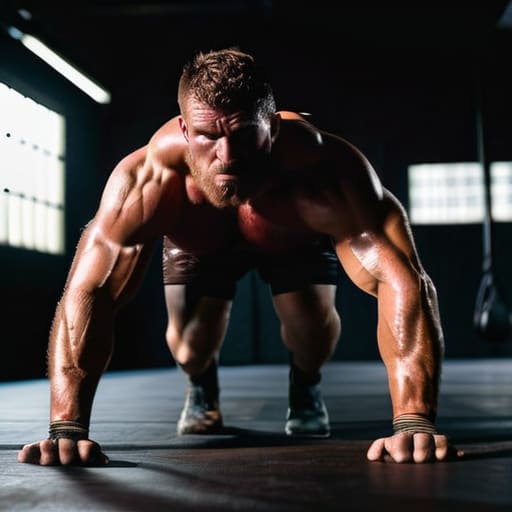
I still remember the smell of stale sweat and floor mats in that cramped local gym where I spent my early twenties, watching guys chase massive, puffy muscles that looked great in a lifting video but crumbled the second they hit a high-intensity scramble. They were obsessed with the wrong things, completely missing the mark on the nuance of wrestling hypertrophy vs strength. I saw too many athletes sacrifice their mobility and gas tank just to add a few inches to their biceps, only to find out that “looking big” doesn’t mean a damn thing when you’re stuck under a heavy sprawl and your lungs are burning.
I’m not here to sell you a complicated, overpriced supplement stack or a program that promises you’ll look like a bodybuilder by next month. Instead, I’m going to give you the straight truth based on my years in the trenches and my background in exercise science. We are going to break down how to prioritize the kind of power that actually moves an opponent, ensuring you build a body that is built for capability, not just for show.
Table of Contents
- Sarcoplasmic vs Myofibrillar Hypertrophy Choosing Capability Over Size
- Maximal Force Production the Foundation of True Mat Power
- How to Stop Training Like a Bodybuilder and Start Training Like a Wrestler
- The Bottom Line: Training to Win, Not Just to Pose
- ## Performance Over Aesthetics
- The Bottom Line: Train for the Mat, Not the Stage
- Frequently Asked Questions
Sarcoplasmic vs Myofibrillar Hypertrophy Choosing Capability Over Size

If you’ve spent any time in a gym, you’ve probably heard the debate about sarcoplasmic vs myofibrillar hypertrophy. In plain English? One is about increasing the fluid volume in your muscle cells (sarcoplasmic), while the other is about thickening the actual contractile proteins (myofibrillar). For a bodybuilder, that extra fluid volume looks great under gym lights, but for us, it can be a liability. If you’re just adding non-functional mass, you’re essentially carrying around a weighted vest that you can’t take off when you’re mid-scramble on the mat.
When we talk about performance, we care about maximal force production. Myofibrillar hypertrophy is the real winner here because it builds the dense, functional tissue required to move an opponent. My goal for my athletes is always to optimize their strength-to-weight ratio for wrestlers. You want to be as strong as possible without becoming a sluggish version of yourself. We aren’t training to fill out a shirt; we are training to ensure that when you drive into a double leg, your muscles have the structural integrity to finish the shot and hold the position.
Maximal Force Production the Foundation of True Mat Power
If you want to be the person who controls the tie-up and dictates the pace of the match, you need to prioritize maximal force production. In wrestling, it’s rarely about how much mass you can carry; it’s about how much force you can exert against an opponent who is actively resisting you. When you’re fighting for a single leg or trying to finish a takedown, you aren’t relying on fluid, slow-twitch muscle endurance—you’re relying on the ability of your nervous system to recruit every available fiber to move a heavy load instantly.
This is where the distinction between just “getting big” and getting strong becomes vital. To dominate on the mat, you need to optimize your strength-to-weight ratio for wrestlers. If you’re packing on unnecessary bulk that doesn’t translate to tension and drive, you’re just making yourself a harder person to move for your opponent. We aren’t training to win a bodybuilding show; we are training to ensure that when you hit that shot, you have the raw, structural power to drive through your opponent and finish the move.
How to Stop Training Like a Bodybuilder and Start Training Like a Wrestler
- Prioritize heavy, compound movements over isolation machines. If you’re spending your session doing nothing but bicep curls and cable flies, you aren’t building the kind of explosive, integrated strength needed to snap someone down or finish a single leg. Stick to the big lifts—squats, deadlifts, and presses—to build a foundation that actually transfers to the mat.
- Don’t fear the weight, but don’t chase the pump either. While a bit of hypertrophy is great for injury prevention and structural integrity, if your training program is centered around high-rep sets just to get a “burn,” you’re sacrificing the neurological adaptations required for maximal force. Train for tension and power, not just muscle fullness.
- Periodize your training to match your season. During the off-season, you have the luxury to lean into some hypertrophy to build a bigger engine. But as you get closer to your first tournament, shift the focus toward strength and speed. You don’t want to walk into a weigh-in feeling heavy and sluggish; you want to feel sharp and powerful.
- Focus on “functional” hypertrophy by targeting the stabilizer muscles. In wrestling, it’s rarely the prime mover that fails; it’s the small muscles in your core, neck, and grip that give out during a scramble. Building muscle in these areas isn’t about aesthetics; it’s about making sure your body doesn’t break down when the intensity ramps up.
- Fuel for performance, not just calorie counting. If you’re trying to build muscle through strength training, you cannot afford to be in a massive caloric deficit. You need enough carbohydrates to fuel those high-intensity sessions and enough protein to repair the tissue you’re breaking down. You can’t build a powerhouse on a starvation diet.
The Bottom Line: Training to Win, Not Just to Pose
Stop chasing “pump” training if your goal is dominance on the mat; prioritize myofibrillar hypertrophy and heavy, low-rep sets to build the dense, functional strength that actually moves opponents.
Understand that size without stability is a liability—focus on maximal force production so that the muscle you build translates directly into explosive takedowns and clinch control.
Treat your nutrition as performance fuel rather than a weight-loss tool, ensuring you have the caloric support to recover from heavy lifting without sacrificing the agility needed for wrestling.
## Performance Over Aesthetics
“If you’re training just to add bulk, you’re building a weight class you can’t carry; but if you’re training for strength, you’re building the kind of explosive, functional power that actually dictates the pace of a match.”
Tamsin Broadhurst
The Bottom Line: Train for the Mat, Not the Stage

At the end of the day, the debate between hypertrophy and strength isn’t about choosing one and discarding the other; it’s about intentionality. If you’re just chasing a pump and ignoring your nervous system, you’re going to hit a wall the second you face someone who actually knows how to manipulate leverage. You need that myofibrillar density to hold your ground, but you also need the metabolic capacity to keep moving when the third period hits. Don’t get caught in the trap of training for aesthetics alone. If your program doesn’t translate to functional dominance on the mat, you’re just wasting your time and your energy.
Stop looking for the magic shortcut and start embracing the grind. Strength is a skill, and just like a perfect double-leg takedown, it requires relentless, disciplined practice. Whether you’re focusing on building lean muscle or pushing your one-rep max, remember that every rep is a deposit into your capability bank. We don’t lift to look a certain way in a mirror; we lift so that when we step into that circle, we are the most dangerous, capable version of ourselves. Now, grab your electrolytes, get your head right, and go get to work.
Frequently Asked Questions
If I'm focusing on maximal strength, how do I make sure I'm not losing the explosive speed I need for shots and takedowns?
That’s the million-dollar question. If you just grind out heavy, slow reps, you risk becoming “slow strength”—strong, but sluggish on the mat. To keep that snap in your shots, you have to marry your heavy lifting with explosive intent. I recommend incorporating plyometrics or Olympic lift variations into your sessions. Think about moving the bar as fast as possible during your concentric phase. Strength provides the engine, but explosiveness is the spark that actually executes the takedown.
Can I actually train for both hypertrophy and strength at the same time, or am I just going to end up spinning my wheels?
You can absolutely train for both, but you can’t just wing it. If you try to chase a massive pump and a new one-rep max in the same session without a plan, you’ll burn out or plateau. I recommend periodization: dedicate specific blocks to building a base of muscle (hypertrophy) before shifting focus to heavy, neurological strength work. Think of it as building the engine first, then tuning it for high performance.
How much do I need to adjust my protein and carb intake when I shift from a pure strength block to a hypertrophy-focused phase?
When you shift from pure strength to hypertrophy, your body’s demand for fuel changes. You aren’t just recruiting motor units anymore; you’re building tissue. Keep your protein high—don’t let that drop—to support muscle repair. The real tweak is your carbs. Since hypertrophy training involves more volume and metabolic stress, you’ll need more glycogen. Bump up your carb intake slightly to fuel those higher-rep sets and ensure you aren’t burning through your hard-earned muscle for energy.
