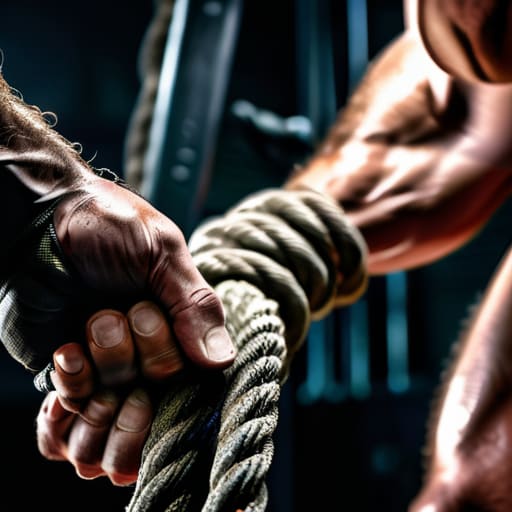
I still remember the smell of stale sweat and old mats in that cramped basement gym where I spent my early twenties, feeling completely helpless when a heavier opponent locked their hands around my waist. I had all the “supplements” and fancy gym memberships, but the moment I needed to snap someone down or control a tie-up, my grip just gave out. I realized then that you can’t just “bulk up” your way to success; real wrestling pulling strength is a specific, gritty skill that requires more than just chasing ego lifts on a lat pulldown machine.
I’m not here to sell you a complicated, thirty-step supplement protocol or a bunch of flashy, non-functional movements that look good on Instagram but fail on the mat. Instead, I’m going to give you the straight-up truth about how to build a back and grip that actually works when the pressure is on. We are going to focus on science-based, purposeful lifting that turns your body into a tool for functional capability, ensuring you have the power to dictate the pace of every match.
Table of Contents
- Mastering Functional Pulling Power for Combat Sports
- Scapular Stability in Wrestling the Foundation of Control
- Stop Chasing Numbers and Start Building Grip and Pull
- The Bottom Line: Building Strength That Actually Matters
- Strength is More Than a Number on a Plate
- The Long Game of Pulling Strength
- Frequently Asked Questions
Mastering Functional Pulling Power for Combat Sports

When we talk about functional pulling power for combat sports, we aren’t just talking about the ability to move a barbell from point A to point B. In a live scramble, you aren’t pulling against a static weight; you’re pulling against a moving, resisting human being. This is where the difference between “gym strength” and “mat strength” becomes glaringly obvious. To bridge that gap, you have to move beyond basic rows and start focusing on how your back muscles actually interact with your limbs during a clinch or a takedown attempt.
I’m a huge advocate for prioritizing scapular stability in wrestling because if your shoulder blades aren’t locked in, your power leaks everywhere. You can have the biggest lats in the room, but if your foundation is shaky, you’ll lose that leverage the second someone snaps your head down. I also want to see my athletes leaning into weighted pull-up training for athletes to build that raw, vertical pulling capacity. It’s not about looking aesthetic in the mirror; it’s about ensuring that when you grab a wrist or a collar, your body has the structural integrity to hold that position under pressure.
Scapular Stability in Wrestling the Foundation of Control

If you’ve ever been stuck in a bad position on the mat, you know it isn’t always about how much you can bench; it’s about how well you can hold your ground. This is where scapular stability in wrestling becomes your best friend. Your shoulder blades act as the literal anchor for every tie-up, snap-down, and clinch you attempt. If your scapula is sliding around like a loose bolt in a machine, you’re going to leak power every time you try to initiate a move. You need that stable base to ensure that when you pull, the force actually transfers through your entire frame rather than just straining a tired rotator cuff.
Think of your upper back as the platform that supports your heavy hitters. When we talk about building functional pulling power for combat sports, we aren’t just talking about big muscles; we’re talking about the ability to control an opponent’s movement through precise, stable tension. You can have all the lat strength in the world, but without a stable scapular foundation, you’re essentially trying to pull a heavy sled with a frayed rope. Focus on those small, stabilizing movements to ensure your strength is actually usable when the match gets intense.
Stop Chasing Numbers and Start Building Grip and Pull
- Prioritize heavy carries over high-rep isolation moves. If you can’t hold onto your opponent during a scramble, your bicep curls don’t matter; pick up the heavy kettlebells or sandbags and move them to build that functional, isometric endurance.
- Stop neglecting your posterior chain in favor of lat machines. Real wrestling strength comes from the connection between your hips and your back; integrate rows that force you to stabilize your entire torso to mimic the tension of a real clinch.
- Train your grip like your life depends on it. I see too many athletes with massive backs but weak hands; incorporate fat grips or towel pull-ups to ensure that when you grab a wrist or a collar, it actually stays grabbed.
- Focus on eccentric control during your pulling movements. It’s easy to yank a weight up, but controlling the descent builds the type of structural integrity you need when you’re fighting to prevent an opponent from breaking your posture.
- Treat your pulling strength as a skill, not a checkbox. You don’t just “get” strong; you refine the mechanics of how you pull through different planes of motion, so don’t just repeat the same three movements every single week.
The Bottom Line: Building Strength That Actually Matters
Stop training for aesthetics and start training for leverage; functional pulling strength is what allows you to dictate the pace and control your opponent’s movement.
Stability is your armor—without a rock-solid scapular foundation, your raw pulling power will never translate into effective control on the mat.
Consistency beats intensity every single time; treat your pulling protocols like a skill you’re honing, not a weight you’re just trying to move once.
Strength is More Than a Number on a Plate
In wrestling, pulling strength isn’t about how much you can move a bar in a controlled environment; it’s about the ability to snap an opponent into position and hold them there when your lungs are burning and your grip wants to quit.
Tamsin Broadhurst
The Long Game of Pulling Strength
At the end of the day, building elite pulling strength for the mat isn’t about one heavy session or a random accessory move you saw on social media. It’s about the synergy between scapular stability and purposeful, functional movement. We’ve talked about why you can’t just chase ego lifts and why your foundation has to be rock solid before you start adding heavy weight to your rows or pull-ups. If you focus on mastering the mechanics and treating your strength like a skill that requires constant refinement, you won’t just be stronger in the gym—you’ll be impossible to shake when you’re deep in the grind of a match.
I know the grind can feel relentless, especially when you feel like you’re hitting a plateau, but remember that strength is built in the quiet, consistent moments. Don’t get discouraged if the progress feels slow; real, functional power is a marathon, not a sprint. Use your nutrition as fuel, respect your recovery, and show up for the work even when you don’t feel like it. We don’t train just to look a certain way; we train to be capable of anything the mat throws at us. Now, grab your shaker, get your head right, and go get to work.
Frequently Asked Questions
How can I tell if my pulling strength is actually translating to my wrestling, or if I'm just getting good at the gym?
If you’re just moving weight in a controlled gym environment, you’re building capacity; if you’re controlling a resisting human, you’re building wrestling strength. Ask yourself: can you maintain your grip when someone is actively trying to peel your hands away? Does your pull feel “heavy” and stable when you’re fighting for an underhook, or do you feel like you’re just straining against air? If your gym gains don’t hold up during live situational drilling, they aren’t translating yet.
Should I be focusing more on heavy, low-rep pulls or higher-volume accessory work to build mat-ready endurance?
You need both, but they serve different masters. Think of heavy, low-rep pulls—like weighted chin-ups or heavy rows—as your foundation for raw, explosive control. That’s what stops an opponent from breaking your grip. However, if you want to maintain that grip through the third period, you can’t skip the volume. Layer in higher-rep accessory work to build the muscular endurance required to keep your technique from crumbling when the fatigue hits.
What do I do if my grip strength is failing before my back and biceps during a heavy pulling session?
Look, it’s frustrating when your hands give out while your back still feels like it could go for another five rounds. If your grip is failing first, stop treating it as a separate issue and start treating it as a weakness in your kinetic chain. Mix in more heavy carries and farmer’s walks to build that forearm endurance. If you’re mid-session and can’t finish your sets, use straps for your heavy compound movements so you can actually tax your lats without your hands quitting on you.
