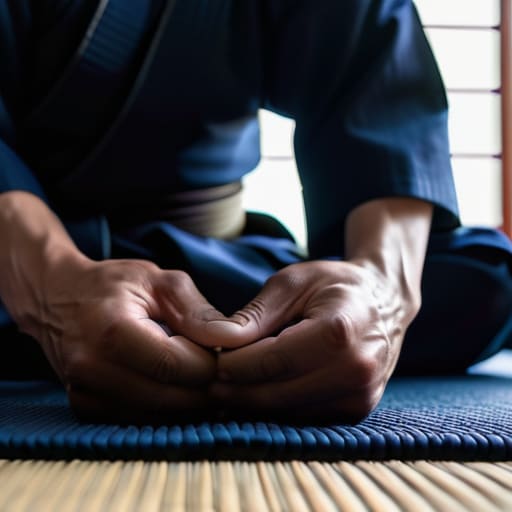
I can still smell the stale sweat and industrial disinfectant from the basement gym where I spent my early twenties. I remember staring at the worn-out vinyl, feeling completely invisible while the guys around me commanded every inch of the room without even trying. Back then, I thought mat presence was something you were either born with or you weren’t—a mystical aura reserved for the natural athletes. I spent years thinking I needed more gear, better supplements, or a more intimidating physique to finally belong in that space.
I’m here to tell you that most of that “aura” is just noise. You don’t need a magic pill or a fancy training program to command respect when you step into the circle; you need a foundation of mental and physical readiness. In this post, I’m stripping away the fluff to show you how to build a genuine mat presence through disciplined movement and psychological grit. We aren’t chasing aesthetics here; we are building the capacity to show up, hold your ground, and execute when the pressure is on.
Table of Contents
Managing Combat Anxiety Through Steady Breath

When you’re mid-scramble and your heart is hammering against your ribs, it’s easy to let panic dictate your movement. That spike in cortisol doesn’t just make you tired; it clouds your judgment and kills your technical precision. I’ve been there—staring at an opponent, feeling that frantic urge to just explode without a plan. This is where managing combat anxiety becomes a mechanical skill, just like a sprawl or a takedown. You have to learn to use your breath as a physiological reset button. By focusing on slow, rhythmic exhales even when the pressure is mounting, you signal to your nervous system that you aren’t actually in mortal danger.
This isn’t just about staying calm; it’s about maintaining grappling composure and control when the weight of another person is trying to crush the air out of you. If you’re gasping for air, you’re reactive. If you’re breathing deeply, you’re proactive. When you control your breath, you stabilize your core and steady your vision, allowing you to see the openings that panic usually hides. Don’t let your lungs dictate your technique. Control the breath, and you control the pace of the match.
Tactical Positioning and Awareness Under Pressure
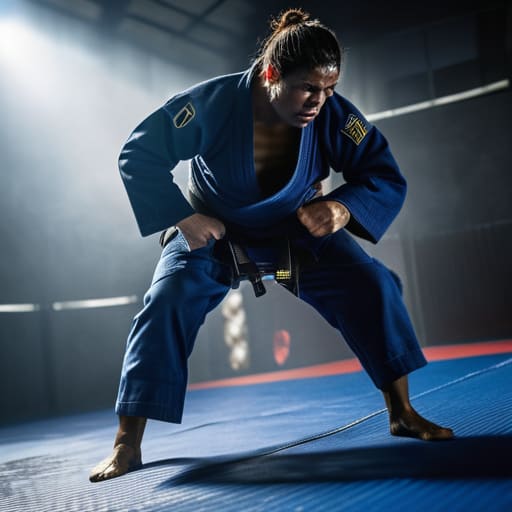
When the pressure ramps up and you’re stuck in a scramble, your brain wants to go into survival mode—panicked, frantic, and reactive. But that’s exactly when you need to lean into grappling composure and control. Tactical positioning isn’t just about where your limbs are; it’s about how you occupy space. If you’re constantly shrinking away or playing defensively, you’re giving your opponent the initiative. You have to learn to stay heavy, even when you’re tired, and use your frame to dictate the terms of the engagement rather than just reacting to theirs.
This is where you start imposing physical presence in combat. It’s a subtle shift in how you carry your weight and how you interact with your opponent’s center of gravity. You aren’t just moving through space; you are claiming it. By maintaining structural integrity and keeping your hips active, you signal to your opponent that you aren’t an easy target. This kind of awareness turns a chaotic scramble into a calculated sequence of movements, allowing you to stay ahead of the game instead of just trying to survive it.
Five Ways to Own Your Space When the Pressure Hits
- Stop reacting and start responding. When you’re stuck in a bad position, your instinct is to scramble, but scrambling leads to mistakes. Instead, freeze for a split second, assess where your center of gravity is, and make one intentional move. Control the chaos by slowing your internal clock.
- Master your peripheral vision. If you’re hyper-focused on your opponent’s hands or face, you’re missing the setup for the next shot. Train yourself to see the whole mat, not just the immediate threat. Awareness is the difference between being hunted and being the hunter.
- Use your weight as a tool, not a burden. Mat presence isn’t just about being loud or aggressive; it’s about how you occupy space. If you’re underneath someone, don’t just lie there—drive your hips, create tension, and make every inch of your body feel heavy and difficult to move.
- Check your ego at the door. You’re going to get taken down. You’re going to get caught in bad spots. The people who actually develop presence are the ones who don’t let a mistake turn into a mental spiral. Shake it off, reset your stance, and get back into the fight immediately.
- Fuel the engine before you step on the mat. You can’t maintain mental focus if your blood sugar is crashing or you’re dehydrated. If you’re running on fumes, your “presence” will evaporate the moment you get tired. Treat your nutrition like the tactical prep it is so your brain stays sharp when your muscles want to quit.
The Bottom Line: Owning Your Space
Stop letting the chaos of a match dictate your movement; use your breath and tactical awareness to dictate the pace instead.
Mat presence isn’t a feeling you wait for—it’s a skill you build by staying disciplined when the pressure is on.
Treat your physical conditioning and mental focus as two sides of the same coin; you can’t have one without the other if you want to be truly capable.
## Beyond the Physical Grind
Mat presence isn’t about how much weight you can move or how many reps you can grind out; it’s about the quiet, steady ability to stay centered when the world around you is trying to force you into chaos.
Tamsin Broadhurst
Taking it Off the Mat

At the end of the day, mat presence isn’t some mystical state of being that you either have or you don’t; it is a practical skill set that you build through repetition. We’ve talked about using breath to keep your nervous system from redlining and how tactical awareness keeps you from getting caught in reactive, sloppy movements. When you combine intentional breathing with a sharp eye for positioning, you stop being a victim of the chaos and start becoming the one who controls it. It’s about moving from a place of pure reaction to a place of calculated, composed action, whether you’re in the middle of a heavy scramble or just trying to hold your ground in a high-pressure drill.
Don’t get discouraged if you feel scattered during your next session. Even the most seasoned athletes have days where their focus slips and the noise gets too loud. The goal isn’t perfection; the goal is consistency and resilience. Every time you catch yourself panicking and bring your focus back to your breath or your stance, you are winning. Strength is built in those small, disciplined moments of recalibration. So, stop waiting for the perfect headspace to show up and just get back on the mat. The presence you’re looking for is waiting for you in the work.
Frequently Asked Questions
How do I maintain mat presence when I'm physically exhausted halfway through a training session?
When the lungs are burning and your limbs feel like lead, that’s when the real work starts. Stop trying to fight the fatigue; instead, narrow your focus. Don’t worry about the next ten minutes—just win the next thirty seconds. Lean into your technical fundamentals. When your gas tank is empty, your mechanics have to take over. Focus on your posture, reset your breath, and stay intentional. Fatigue is just a signal to sharpen your discipline.
Can I use specific strength training drills to help improve my situational awareness during live wrestling?
Absolutely. You can’t just lift heavy and expect it to translate to the mat if you’re staring at the ceiling during your sets. Stop doing mindless reps. Incorporate reactive drills—like partner-resisted movements or unilateral stability work—that force you to adjust your center of gravity mid-rep. I use heavy kettlebell flows to mimic the constant shifting of a scramble. If you train your body to stabilize under unpredictable tension, your situational awareness will follow.
Is there a way to practice this mental focus outside of the gym so it becomes more intuitive when I'm actually on the mat?
Absolutely. You can’t just flip a switch when you step onto the mat; you have to build the muscle memory elsewhere. Try practicing “micro-focus” during mundane tasks. When you’re walking through a crowded street or even just washing dishes, practice maintaining steady, rhythmic breathing while staying acutely aware of your surroundings. If you can maintain composure and spatial awareness during a chaotic commute, staying grounded during a heavy scramble becomes second nature.
