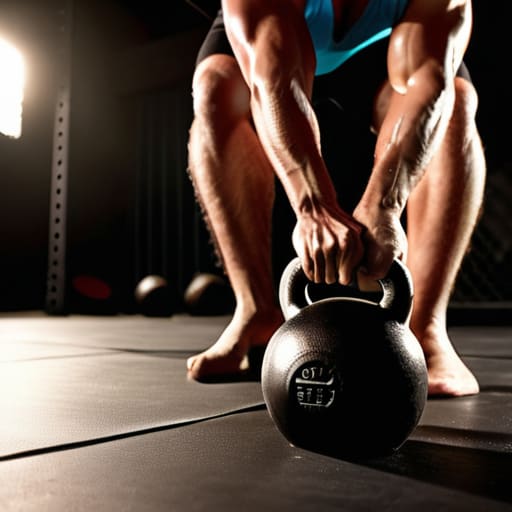
I still remember the smell of stale sweat and old mats during my early days in the amateur wrestling circuit, specifically that moment a heavy sprawl caught me off balance because my left side just wasn’t there. I was doing plenty of heavy bilateral squats, but the second I had to fight from an asymmetrical position, my strength evaporated. That’s the hard truth most people miss: if you’re only training with two legs and two arms, you’re leaving your game wide open. You can’t build a championship physique in a vacuum of symmetry when wrestling unilateral training is what actually keeps you upright when a competitor is trying to drive through your hips.
I’m not here to sell you some flashy, overcomplicated movement pattern that looks cool on Instagram but fails the moment you hit the mat. Instead, I’m going to give you the no-nonsense blueprint for building stability that actually translates to the grind. We’re going to focus on practical, science-backed movements that fix your imbalances and turn your body into a functional weapon. My goal is to help you move past just “looking strong” and start building the skill of capability so you can dominate every scramble.
Table of Contents
- Mastering Asymmetrical Strength Development for the Mat
- Single Limb Stability Drills to Build Real Capability
- Stop Training Like a Machine: 5 Ways to Make Unilateral Work Count
- The Bottom Line for Your Training
- ## Stability Over Symmetry
- Stop Training for Aesthetics, Start Training for Capability
- Frequently Asked Questions
Mastering Asymmetrical Strength Development for the Mat

When you’re deep in a scramble, you aren’t moving in a perfectly symmetrical, laboratory-controlled plane. You’re twisting, driving from one leg, and fighting to maintain balance while someone is actively trying to off-balance you. This is why asymmetrical strength development is the backbone of a resilient athlete. If you only ever train with a barbell across your back, you’re leaving a massive gap in your ability to handle real-world chaos. You need to bridge the gap between “gym strong” and “mat capable” by forcing your body to stabilize itself without the luxury of a balanced load.
I tell my athletes that if they want long-term longevity, they have to prioritize wrestling injury prevention through targeted, single-sided work. This isn’t just about building muscle; it’s about correcting muscle imbalances in combat sports that naturally occur from years of repetitive shots and single-leg takedowns. By integrating single-limb stability drills into your lifting sessions, you teach your nervous system to fire correctly even when you’re out of position. We aren’t just chasing numbers here—we are building a body that can withstand the grind.
Single Limb Stability Drills to Build Real Capability
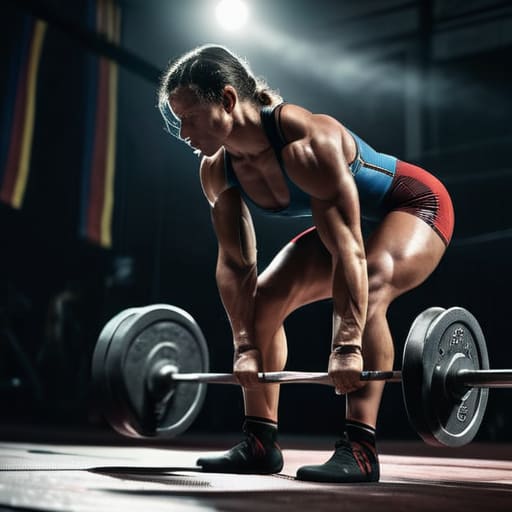
If you want to stop being predictable on the mat, you have to stop training like a machine that only moves in straight lines. In wrestling, you’re rarely in a perfect, symmetrical stance; you’re sprawling, shooting, or defending a single-leg takedown. This is where single-limb stability drills become your best friend. I’m talking about movements like the Bulgarian split squat or single-leg RDLs. These aren’t just “leg days” variations; they force your stabilizer muscles to fire in ways a standard barbell squat never will. When you can control your center of gravity on one leg, you become significantly harder to off-balance.
Beyond just getting stronger, these drills are essential for wrestling injury prevention. When you’re constantly fighting against an opponent’s weight, your joints take a beating. By focusing on correcting muscle imbalances in combat sports, you’re essentially building a suit of armor around your knees and ankles. I always tell my athletes: if you can’t stabilize yourself on one leg in the gym, you have no business trying to fight through a scramble on the mat. Build that foundation now, or pay for it later when a shot goes sideways.
Stop Training Like a Machine: 5 Ways to Make Unilateral Work Count
- Prioritize your weak side first. If your left leg is your “anchor” but your right side is lagging, start your sets with the right. Don’t let your dominant side dictate your training volume, or you’ll just be reinforcing a massive imbalance that an opponent will exploit the second you hit the mat.
- Focus on time under tension, not just moving weight. In wrestling, you aren’t just lifting a barbell; you’re fighting a resisting, shifting human body. When you’re doing single-leg RDLs or split squats, slow down the eccentric phase. Control the descent. That’s where you build the stability needed to stay upright when someone’s trying to snap you down.
- Integrate “chaos” into your stability drills. A perfectly still gym environment isn’t the wrestling room. Use kettlebells, sandbags, or even just a slightly uneven surface to force your stabilizer muscles to wake up. If you can’t maintain form while the load is shifting, you aren’t actually strong enough for the sport.
- Don’t neglect your core’s anti-rotational strength. Unilateral training isn’t just about legs and arms; it’s about your trunk’s ability to resist being twisted out of position. Incorporate things like Pallof presses or single-arm farmer’s carries to ensure your midsection acts as a solid bridge between your limbs.
- Treat unilateral work as a skill, not a chore. You wouldn’t expect to hit a perfect double-leg without practice, so don’t expect your body to balance perfectly on one leg without repetition. Approach these movements with the same technical focus you use for wrestling drills—precision matters more than the number on the plate.
The Bottom Line for Your Training
Stop chasing bilateral numbers alone; if you aren’t training one limb at a time, you’re leaving your stability—and your performance on the mat—to chance.
Use unilateral work to hunt down your weaknesses, not just to add more volume, so your “off” side doesn’t become a liability during a scramble.
Treat single-limb stability as a foundational skill that requires the same consistency and discipline as your heavy lifts.
## Stability Over Symmetry
“In a match, you’re rarely fighting from a perfect, symmetrical stance; you’re constantly fighting through awkward angles and off-balance transitions. If you only train with bilateral movements, you’re building a strength that disappears the second someone tries to snap you off your center.”
Tamsin Broadhurst
Stop Training for Aesthetics, Start Training for Capability
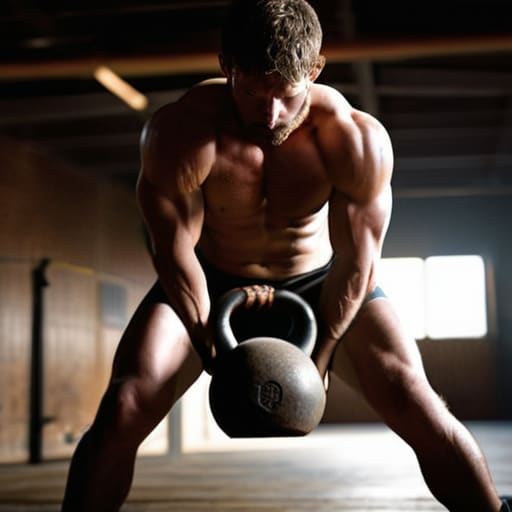
At the end of the day, wrestling isn’t a symmetrical sport. You aren’t moving through a controlled, bilateral plane in a gym; you are fighting against an opponent who is actively trying to unbalance you. By prioritizing unilateral work—from those single-leg stability drills to heavy, asymmetrical lifts—you aren’t just building muscle; you are building the skill of stability. We’ve covered how to fix those nagging imbalances and why single-limb strength is the foundation of a dominant takedown. Don’t let your weak side be the reason you end up flat on your back when the match gets intense. Consistency in these movements is what separates a gym lifter from a true athlete.
I want you to look at your training through a different lens. Forget about chasing a specific look or hitting a number just for the sake of the ego. Instead, focus on what your body is actually capable of doing when you’re deep in the third period and your lungs are burning. Strength is a tool, and unilateral training is how you sharpen that tool to be more precise and resilient. Get under the bar, embrace the instability, and trust the process of building a more capable version of yourself. You aren’t just lifting weights; you are preparing for the reality of the mat. Now, go get to work.
Frequently Asked Questions
How do I know if my imbalance is actually a strength deficit or just a mobility issue?
Here’s the quick test: if you can hit the full range of motion with a light weight or just your body weight, but the moment you add load your form breaks or your limb shakes, you’re looking at a strength deficit. If you physically cannot reach the position without compensating or feeling a sharp pinch, that’s a mobility wall. Don’t try to power through a mobility restriction with heavy weights; you’ll just train bad patterns.
Should I be doing unilateral work before or after my heavy compound lifts?
Keep your heavy compounds first. If you’re trying to move a heavy weight or blast through a double leg, you need your central nervous system fresh and your primary movers firing at 100%. If you fatigue yourself with single-leg work beforehand, your form will slip on the big lifts, and that’s how injuries happen. Use the unilateral work as your “finisher” to build that specific stability once the heavy lifting is out of the way.
How much volume do I need to add to my routine without burning out before my actual wrestling sessions?
Don’t try to overhaul your entire program overnight. If you’re already wrestling, your central nervous system is already under heavy load. Start by adding just one or two unilateral movements to your existing sessions—maybe a single-leg RDL or a Bulgarian split squat—at a lower volume. Focus on quality over quantity. If your performance on the mat starts dipping, you’ve overshot. We’re building capability here, not chasing exhaustion.
