
I still remember the smell of stale sweat and floor cleaner in that cramped basement gym where I spent my early twenties, staring at an opponent who simply wouldn’t budge. I was working hard, sure, but I was hitting a wall because I was chasing “mirror muscles” instead of actual utility. I thought more bench press would solve everything, but when I tried to drive through a heavy sprawl, my power just evaporated. I realized then that most people approach wrestling pushing strength as a pursuit of vanity, focusing on isolation movements that look great in a gym mirror but fail the second you’re locked in a tie-up.
I’m not here to sell you a complicated, thirty-step supplement protocol or a flashy, over-engineered lifting program that takes two hours to complete. Instead, I’m going to show you how to build functional, explosive power by focusing on the movements that actually matter when you’re on the mat. We are going to strip away the fluff and focus on purposeful, consistent training that turns your strength into a reliable skill. If you want to stop guessing and start actually moving people, let’s get to work.
Table of Contents
Fueling Explosive Upper Body Power for Wrestlers

You can have the most disciplined lifting program in the world, but if you aren’t fueling your body to meet the demands of the mat, you’re just spinning your wheels. When we talk about developing explosive upper body power for wrestlers, we aren’t just talking about calories; we’re talking about nutrient timing and metabolic readiness. To drive those heavy shots and maintain pressure in the clinch, your muscles need glycogen readily available. I tell my athletes that nutrition is the difference between a sharp, reactive snap-down and a sluggish, heavy-limbed struggle.
Don’t fall into the trap of thinking you need to eat everything in sight to get big. For us, it’s about quality that supports functional strength for combat sports. If you’re aiming for more muscle density to hold off an opponent, you need to prioritize protein intake to support muscle repair, but don’t neglect the complex carbs that fuel your high-intensity intervals. Think of your food as the raw material for your movement. If you want to be able to explode out of a sprawl or drive through a double leg, you have to treat your plate with the same intentionality as your training sessions.
Beyond Aesthetics Pectoral Muscle Hypertrophy for Grappling

When you’re deep in a scramble, nobody cares about how your chest looks in a mirror. But there is a massive, practical difference between “gym muscles” and the kind of muscle that actually moves an opponent. We aren’t chasing a pump just for the sake of vanity; we are looking for pectoral muscle hypertrophy for grappling because a larger muscle cross-section provides a bigger engine for your push. If you want to create space when someone is heavy on top of you, you need that raw mass to act as a structural foundation for your force production.
However, don’t fall into the trap of just chasing a massive bench press. If you only train in a single plane, you’re going to leave yourself vulnerable. Real-world strength requires integrating that chest power with scapular stability exercises to ensure your shoulders don’t collapse when you’re under load. We want thick, functional muscle that can actually transfer energy from your core through your limbs. It’s about building a frame that is as resilient as it is powerful, ensuring that every ounce of hypertrophy serves a specific, combat-ready purpose.
Stop Chasing Reps, Start Building Leverage
- Prioritize compound movements like the bench press and overhead press, but don’t just move the weight from A to B. Focus on the explosive drive from the bottom of the movement—that’s where your ability to break an opponent’s posture lives.
- Incorporate heavy sled pushes to bridge the gap between gym strength and mat reality. Pushing a weighted sled mimics the constant, grinding resistance of a head-and-arm tie-up better than almost any machine.
- Don’t neglect your triceps. While your chest gets you moving, your triceps are the engines that lock out the extension. If your triceps are weak, you’ll find yourself stalling mid-push when you need that final burst of power.
- Train for stability, not just raw force. Incorporate unilateral movements like single-arm dumbbell presses to ensure you aren’t overcompensating with one side, which is a recipe for injury when you’re scrambling on the mat.
- Treat your recovery like part of the training. You can’t build explosive pushing power if your central nervous system is fried. High-intensity lifting requires intentional rest and enough fuel to repair the tissue you’re breaking down.
The Bottom Line: Building Real-World Power
Stop training for the mirror and start training for the mat; focus on movements that translate to pushing an opponent off you, not just building big chest muscles.
Consistency is your best tool, so prioritize heavy, purposeful compound lifts over random accessory work to build a foundation of functional strength.
Treat your nutrition as fuel for your performance, ensuring you’re eating enough to support both explosive power and the recovery your body needs to keep training hard.
## Strength is More Than a Number on a Barbell
“In the middle of a scramble, nobody cares about your bench press max; they care about whether you can actually drive through an opponent’s chest when your lungs are burning and the clock is running out. Pushing strength isn’t about looking powerful—it’s about having the functional grit to dictate where the match goes.”
Tamsin Broadhurst
Putting the Work Into the Mat
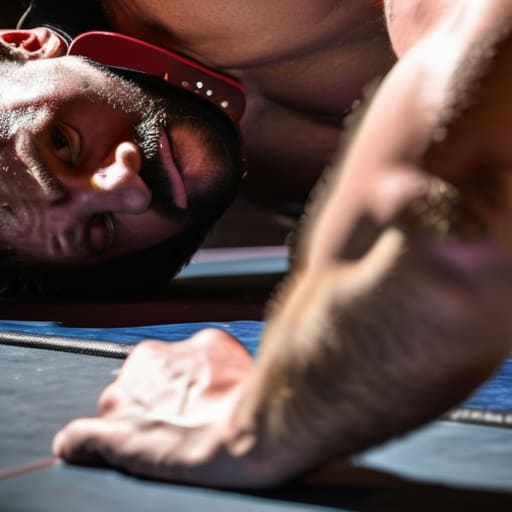
At the end of the day, building wrestling-specific pushing strength isn’t about finding some magic shortcut or a single “perfect” exercise. It’s about the synergy between intentional hypertrophy and functional, explosive movements that actually translate when you’re locked in a tie-up. We’ve talked about how fueling your body correctly is non-negotiable and why focusing on your pectorals and triceps provides the foundation for that heavy, grinding pressure. If you combine purposeful strength training with a nutrition plan that treats food as fuel rather than a restriction, you aren’t just building muscle—you’re building a toolkit for the mat. Stop chasing the burn for the sake of it and start training with the specific goal of moving your opponent.
I know how exhausting it can be to balance heavy lifting sessions with technical drilling and recovery, but remember that strength is a skill. It doesn’t happen overnight, and it certainly doesn’t happen by accident. You show up, you put in the reps, and you respect the process. Whether you’re a seasoned grappler or someone just starting to find your footing in the gym, stay focused on the long game. Don’t train just to look a certain way; train so that when you’re in the heat of a match, your body has the capability to respond exactly how your mind demands. Now, grab your shaker bottle, get your electrolytes in, and get to work.
Frequently Asked Questions
How do I balance heavy bench pressing with the need for explosive, functional movement on the mats?
Look, you don’t have to choose between being a powerhouse in the rack and being sluggish on the mats. The secret is how you periodize. Use your heavy bench sessions to build that raw force production, but don’t let it be your only focus. Pair those heavy sets with explosive, velocity-based movements like medicine ball chest passes or plyometric push-ups. We’re training for capability, so make sure that strength actually translates to the scramble.
Should I be focusing more on single-arm pushing drills or traditional bilateral lifts to improve my hand fighting?
If you’re looking to sharpen your hand fighting, you need both, but don’t neglect the single-arm work. Bilateral lifts like the bench press build that foundational, raw power you need to move a heavy opponent. However, wrestling is rarely symmetrical. Single-arm drills—think unilateral landmine presses—teach you to stabilize your core while applying force from awkward angles. Use the big lifts to build the engine, then use the single-arm work to learn how to drive it.
How much should I adjust my protein intake on heavy lifting days versus my high-intensity wrestling practice days?
Don’t overcomplicate it. Your body needs a steady baseline of protein to repair tissue, so I don’t recommend massive swings between days. On heavy lifting days, prioritize that post-session window to kickstart recovery. On high-intensity wrestling days, your focus should actually shift toward carbohydrates to fuel that explosive output, but keep your protein consistent. Think of protein as your structural foundation; it stays constant, while your carbs act as the fuel for the fire.
