I still remember the smell of stale sweat and floor cleaner in that cramped basement gym during my early twenties, staring at a guy twice my size who seemed to have effortless control over every tie-up. I used to think he was just born with it, but after years of training in the amateur wrestling circuit, I realized that true wrestling upper body strength isn’t about how much you can bench press for a vanity photo. It’s not about chasing massive, aesthetic muscles that look great in a mirror but fail the moment you’re fighting for a dominant position on the mat. If your strength doesn’t translate to controlling an opponent’s movement, you’re just wasting your time in the weight room.
I’m not here to sell you a complicated, expensive supplement stack or a flashy, six-week transformation program. Instead, I’m going to give you the straight truth on how to build functional, heavy power through science-based lifting and consistent movement. We are going to focus on the specific, gritty mechanics that actually matter when you’re in the middle of a scramble. My goal is to help you develop a body that is truly capable, turning strength into a reliable skill you can call upon every single time you step onto the mat.
Table of Contents
- Grappling Specific Strength Training Developing Skill Through Movement
- Explosive Upper Body Power for Wrestlers Fueling Every Shot
- Hard Truths: 5 Ways to Build Upper Body Strength That Actually Works on the Mat
- The Bottom Line: Building a Body That Performs
- Strength Beyond the Mirror
- Putting the Work into Practice
- Frequently Asked Questions
Grappling Specific Strength Training Developing Skill Through Movement
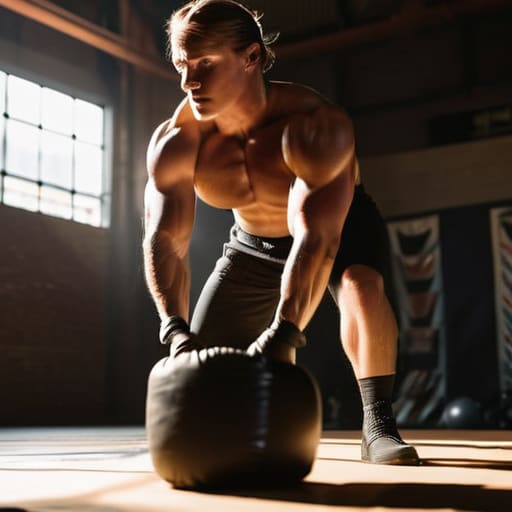
If you’re just hitting the bench press and hoping for the best, you’re missing the point. To actually move an opponent, your lifting needs to mimic the chaotic, multi-directional tension of a match. I’m a huge advocate for grappling specific strength training that prioritizes pulling and rotational movements over simple linear pushes. Think about it: when you’re fighting for a single leg or trying to snap someone down, you aren’t moving a barbell in a straight line; you’re fighting against a resisting, living force.
This is where we bridge the gap between gym strength and mat performance. Instead of standard bodybuilding splits, I want you to focus on movements that build explosive upper body power for wrestlers. This means incorporating things like heavy kettlebell cleans or weighted pull-ups that challenge your stability while you’re under load. We aren’t just chasing a pump; we are building a body that can react, grip, and overpower. If your training doesn’t make you feel more capable of controlling a human being, you’re likely just exercising, not training.
Explosive Upper Body Power for Wrestlers Fueling Every Shot

If you’re just moving weight from point A to point B in a slow, controlled manner, you’re missing half the battle. In a match, you don’t have the luxury of a tempo; you need to be able to snap an opponent down or explode into a double leg in a fraction of a second. This is where explosive upper body power for wrestlers becomes the difference between a controlled takedown and getting stuffed. I’m talking about movements that demand high velocity—think medicine ball slams or plyometric push-ups. You aren’t training for a bodybuilding stage; you’re training to be a spring-loaded weapon.
However, power is useless if you can’t hold onto what you’ve grabbed. I always tell my athletes that functional strength for wrestlers is useless if your hands fail you mid-scramble. You need to bridge the gap between raw force and control. Integrating heavy carries or towel pull-ups into your routine will build that necessary grip strength for combat sports, ensuring that once you secure a wrist or a collar tie, it stays secured. We aren’t just building muscle; we are building the ability to execute under pressure.
Hard Truths: 5 Ways to Build Upper Body Strength That Actually Works on the Mat
- Stop obsessing over the bench press alone. If you want to control an opponent, you need pulling strength. Incorporate heavy rows and weighted pull-ups to ensure you have the back strength to snap them down and hold them there.
- Grip strength isn’t an afterthought; it’s your lifeline. If your hands fail, your technique fails. Stop using straps for everything and start incorporating farmer’s carries and towel pull-ups to turn your hands into vices.
- Train for isometric stability. Wrestling isn’t just about moving weight from A to B; it’s about holding a position while someone is trying to rip you apart. Add pause reps to your lifts to build that “unshakeable” feeling in your core and shoulders.
- Don’t neglect your rotational power. Most wrestling movements happen on a diagonal or in a twist. If you’re only training in a straight line, you’re leaving strength on the table. Get some medicine ball slams and rotational landmine presses into your routine.
- Prioritize recovery as much as the lift. You can’t build strength if your nervous system is fried from overtraining. Fuel up with enough protein to repair the tissue, and don’t skip your mobility work—a stiff upper body is a slow upper body.
The Bottom Line: Building a Body That Performs
Stop training for aesthetics and start training for utility; every rep should serve the goal of controlling an opponent or maintaining a dominant position.
Prioritize a balance between raw pulling power and explosive pushing strength to ensure you aren’t just strong, but capable of reacting instantly during a scramble.
View your nutrition as the literal fuel for your recovery, because you can’t build the strength required for the mat if you’re running on empty.
Strength Beyond the Mirror
Stop training for the aesthetic and start training for the scramble; upper body strength in wrestling isn’t about how much you can bench, it’s about how much control you can maintain when you’re stuck in a tie-up and the clock is running out.
Tamsin Broadhurst
Putting the Work into Practice
At the end of the day, building wrestling-specific upper body strength isn’t about hitting a certain number on a bench press just to say you did it. It’s about the synthesis of everything we’ve discussed: developing the functional stability to control an opponent, the explosive power to finish a shot, and the grit to maintain your grip when your forearms are screaming. You need to bridge the gap between the weight room and the mat by ensuring your training is purposeful and movement-based. Don’t let your lifting sessions become a mindless grind; make sure every rep is serving the goal of making you a more capable athlete when the whistle blows.
I know how exhausting it is to balance heavy lifting with technical drilling, but remember that strength is a skill you earn through every single rep. There are no shortcuts to being the person who stays calm and powerful when a match gets chaotic. Stop training for aesthetics and start training for capability. Whether you’re a seasoned competitor or just starting your journey in the wrestling circle, show up with intention, fuel your body like it’s your most important piece of equipment, and trust the process. The mat doesn’t care about luck—it only cares about how much work you’ve put in.
Frequently Asked Questions
How do I balance heavy upper body lifting with my wrestling practice so I don't burn out or feel too stiff on the mat?
Listen, you can’t treat your lifting sessions and your mat time as two separate wars. If you’re redlining in the weight room and then trying to scrap in practice, you’re begging for burnout. I recommend a “heavy/light” split: prioritize your heavy compound lifts on days when practice is technical or lighter. On high-intensity wrestling days, keep the lifting focused on mobility and explosive, low-volume movements. We train to be capable, not exhausted.
Should I focus more on grip strength and forearm endurance or just stick to the big compound lifts like rows and presses?
Look, if you’re only doing heavy rows and presses, you’re leaving a massive gap in your performance. Compound lifts build the engine, but grip strength is the steering wheel. If your hands fail mid-match, it doesn’t matter how strong your back is—you won’t be able to control your opponent. Don’t ignore the small stuff. Integrate heavy carries and dedicated forearm work so your strength actually translates to the mat.
What are some ways to build functional pulling strength without spending hours doing nothing but pull-ups?
Look, if you spend your entire session just hanging from a bar, you’re missing the bigger picture. To actually control an opponent, you need variety. I swear by heavy rows—pendlay or single-arm dumbbell—to build that raw, pulling grit. Don’t overlook weighted chin-ups for pure force, but add in face pulls or towel pull-ups to mimic the grip demands of a real scramble. Build a pulling engine that works in every angle, not just one.
