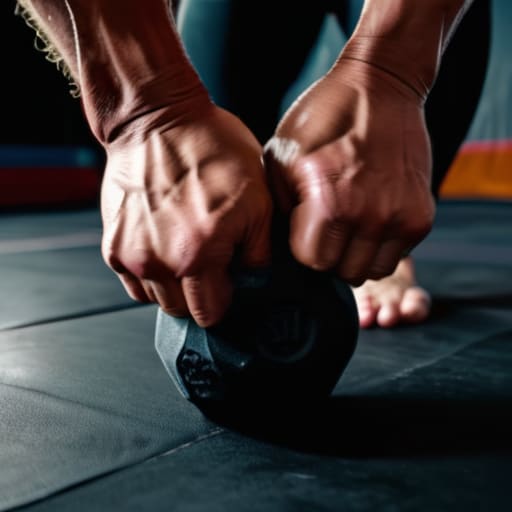
I remember sitting on a sweat-soaked mat in a basement gym during my early twenties, my lungs burning and my forearms screaming because I couldn’t hold a single clinch for more than three seconds. I had the cardio, and I had the explosive power, but the moment someone locked onto me, I just disintegrated. Most people will tell you that you just need more reps or a better conditioning circuit, but they’re missing the point entirely. If you want to stop being a passenger in your own matches, you need to stop chasing vanity metrics and start prioritizing wrestling isometric training. It’s the difference between being strong in a vacuum and being strong when someone is actively trying to break your posture.
I’m not here to sell you a complicated, twenty-step protocol or some overpriced gadget that promises overnight results. My goal is to give you the straight-up, science-backed truth about how to build the kind of structural integrity that actually holds up when the grind gets heavy. We are going to strip away the fluff and focus on how to use wrestling isometric training to turn your body into an unshakeable anchor. By the end of this, you’ll have a roadmap to build functional, combat-ready strength that translates directly to the mat.
Table of Contents
- Mastering Isometric Strength for Grapplers in the Heat of Battle
- Developing Functional Strength for Wrestlers Through Constant Tension
- My Non-Negotiable Tactics for Isometric Gains
- The Bottom Line: Turning Tension into Performance
- ## The Reality of the Grind
- The Grind Doesn't Lie
- Frequently Asked Questions
Mastering Isometric Strength for Grapplers in the Heat of Battle

When you’re deep in the third period and someone is trying to explode out of your snapdown, you aren’t moving through a full range of motion like you would on a bench press. You’re fighting to stay still. You’re fighting to hold a position. This is where isometric strength for grapplers becomes the difference between a controlled scramble and a total collapse. If you aren’t training your body to maintain tension under extreme stress, you’re going to find yourself gassing out the second someone tries to break your posture.
To actually see results, you need to move beyond basic planks and start implementing wrestling specific isometric exercises that mimic the grind. I’m talking about heavy, sustained holds—like a weighted pull-up hold at the top or isometric mid-thigh pulls—that force your nervous system to stay “on.” We aren’t just looking for muscle size here; we are building the kind of functional strength for wrestlers that allows you to squeeze through a tight clinch and stay anchored when the match gets chaotic. It’s about being unshakeable.
Developing Functional Strength for Wrestlers Through Constant Tension

When you’re deep in a scramble, you aren’t moving through a clean, rhythmic rep count. You’re fighting against a living, breathing force that is actively trying to unbalance you. This is where functional strength for wrestlers separates the people who look fit from the people who are actually hard to move. To bridge that gap, you have to embrace constant tension. Instead of just moving a weight from point A to point B, I want you to focus on the moments where everything stalls—the heavy clinch, the struggle to maintain a headlock, or the fight to stay upright during a shot.
Incorporating wrestling specific isometric exercises into your lifting sessions means teaching your nervous system to stay “on” even when you aren’t moving. Think about holding a heavy sandbag in a crushing bear hug or performing static pulls against an immovable object. These protocols force your muscles to recruit more fibers under duress, mimicking the grueling reality of mat wrestling conditioning. We aren’t training for aesthetics here; we are training to ensure that when you lock onto an opponent, your hold stays unbreakable regardless of how much they fight back.
My Non-Negotiable Tactics for Isometric Gains
- Stop chasing the pump and start holding the position. When you’re doing isometric holds, don’t just go through the motions; fight against the tension like you’re trying to break a tie-up. The more mental grit you apply to the hold, the more effective it becomes for the mat.
- Integrate “overcoming isometrics” into your heavy days. Instead of just moving a weight from A to B, find a barbell that’s pinned against safety bars and push or pull against it with 100% maximum effort for five to ten seconds. This builds that raw, explosive neurological drive you need when a match turns into a stalemate.
- Train your grip in ways that actually matter. Holding a heavy kettlebell is fine, but I want to see you performing isometric hangs or towel pull-ups. If your hands give out during a single leg, all the back strength in the world won’t save your shot.
- Don’t forget the core stability that keeps you from getting folded. Incorporate long-duration planks or hollow body holds, but do them with intention. You aren’t just “holding a plank”; you’re bracing your midsection to resist a heavy sprawl.
- Respect the recovery. Isometric training is brutal on the central nervous system because you’re asking your brain to recruit every single motor unit at once. If you’re redlining your nervous system with heavy holds every single day, you’re going to burn out before you even hit the tournament mat.
The Bottom Line: Turning Tension into Performance
Stop treating isometrics like a separate workout; use them to bridge the gap between your lifting sessions and the actual chaos of a match.
Focus on the specific holds that fail you in training—whether it’s maintaining a heavy sprawl or controlling a headlock—and build the capacity to stay rigid under pressure.
Prioritize quality of tension over the amount of time spent holding a position; if your form breaks down, you aren’t building strength, you’re just practicing how to fail.
## The Reality of the Grind
“In a match, you aren’t always moving through a full range of motion; half the time, you’re just fighting to keep someone from moving through yours. If you aren’t training that static, bone-deep tension, you’re going to fold the second the pressure hits.”
Tamsin Broadhurst
The Grind Doesn't Lie

At the end of the day, wrestling isn’t just about how much you can bench or how fast you can sprint; it’s about the ability to hold your ground when someone is trying to move you. By integrating targeted isometric holds and focusing on constant tension, you aren’t just building muscle—you’re building unshakeable stability. We’ve covered how these protocols translate directly to the mat, from maintaining a heavy snap-down to keeping your hips heavy during a scramble. Stop treating your strength training like a separate, aesthetic pursuit and start viewing it as the essential foundation for your technical performance.
I know the work is grueling. Holding a static position until your muscles scream for mercy isn’t “fun” in the traditional sense, but that’s where the real progress lives. Strength is a skill, and like any skill, it demands your presence and your patience. Don’t chase the quick fix or the flashy workout; instead, commit to the slow, steady process of becoming physically undeniable. When you step back onto that mat, let your strength be the thing that allows your technique to finally shine. Now, grab your electrolytes, get your mind right, and get to work.
Frequently Asked Questions
How do I balance heavy isometric holds with my regular explosive lifting sessions without burning out?
Don’t try to do both at max intensity in the same session. If you’re hitting heavy triples on your squats, save the isometric holds for a secondary day or tack them onto the end of a lighter session as finishers. Think of isometrics as your “structural reinforcement.” Use them to bridge the gap between your explosive power and your mat stability without frying your CNS before you even step into the room.
Should I be focusing more on static holds or dynamic isometrics to see better results on the mat?
Look, if you’re choosing between the two, you’re looking at it wrong. You need both, but for different reasons. Static holds are your foundation—they build that raw, unshakeable stability you need when you’re fighting to maintain a position. But dynamic isometrics? That’s where the magic happens for the mat. They bridge the gap between lifting weights and actually grappling, teaching your muscles to produce force through a full range of motion. Use both.
How much recovery time do I actually need between these high-tension isometric workouts?
Listen, because this is where most people trip up. Isometrics are brutal on your central nervous system, not just your muscles. If you’re hitting heavy, high-tension holds, you can’t just grind them every single day and expect to see progress. I recommend at least 48 to 72 hours between intense isometric sessions. If you feel sluggish or your grip strength is dipping, back off. Recovery isn’t laziness; it’s part of the training protocol.
