
I still remember the smell of stale sweat and industrial floor cleaner in those cramped basement gyms where I spent my early twenties. I spent years watching athletes chase “beach muscles” and follow overpriced, complicated supplement stacks that promised overnight transformations, only to see them gasping for air and getting snapped down the second a real match started. Most of the advice out there regarding wrestling muscle building is just noise designed to sell you something you don’t need. If you’re training to be a powerhouse on the mat, you don’t need a dozen different protein powders; you need functional mass that actually holds up when someone is trying to drive you through the canvas.
I’m not here to give you a fluff piece filled with gym-bro myths or aesthetic-only workouts. My goal is to strip away the nonsense and give you a blueprint based on exercise science and real-world mat experience. We are going to focus on building true capability through consistent, heavy lifting and smart, fuel-focused nutrition. I promise to show you how to train for strength that matters, ensuring every ounce of muscle you put on serves a purpose when the whistle blows.
Table of Contents
Mastering Wrestling Specific Hypertrophy for Mat Dominance

If you’re just chasing a pump in the mirror, you’re doing it wrong. To actually impact your performance on the mat, we need to focus on wrestling specific hypertrophy—building muscle that actually serves a purpose when you’re stuck in a sprawl or fighting for a single leg. This isn’t about being a bodybuilder; it’s about developing the structural integrity required to handle the chaotic, multi-planar forces of a live match. We aren’t just adding weight to the scale; we are adding utility to your frame.
To get there, your lifting needs to bridge the gap between raw size and functional output. I prioritize compound movements that force your stabilizer muscles to work alongside your prime movers. Think heavy pulls, unilateral lunges, and rotational work that mimics the tension of a clinch. This approach ensures your functional strength for grappling stays ahead of your fatigue levels. If you can build the mass without sacrificing your ability to move fluidly, you’ll find yourself much harder to move once the whistle blows.
Functional Strength for Grappling and Controlled Power
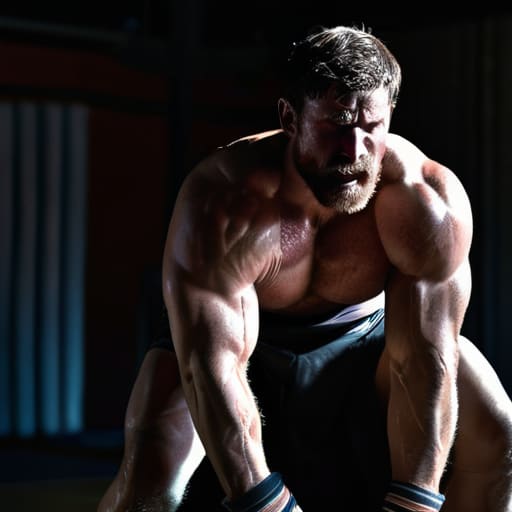
When we talk about building mass, we can’t just chase a number on a scale or a pump in the mirror. In grappling, useless weight is just extra baggage that drains your gas tank. To be effective, your training needs to prioritize functional strength for grappling—the kind of strength that translates when someone is trying to snap your head down or sprawl on your shot. I’m talking about isometric holds, heavy carries, and movements that force your entire kinetic chain to work as a single, unified unit.
You also have to bridge the gap between raw strength and explosive power development. It’s one thing to grind out a heavy deadlift in the gym, but it’s another thing entirely to explode into a double-leg takedown when your lungs are burning. This is where true strength and conditioning for wrestlers comes into play. We aren’t just lifting to get big; we are training to ensure that every ounce of muscle you carry is capable of generating force exactly when the match is on the line. Stop training like a bodybuilder and start training like an athlete.
The Blueprint for Mat-Ready Muscle
- Prioritize compound movements over isolation machines. If you aren’t squatting, deadlifting, or pressing heavy, you aren’t building the kind of functional mass that actually helps you finish a takedown.
- Stop treating protein like an afterthought. If you want to build muscle while enduring grueling practice sessions, you need to hit your protein targets consistently to repair the damage you’re doing on the mat.
- Don’t chase a “pump” at the expense of performance. I see too many people doing high-rep fluff work; focus on heavy, quality sets that build dense, usable strength rather than just looking big in the mirror.
- Respect the recovery cycle. You don’t grow in the gym; you grow while you sleep. If you’re pulling double sessions and skipping rest days, you’re just burning muscle instead of building it.
- Fuel for the work required. Stop trying to cut calories while you’re in a heavy hypertrophy phase. You need real, nutrient-dense fuel to power your lifts and keep your energy from cratering mid-match.
The Bottom Line: Building a Body That Works
Stop chasing a “gym body” and start chasing capability; focus on hypertrophy that actually translates to holding a tie-up or powering through a takedown.
Consistency beats intensity every single time—you don’t build wrestling-grade strength through one-off hero workouts, but through disciplined, repeatable programming.
Treat your nutrition as fuel, not a math problem; if you aren’t eating enough to support your recovery and muscle growth, you’re leaving performance on the mat.
## Fueling the Grind
“Don’t train just to add size for the sake of a mirror; train to build the kind of dense, functional muscle that makes you impossible to move when you’re locked in a tie-up.”
Tamsin Broadhurst
Building Your Foundation

At the end of the day, building muscle for wrestling isn’t about chasing a pump or looking good in the mirror; it’s about creating a body that can withstand the grind. We’ve covered how to balance hypertrophy with the explosive, functional power required for the mat, and how to treat your nutrition as the essential fuel for that recovery. Remember, you can’t out-train a bad diet, and you certainly can’t out-work a lack of structured programming. If you focus on progressive overload and eating to support your output, the physical changes will follow as a byproduct of your increased functional capability.
Don’t let the complexity of sports science intimidate you into paralysis. Strength is a skill, and like any skill you’ll learn in the wrestling room, it requires patience and a refusal to quit when the sessions get heavy. Whether you are stepping onto the mat for the first time or you are a seasoned veteran looking to reclaim your edge, show up with intention. Stop training for aesthetics and start training to be unshakeable. Build the kind of strength that doesn’t just look impressive, but actually dominates the landscape of your sport. Now, grab your shaker bottle and get to work.
Frequently Asked Questions
How do I balance heavy lifting sessions with the high cardio demands of a wrestling practice without burning out?
Listen, this is where most people trip up. You can’t treat your body like a bottomless pit of energy. To avoid hitting a wall, you have to periodize. If you have a heavy mat session scheduled, dial back the volume in the weight room. Focus on high-quality, low-rep strength rather than grinding through endless hypertrophy sets. Most importantly, eat. If you aren’t fueling for both, you aren’t training; you’re just digging a hole.
Should I be focusing on a massive caloric surplus to gain weight, or is there a better way to build muscle without losing my agility on the mat?
Look, if you go into a massive caloric surplus, you’re just going to feel heavy, sluggish, and out of breath by the second period. You don’t want to be a tank that can’t turn. Aim for a lean surplus—just enough to fuel growth without the unnecessary fat gain. Focus on high-quality protein and timed carbohydrates to support your training. We’re training for capability here, not just to move a number on the scale.
What are the best ways to train for explosive muscle power so I don't feel "heavy" or sluggish during live wrestling rounds?
If you’re feeling sluggish, you’re likely training for size but neglecting your rate of force development. To stay snappy, stop grinding through slow, heavy reps every single day. Incorporate plyometrics and Olympic lift variations—think cleans or kettlebell swings—to teach your nervous system to fire fast. We want explosive, reactive muscle, not just dead weight. Train for speed and power so you can explode into a shot without feeling like you’re moving through sludge.
