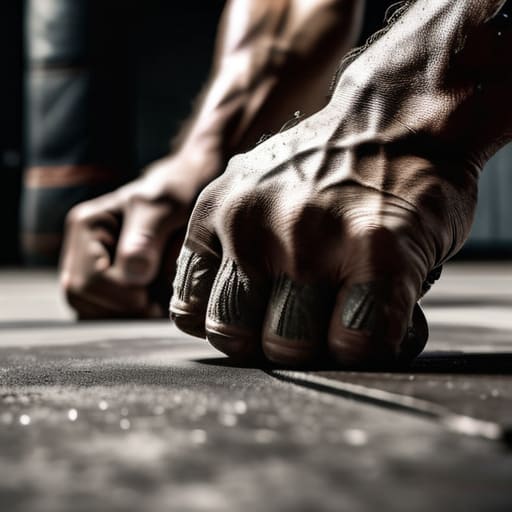
I still remember the smell of stale sweat and old mats in the basement gym where I spent my early twenties, gasping for air after a grueling wrestling session. I’d spent hours trying to follow those “elite athlete” programs I found online, only to realize they were designed for bodybuilders, not people trying to survive a scramble on the mats. Most of the advice out there regarding combat sports lifting is either way too complicated or focused on looking good in a mirror rather than being able to actually control an opponent. We don’t need more flashy, high-volume fluff; we need to build a body that doesn’t break when the pressure hits.
I’m not here to sell you a magic pill or a twenty-step supplement stack. My goal is to strip away the noise and give you a blueprint based on science and real-world grit. I’m going to show you how to structure your training so you’re building functional, explosive power without burning out before your next fight. We are going to focus on lifting for capability and consistency, ensuring every rep you perform in the weight room translates directly to your performance on the mats.
Table of Contents
- Building Explosive Movement Patterns Through Intentional Strength Training
- Functional Strength for Grappling Developing Unshakeable Stability
- Stop Guessing and Start Building: 5 Non-Negotiables for Your Lifting Program
- The Bottom Line: Training for the Long Game
- Strength is Your Foundation
- The Long Game of Capability
- Frequently Asked Questions
Building Explosive Movement Patterns Through Intentional Strength Training

If you’re just grinding out slow, heavy reps in a vacuum, you aren’t preparing for a fight; you’re just building slow muscle. In the ring or on the mats, power isn’t about how much you can move once—it’s about how fast you can apply force when a scramble breaks out. To bridge the gap between the weight room and the mat, we have to focus on explosive movement patterns that translate to real-world impact. This means moving from the concentric phase of a lift with absolute intent.
I don’t want you just “lifting weights”; I want you to train your nervous system to fire rapidly. Integrating plyometric exercises for fighters—like box jumps or medicine ball slams—into your routine helps prime that neuromuscular connection. This isn’t about mindless jumping, though. It’s about controlled, violent bursts of energy that mimic a takedown or a heavy strike. When we prioritize this kind of training, we aren’t just chasing aesthetics; we are developing the functional strength for grappling that allows you to dominate a position rather than just holding onto it.
Functional Strength for Grappling Developing Unshakeable Stability

If you’ve ever been stuck in a bad position on the mats, you know that strength isn’t just about how much you can bench; it’s about how well you can hold your ground when someone is trying to move you. In grappling, your core and stabilizers are your primary line of defense. I tell my athletes to stop chasing vanity metrics and start focusing on functional strength for grappling by prioritizing multi-planar movements. You need to be able to resist force from unexpected angles, which means your training has to move beyond the standard sagittal plane.
To build that unshakeable base, I lean heavily into unilateral work and isometric holds. Think heavy Bulgarian split squats or weighted carries that force your midsection to fight for stability. This isn’t just about muscle size; it’s about injury prevention for combatants. When your stabilizers are conditioned to handle heavy, awkward loads, you aren’t just harder to sweep—you’re significantly less likely to snap something when a scramble goes sideways. We train to be durable, because a strong body is useless if it’s too broken to step back onto the mats.
Stop Guessing and Start Building: 5 Non-Negotiables for Your Lifting Program
- Prioritize compound movements over isolation work. I don’t care how much you can curl; if you aren’t squatting, deadlifting, or pressing heavy loads, you aren’t building the foundational strength required to control an opponent on the mat.
- Train for intent, not just fatigue. It’s easy to go through the motions and just “get tired,” but in combat sports, speed matters. Move the weight with aggression and purpose during your concentric phase so your nervous system learns to fire when it actually counts.
- Respect the recovery-to-intensity ratio. You can’t go 100% in the gym and 100% on the mats every single day without hitting a wall. Use your lifting sessions to supplement your technical skill work, not to completely drain your gas tank before your next sparring session.
- Fuel the movement, don’t just restrict calories. If you’re trying to make weight by starving yourself, your strength training will suffer and your injury risk will skyrocket. Eat enough protein and complex carbs to actually repair the muscle tissue you’re breaking down.
- Build “anti-movement” stability. Grappling is essentially a constant battle against being moved. Incorporate carries, rotational stability work, and core exercises that teach you how to resist external forces rather than just crunching your abs.
The Bottom Line: Training for the Long Game
Stop training just to look a certain way; every rep in the gym needs to translate to a movement on the mats or in the ring.
Consistency beats intensity every single time—don’t hunt for “magic” workouts, just build a sustainable routine that fuels your recovery.
Treat your nutrition as performance fuel, not a math problem, so you actually have the energy to execute the strength you’ve built.
Strength is Your Foundation
Stop training to look good in a mirror and start training to be impossible to move; in the ring, your strength isn’t an aesthetic, it’s your primary line of defense.
Tamsin Broadhurst
The Long Game of Capability

At the end of the day, combat sports lifting isn’t about chasing a specific aesthetic or hitting a PR just for the sake of the ego. It’s about the synthesis of everything we’ve discussed: developing that explosive power for your strikes, building the unshakeable stability required to hold a position in a scramble, and fueling your body so you don’t redline after the first round. When you stop viewing the weight room and the mats as two separate worlds and start seeing them as one cohesive training environment, that is when your performance actually shifts. You aren’t just lifting weights; you are building the physical tools necessary to execute your technique under pressure.
Don’t let the complexity of programming or nutrition intimidate you into paralysis. Strength is a skill, and like any skill you pick up in the wrestling ring, it requires relentless consistency rather than occasional bursts of intensity. There will be days when the bar feels heavy and your recovery feels sluggish, but that is where the real work happens. Show up, follow the plan, and trust the process. We don’t train to look a certain way; we train to be capable of anything the fight throws at us. Now, get to work.
Frequently Asked Questions
How do I balance heavy lifting sessions with my technical drilling without burning out?
Stop treating your training like a zero-sum game. If you’re redlining in the weight room and then trying to hit technical nuances on the mats, you’re asking for an injury. I tell my athletes to prioritize: if it’s a heavy lifting day, keep your drilling technical and low-impact. Don’t go 100% on both simultaneously. Listen to your CNS; if your movement feels sluggish, scale the intensity back. Train to be capable, not just exhausted.
Should I be focusing more on maximal strength or explosive power if my main goal is grappling?
If you’re purely grappling, you can’t afford to pick just one, but if you have to prioritize, start with maximal strength. You need that raw force production to control an opponent’s weight and hold your ground. Think of maximal strength as your foundation; without it, you’ll have nothing to convert into power. Once you’ve built that base, we’ll layer on the explosive work to make sure that strength actually translates to the mat.
What are the best ways to fuel my body for high-intensity training days versus recovery days?
Stop treating your nutrition like a guessing game. On high-intensity days, think of food as high-octane fuel; prioritize complex carbs and adequate protein to power those explosive movements and prevent crashing mid-session. On recovery days, dial back the heavy carbs but don’t starve yourself. Focus on nutrient-dense fats and steady protein to repair tissue. We eat to support the work we do, not just to hit a number on a scale.
