
I still remember the smell of stale sweat and industrial floor cleaner in those cramped basement gyms where I spent my early twenties. I can still feel that specific, grinding ache in my hips after a heavy session of live drilling—the kind of stiffness that makes you feel like your joints are made of rusted iron rather than bone and muscle. For a long time, I thought that being “tough” meant just powering through the tightness, but I quickly learned that ignoring your wrestling-specific mobility is the fastest way to end up on the sidelines with a preventable injury. You can have all the grit in the world, but if your body can’t actually function in a sprawl or a deep shot, that grit won’t save you.
I’m not here to sell you on some expensive, thirty-minute flow or a “magic” stretching routine that feels good but does nothing for your performance. We’re going to focus on movement that actually translates to the mat. My goal is to give you a straightforward, science-backed approach to building a body that is as resilient as it is strong.
Table of Contents
- Functional Movement for Wrestlers Building Capability for the Grind
- Grappling Injury Prevention Through Consistent Purposeful Movement
- Five Non-Negotiables for Staying Fluid on the Mat
- The Bottom Line: Training for Longevity and Leverage
- Mobility is More Than Just Stretching
- The Long Game of Movement
- Frequently Asked Questions
Functional Movement for Wrestlers Building Capability for the Grind

When we talk about functional movement for wrestlers, I’m not talking about touching your toes for thirty seconds and calling it a day. If you want to actually perform under pressure, your mobility needs to be active, not passive. We need to focus on improving wrestling stance mobility so that when you’re deep in a sprawl or fighting for hand control, your hips aren’t a massive liability. If your joints can’t handle the awkward angles of a scramble, you’re essentially asking for a setback.
I’ve seen too many athletes focus solely on strength while ignoring the connective tissue demands of the sport. This is where mat-based mobility drills become non-negotiable. I like to integrate movements that mimic the chaotic nature of a match—think deep lunges with thoracic rotations or lateral movements that challenge your stability. This isn’t just about being “bendy”; it’s about grappling injury prevention. We train our bodies to absorb force and move through uncomfortable ranges of motion so that when the grind hits, your movement remains a tool rather than a weakness.
Grappling Injury Prevention Through Consistent Purposeful Movement

If you’ve spent any time on the mat, you know that injuries don’t usually happen during a clean drill; they happen when you’re caught in an awkward position, trying to recover from a bad shot or a heavy sprawl. Most people treat grappling injury prevention as an afterthought, something they do only after they feel a tweak in their neck or a pull in their hip. That’s a mistake. Real longevity comes from treating your movement patterns as your primary line of defense. You aren’t just stretching to get flexible; you are training your body to handle the chaotic, unpredictable loads that come with being under pressure.
This is why I’m such a stickler for mat-based mobility drills that actually mimic the demands of a match. Standing still and touching your toes isn’t going to help you when someone is trying to snap your head down. You need to integrate movement that challenges your stability in deep, loaded positions. Whether it’s working on your hip internal rotation or stabilizing your core while moving through different planes, every rep should have a purpose. We aren’t just moving to move; we are building a body that is resilient enough to stay in the fight.
Five Non-Negotiables for Staying Fluid on the Mat
- Prioritize hip internal rotation over everything else. If your hips are locked up, you aren’t just slow—you’re vulnerable to getting caught in awkward positions that end in injury. Don’t just stretch; work on active control so you can actually use that range when someone’s trying to break your posture.
- Stop treating your thoracic spine like an afterthought. We spend so much time hunched over in defensive stances or fighting for underhooks that our upper backs turn into concrete. If you can’t rotate your mid-back, your lower back is going to pay the price.
- Build ankle mobility to save your knees. Wrestling demands constant explosive movements from weird angles. If your ankles are stiff, your body will compensate by putting undue stress on your joints, and that’s a fast track to a meniscus tear.
- Focus on active end-range strength, not just passive stretching. It’s one thing to sit in a split for a minute; it’s another thing entirely to be able to stabilize your body when you’re caught in a scramble. You need to be strong in the positions where you’re most vulnerable.
- Integrate mobility into your warm-up, not as a separate chore. If you wait until after a grueling two-hour practice to try and “fix” your stiffness, you’ve already lost. Treat your movement prep like the skill it is—use it to prime your nervous system for the grind ahead.
The Bottom Line: Training for Longevity and Leverage
Stop treating mobility as a warm-up chore; treat it as a foundational skill that directly dictates how much force you can apply on the mat.
Consistency beats intensity every single time—five minutes of purposeful, focused movement daily will do more for your injury prevention than one massive stretching session a week.
Mobility isn’t about being “flexible” for the sake of it; it’s about maintaining the control and range of motion required to stay strong through every scramble and snap-down.
Mobility is More Than Just Stretching
“If you’re just sitting in a static stretch waiting for your hips to loosen up, you’re missing the point. In wrestling, mobility isn’t about being flexible for the sake of it; it’s about having the control to move through awkward angles without snapping or stalling when the pressure hits.”
Tamsin Broadhurst
The Long Game of Movement
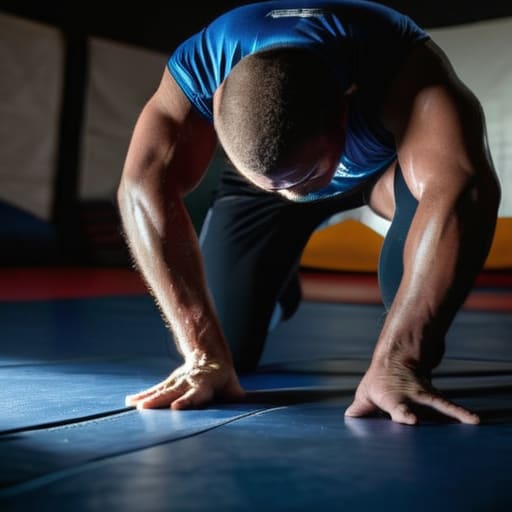
At the end of the day, wrestling-specific mobility isn’t some luxury you add on when you have extra time; it is a fundamental part of your training load. We’ve talked about why you can’t just go through the motions and why treating your movement like a functional skill is the only way to stay ahead of the grind. Whether you are working on hip opening to prevent those nasty injuries or improving thoracic rotation to stay explosive during a scramble, remember that consistency is your only real leverage. You can’t expect to be fluid on the mat if you’re treating your mobility like an afterthought in the weight room.
I know it’s tempting to skip the stretching and head straight for the heavy sets, but I want you to shift your perspective. We don’t train for aesthetics, and we don’t train just to check a box. We train to be capable of handling whatever the person across from us throws our way. Building a body that moves well is what allows you to push your limits without breaking. So, grab your electrolytes, get on the mat, and commit to the work. Strength is built through repetition, and that includes the way you move.
Frequently Asked Questions
How much time should I actually spend on mobility work versus my heavy lifting sessions?
Look, I get the urge to rush straight to the rack, but don’t treat mobility like an afterthought. I treat my mobility work as a prerequisite, not a luxury. Aim for 10–15 minutes of purposeful movement as part of your warm-up to prime your nervous system, and then slot in another 15–20 minutes of restorative work on your off-days or post-lift. If you’re skipping it to squeeze in more sets, you’re just borrowing time from your future injuries.
I feel really tight in my hips after drilling; should I be stretching them immediately or waiting until after my workout?
Listen, I get it—that post-drill hip tightness feels like your pelvis is made of concrete. If you’re feeling that immediate, sharp tension, don’t go diving into intense, static stretching right away; you don’t want to aggravate an already stressed joint. Instead, focus on some light, active mobility or restorative yoga movements to flush the area. Save the deep, long-hold stretches for after your full session when your muscles are warm and ready to actually release.
Can I use mobility drills to help with my gas tank, or is that strictly for injury prevention?
Think of mobility as the foundation for your efficiency. If you’re stiff, you’re fighting your own body every time you shoot for a takedown or scramble, which burns through your gas tank way faster than necessary. While mobility isn’t cardio, it makes your movement economical. When you move fluidly instead of grinding through awkward, tight positions, you save energy. Better range of motion means less wasted effort, and less wasted effort means more gas in the tank.
