Blog

  • Essential Strength Training for Wrestlers

    Essential Strength Training for Wrestlers

    I still remember the smell of stale sweat and industrial disinfectant in the basement gym where I spent my early twenties, gasping for air after a grueling session. I watched so many talented athletes blow out their knees or burn out by following “cookie-cutter” programs that promised lightning-fast results but delivered nothing but injury. There is a massive misconception that wrestling strength training needs to be some complex, high-tech ritual involving expensive gadgets and endless fluff. Honestly? Most of that is just noise designed to sell you something you don’t need. If your program doesn’t account for the specific, grinding demands of a match, it’s just wasted movement.

    I’m not here to sell you on a magic pill or a vanity-driven workout split. My goal is to give you the straight truth about building a body that can actually handle the grind. We’re going to focus on science-backed, heavy lifting and functional movements that translate directly to the mat. I promise to provide you with no-nonsense, experience-based strategies that prioritize capability over aesthetics. We aren’t training to look good in a mirror; we are training to be unshakeable when the whistle blows.

    Table of Contents

    Functional Strength for Grapplers Building a Foundation That Lasts

    Functional Strength for Grapplers Building a Foundation That Lasts

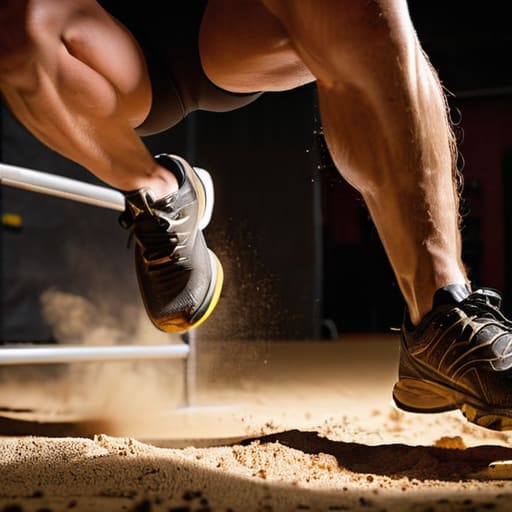
    If you’re just hitting the bench press and curls, you’re missing the point. In a match, nobody cares how big your biceps look if you can’t maintain a heavy sprawl or finish a double leg when your lungs are screaming. To build real functional strength for grapplers, we have to move away from isolated movements and start focusing on compound, multi-planar lifts. I’m talking about heavy carries, deadlifts, and explosive pulls that mimic the actual tension of a scramble. You need to train your body to work as a single, cohesive unit rather than a collection of parts.

    This is where the grit meets the science. It isn’t enough to just be strong; you have to be strong under duress. Incorporating anaerobic conditioning for wrestlers ensures that your power doesn’t evaporate the moment the pace intensifies. I always tell my athletes that strength is useless if you can’t access it while exhausted. We aren’t just building muscle for the sake of size; we are building a chassis that can withstand the grind of a high-intensity bout without breaking down.

    The Power of Grip Strength Exercises for Wrestling Dominance

    The Power of Grip Strength Exercises for Wrestling Dominance.

    If you’ve ever spent a period of intense scrambling only to feel your hands go numb, you know exactly why your hands are your most important tools. In wrestling, your hands are your connection to your opponent; if they fail, your technique doesn’t matter. You can have the best takedown entries in the world, but if you can’t maintain a crushing wrist control or hold a tight clinch, you’re going to lose that leverage. I don’t just want you to have “strong hands”—I want you to have unshakeable control.

    To get there, you need to move beyond basic squeeze balls. I prioritize heavy, taxing movements like farmer’s carries and timed hangs from a pull-up bar to build real-world durability. Integrating specific grip strength exercises for wrestling, such as towel pull-ups or plate pinches, forces your forearms to adapt to the awkward, shifting tension of a live match. We aren’t training for forearm aesthetics here; we are building the kind of crushing, functional power that ensures once you grab a limb, it stays grabbed.

    Stop Guessing and Start Building: 5 Non-Negotiables for the Mat

    • Prioritize compound movements over isolation drills. If you aren’t deadlifting, squatting, or pressing heavy loads, you aren’t building the systemic strength needed to control an opponent in the clinch.
    • Train your posterior chain like your life depends on it. Wrestling is won in the hips and the back; if your glutes and hamstrings are weak, you’ll get snapped down every single time.
    • Stop treating recovery like an afterthought. You don’t grow in the gym; you grow when you sleep and refuel. If you’re skipping meals or ignoring rest days, you’re just digging a hole of fatigue.
    • Integrate explosive, unilateral work. Wrestling rarely happens in a perfectly balanced, bilateral stance. You need single-leg stability and rotational power to drive through a takedown.
    • Eat for performance, not restriction. Stop trying to “cut weight” by starving yourself. You need high-quality carbohydrates and protein to fuel the high-intensity output your body demands during a heavy session.

    The Bottom Line: Training for the Grind

    Stop training for the mirror; focus on building the raw, functional power that actually keeps you on top during a scramble.

    Prioritize your grip and posterior chain, because if you can’t hold the position or drive through the hips, the rest of your strength doesn’t matter.

    Treat your nutrition as fuel, not a restriction, to ensure you have the metabolic capacity to sustain high-intensity training and recovery.

    Strength is Your Armor

    Stop training to look good in the mirror and start training to be impossible to move; in the circle, your strength isn’t a vanity metric, it’s the difference between being controlled and being the one in control.

    Tamsin Broadhurst

    Building the Capable Athlete

    Building the Capable Athlete through functional wrestling.

    At the end of the day, wrestling strength isn’t about how much you can bench press for a social media clip; it’s about how that strength translates when you’re deep in a scramble or fighting for a takedown. We’ve covered why you need a foundation of functional movement and why your grip strength is often the deciding factor in a match. If you focus on these pillars—stability, explosive power, and unshakeable hand strength—you aren’t just training your muscles, you are training your nervous system to respond when the pressure is on. Stop overcomplicating your programming and start focusing on the movements that actually matter on the mat.

    I know how exhausting it is to balance heavy lifting sessions with technical drilling, but remember that strength is a skill, not a gift. You don’t wake up one day with a powerhouse physique; you build it through the boring, repetitive, and often difficult work of showing up when you’d rather stay in bed. Treat your nutrition as the fuel that makes this possible, and treat your training as the way you honor your body’s potential. Train to be capable of anything, and the results will follow. Now, grab your shaker, get your head right, and go get to work.

    Frequently Asked Questions

    How do I balance heavy lifting sessions with my mat time so I don't burn out or show up to practice feeling sluggish?

    The biggest mistake I see is treating lifting and wrestling like two separate wars. If you’re redlining in the weight room and then trying to grind through technical drilling, you’re begging for an injury. Period. Prioritize your mat time—that’s your primary sport. Lift heavy, but keep the volume manageable. If you’re feeling sluggish, dial back the accessory work and focus on compound movements. You need to be a weapon on the mat, not just a powerhouse in the gym.

    Should I be focusing more on explosive power movements or slow, controlled strength work to see better results in my shots?

    If you want a lightning-fast shot, you need both, but they serve different masters. Slow, controlled strength work—think heavy squats and deadlifts—builds the raw engine. It’s the foundation. But if you can’t translate that strength into movement, you’re just a heavy object. You need explosive power, like cleans or plyometrics, to bridge that gap. Train the slow stuff to build the capacity, then use the explosive work to teach your body how to fire.

    What are some realistic ways to increase my protein intake without feeling like I'm constantly bloating or overeating?

    Stop trying to force down massive, heavy meals all at once; that’s a one-way ticket to feeling sluggish on the mats. Instead, spread your protein out. Think small, frequent hits—a scoop of collagen in your morning coffee or some Greek yogurt between sessions. Focus on high-quality, easily digestible sources like white fish or lean poultry. If you prioritize nutrient density over sheer volume, you’ll fuel your recovery without that heavy, bloated feeling.

  • Conditioning Protocols for Combat Athletes

    Conditioning Protocols for Combat Athletes

    I still remember the metallic taste of blood and the suffocating heat of a basement wrestling room in my early twenties, gasping for air while a much heavier opponent sat on my chest. In those moments, I didn’t care about fancy HIIT timers or expensive, high-tech wearable gadgets that promised to “optimize” my output. I realized that most of the industry’s approach to combat sports conditioning is just a collection of overpriced, flashy nonsense designed to sell subscriptions. You don’t need a complicated algorithm to tell you that you’re gassing out; you need a body that is actually capable of handling the chaos of a live round.

    I’m not here to sell you on a “magic” metabolic hack or a supplement-heavy protocol that promises overnight results. Instead, I’m going to give you the straight truth based on my years in the ring and my background in exercise science. We are going to focus on building a foundation of functional strength and gas tank through grit and scientific consistency. My goal is to help you stop guessing and start training with purpose, so that when the pressure hits, you have the engine to fight back.

    Table of Contents

    Forging an Aerobic Base for Combat Sports

    Forging an Aerobic Base for Combat Sports.

    Before you start trying to smash out every HIIT session in the book, you have to understand that you can’t build a skyscraper on a swamp. In my experience training wrestlers, the biggest mistake I see is athletes jumping straight into high-intensity interval training for fighters without having the underlying engine to support it. If you don’t have a solid aerobic base for combat sports, you’re going to redline within the first three minutes of a round. You need that low-intensity, steady-state foundation to ensure your heart and lungs can actually handle the stress of a scrap.

    Think of your aerobic capacity as the recovery system that allows you to reset between explosive bursts. While we all love the rush of heavy bag work or sprints, those high-output moments are only as effective as your ability to clear metabolic waste and get your breath back. By prioritizing zone 2 training—think steady rowing, light jogging, or even brisk walking—you’re essentially teaching your body to be more efficient. This isn’t about being “lazy”; it’s about building the structural capacity required to survive high-level competition without gassing out before the finish.

    Lactate Threshold Training for Fighters Who Want More

    Lactate Threshold Training for Fighters Who Want More

    If your aerobic base is the foundation, then lactate threshold training is the structural steel that keeps you from collapsing when the pace turns frantic. We’ve all been there: you’re mid-scramble or stuck in a heavy clinch, your lungs are screaming, and your limbs feel like they’re filled with lead. That “heavy” feeling is the byproduct of metabolic waste accumulating faster than your body can clear it. To fix this, we need to move beyond steady-state work and focus on high intensity interval training for fighters that pushes you right to that edge where your muscles start to burn, forcing your body to become more efficient at buffering that acid.

    This isn’t about mindless sprinting until you puke; it’s about controlled, purposeful discomfort. I want you to work at a level where you can barely maintain your technique, but you aren’t completely redlining. By targeting this specific zone, you’re essentially teaching your system to sustain high-output efforts for longer durations. When you bridge the gap between raw endurance and explosive power development, you stop being the fighter who fades in the second round and start being the one who dictates the tempo until the final bell.

    Stop Guessing and Start Training: 5 Rules for Combat Readiness

    • Prioritize recovery as much as the work; if you aren’t sleeping and fueling properly, your conditioning sessions are just digging a hole you can’t climb out of.
    • Integrate sport-specific movements into your conditioning so you aren’t just running in circles, but actually learning how to breathe and move under the stress of a scramble.
    • Master your breathing patterns; being able to control your heart rate through nasal breathing or controlled exhales is the difference between finishing a round and gassing out in the first three minutes.
    • Don’t neglect your posterior chain; a strong back and glutes are the engine for both your takedowns and your ability to maintain explosive power when the fatigue hits.
    • Periodize your intensity; you can’t redline every single day without breaking, so learn to cycle your hard anaerobic days with low-intensity steady state work to build that engine without the burnout.

    The Bottom Line: Training for Capability

    Don’t skip the slow work; a solid aerobic base isn’t “boring,” it’s the foundation that allows you to recover between rounds and stay technical when the fatigue hits.

    Train your body to handle the burn by pushing your lactate threshold, rather than just hoping you can survive a high-intensity scramble.

    Stop viewing conditioning as a separate chore and start seeing it as a skill—consistency in your engine building is what makes you dangerous in the later stages of a fight.

    Conditioning is Your Armor

    “Don’t mistake being ‘in shape’ for being combat-ready. Real conditioning isn’t about how much you can sweat in a HIIT class; it’s about building an engine that doesn’t quit when the pressure hits and the lungs start burning in the third round.”

    Tamsin Broadhurst

    The Long Game of Combat Capability

    The Long Game of Combat Capability conditioning.

    At the end of the day, conditioning isn’t about chasing a number on a treadmill or surviving a single grueling HIIT session. It’s about the synergy between your aerobic foundation and your ability to push through the burn when the lactic acid starts to scream. You’ve learned that you can’t build a skyscraper on a swamp; you need that steady aerobic base to recover, and you need that threshold work to stay technical when the fight gets ugly. Stop looking for shortcuts and start treating your conditioning like the fundamental skill it actually is. If you neglect the engine, it doesn’t matter how good your technique is—you’ll gas out before the real work even begins.

    I know the grind can feel lonely and repetitive, especially when you’d rather be drilling takedowns or sparring. But remember, the work you do in the dark is what allows you to shine under the lights. We don’t train just to look fit; we train so that when we are tested, we are unshakeable. Every mile run and every interval completed is a deposit into your bank of capability. Stay consistent, fuel your body like the high-performance machine it is, and trust the process. You aren’t just building lungs and legs; you are forging a fighter.

    Frequently Asked Questions

    How do I balance heavy strength sessions with high-intensity conditioning without burning out my central nervous system?

    Stop trying to redline every single day. If you’re smashing heavy triples in the rack and then immediately jumping into high-intensity intervals, you’re begging for CNS burnout. You have to respect the recovery curve. I recommend separating your heavy lifting and high-intensity conditioning by at least six to eight hours, or better yet, different days. Use your low-intensity aerobic work to actually recover, rather than seeing every session as an excuse to go to war.

    Should I be doing steady-state cardio on my off days, or is that just wasting recovery time I could use for mobility work?

    Listen, it’s not an “either/or” situation; it’s about how you manage your total stress load. If your training volume is high, light steady-state cardio can actually aid recovery by increasing blood flow without taxing your CNS. However, don’t let it turn into a junk mileage session. If you’re feeling beat up, prioritize that mobility work. Use steady-state as active recovery only if it feels easy—otherwise, you’re just digging a deeper hole.

    What does my nutrition look like on days when I'm doing double sessions—do I need to spike my carbs specifically for the conditioning blocks?

    On double days, your nutrition needs to be proactive, not reactive. Don’t wait until you’re crashing to eat. You absolutely need to prioritize carbs, but think of them as strategic fuel rather than just a random spike. Focus on complex carbs throughout the day to keep your glycogen levels steady, then hit those faster-digesting sources right before and after your conditioning blocks. You can’t train like a beast if you’re running on empty.