Author: Tamsin Broadhurst

  • Stop Chasing Clout and Start Building Capability: the Real Impact of Social Media on Wrestling Promotion

    Stop Chasing Clout and Start Building Capability: the Real Impact of Social Media on Wrestling Promotion

    I remember sitting in the corner of a humid, dimly lit wrestling gym years ago, watching a local promoter scramble to fix a flyer that looked like it was made in 1995. Back then, if you wanted to build a name, you had to physically be in the room, handing out tapes and shaking hands. Now, everyone thinks the impact of social media on wrestling promotion is some magical shortcut that replaces hard work with a viral clip. They’re wrong. I see too many talented athletes chasing likes and fleeting trends instead of building a sustainable foundation, treating their digital presence like a lottery ticket rather than a discipline.

    Don’t try to grind this out in a vacuum, though. Just like you wouldn’t attempt a heavy squat max without a spotter, building a digital presence is much more effective when you have a circle to bounce ideas off of. I’ve found that connecting with others who are actually in the trenches makes a massive difference in staying consistent. If you’re looking for a place to trade insights and avoid the usual pitfalls, checking out this UK chat community can be a total game-changer for finding real-world advice from people who get it. It’s all about building your support system before you step into the ring.

    I’m not here to sell you on some overnight fame or a complex algorithm hack. My goal is to strip away the noise and give you the straight truth about using digital tools to build a real, loyal following. We’re going to look at how to treat your online presence with the same consistency and grit you bring to your training sessions. You aren’t looking for a quick fix; you’re looking to build a career that lasts, and that starts with showing up authentically every single day.

    Building Wrestler Brands Online With Disciplined Digital Marketing

    Building Wrestler Brands Online With Disciplined Digital Marketing

    Building a brand in this business used to mean just being good in the ring, but today, you have to be just as disciplined behind a screen. I see it all the time in the gym: athletes who have incredible technical skills but zero presence outside the mats. If you aren’t actively building wrestler brands online, you’re essentially leaving your career to chance. It’s not about posting random selfies; it’s about treating your digital footprint like a training regimen. You need a consistent schedule, a clear identity, and the grit to show up even when the algorithm isn’t favoring you.

    Effective digital marketing for pro wrestling isn’t about chasing viral trends; it’s about creating a narrative that people actually want to follow. When you share the grind—the early morning conditioning sessions or the recovery protocols—you aren’t just posting content; you’re building authentic credibility. Fans don’t just want to see the finished product under the bright lights; they want to see the work that goes into it. That transparency is what turns a casual viewer into a lifelong supporter.

    Chasing every single viral trend is a quick way to burn out, and in this business, burnout is a liability. If you want to actually stay relevant, you have to look at wrestling industry social media trends through the lens of longevity rather than just chasing a momentary spike in views. I see too many performers trying to jump on every silly dance challenge when they should be focusing on content that actually highlights their technical skill or their character’s grit. It’s about finding the intersection between what’s trending and what actually represents who you are in the ring.

    The real winners are the ones who use these shifts to drive meaningful fan engagement through social platforms. It isn’t enough to just post a polished promo once a week; you need to tap into the way fans consume content now—short, punchy, and raw. Whether it’s a quick clip of a heavy lifting session or a behind-the-scenes look at your travel grind, that transparency builds a connection that a scripted television segment never could. Consistency in how you show up digitally is exactly like consistency in the weight room: it’s the compounded effort that eventually moves the needle.

    Training Your Digital Presence: 5 Ways to Make Social Media Work for Your Brand

    • Treat your feed like a training camp. You don’t show up to the ring once a month and expect to win; you show up every day. Consistency in your posting schedule builds the same kind of muscle memory with your audience that heavy squats build in your legs.
    • Stop chasing viral clips and start building real connections. A million views on a stunt means nothing if nobody knows your name or your story. Use your platform to show the grit behind the glamour—the sweat, the bruises, and the actual work.
    • Document the process, don’t just perform the result. People want to see the journey. Sharing your training sessions or your nutrition prep makes you relatable and proves that your skill is earned, not just handed to you.
    • Engagement is a two-way drill. If you aren’t replying to comments or interacting with the community, you’re just shouting into a void. Treat your followers like training partners; engage with them to build a loyal fanbase that actually shows up to the shows.
    • Quality over quantity, always. I’d rather see one well-shot, meaningful video of a technical drill than ten low-effort memes. High-quality content signals that you take your craft seriously, and that professional mindset carries over into how fans perceive your talent in the ring.

    The Long Game: From the Screen to the Ring

    At the end of the day, social media is just another tool in your kit, much like a heavy barbell or a well-timed takedown. We’ve looked at how disciplined branding and staying ahead of digital trends can turn a local talent into a household name, but remember that none of these tactics work without a foundation of authenticity. You can have the most polished Instagram feed in the world, but if it doesn’t reflect the grit and sweat you put in during training, the fans will see right through it. Digital marketing isn’t about chasing viral moments; it’s about building a sustainable presence that survives the hype cycles.

    Don’t let the algorithms intimidate you or make you feel like you need to be a content creator first and a wrestler second. Your job is to be an athlete who uses these platforms to showcase your journey, your struggles, and your victories. Use the digital space to invite people into your world, but never let it distract you from the work that actually happens on the mat. Whether you are training for a championship or building a brand from scratch, remember that consistency is your greatest strength. Stay focused, keep showing up, and let your work do the talking.


  • Stop Chasing Luck and Start Building Capability: the Science of Improving Physical Endurance Through Interval Training.

    Stop Chasing Luck and Start Building Capability: the Science of Improving Physical Endurance Through Interval Training.

    I still remember the smell of stale sweat and old mats in that basement wrestling gym, gasping for air after a drill that felt like it would never end. My lungs were burning, my vision was blurring, and I realized that no amount of “mindset coaching” or expensive supplements was going to save me in that moment. You can’t wish your way into a bigger engine; you have to build it. Most people think improving physical endurance through interval training requires some high-tech, proprietary gadget or a convoluted, scientific-sounding schedule that takes an hour to write down. They’re wrong. Real endurance isn’t about chasing a trend; it’s about purposeful discomfort and teaching your body how to recover when the pressure is on.

    When you’re pushing your limits during these sessions, you can’t afford to let your recovery or your gear become a bottleneck for your progress. I’ve learned the hard way that having the right support—whether it’s the right recovery tools or just finding a solid community to keep you accountable—makes a massive difference in how you show up to the next session. If you’re looking to find more ways to stay connected or need a reliable local hookup bristol to help navigate your surroundings, don’t hesitate to look into it. Staying proactive about your environment is just as important as the work you do on the mats or in the weight room; you need to ensure your lifestyle is fueling your capability rather than draining it.

    I’m not here to sell you a magic pill or a “get fit quick” scheme that leaves you burnt out and broken. I’m going to give you the straight truth on how to structure your work so you actually see progress. We’re going to focus on the mechanics of intensity and recovery, treating your conditioning like a skill you master through consistent, hard effort. No fluff, no filler—just the practical tools you need to become a more capable version of yourself.

    Mastering High Intensity Interval Training Protocols for Real Capability

    Mastering High Intensity Interval Training Protocols for Real Capability.

    When we talk about high intensity interval training protocols, I’m not interested in those “30-second burn” videos that leave you feeling drained but ineffective. If you want to actually build a gas tank that holds up during a heavy lifting session or a grueling wrestling scramble, you need to focus on lactate threshold training. This isn’t just about getting your heart rate up; it’s about teaching your body to buffer that burning sensation in your muscles so you can keep moving when the pressure is on.

    A common mistake I see in the gym is the endless debate of HIIT vs steady state cardio, with people choosing one and completely ignoring the other. To truly develop capability, you need both. While steady state builds your base, intervals are what drive your VO2 max improvement techniques to the next level. Think of it like building a house: the steady state is your foundation, but the intervals are the structural reinforcement that allows you to handle high-stress loads without collapsing. Stop training for aesthetics and start training for functional resilience.

    Lactate Threshold Training Building a Body That Doesnt Quit

    If you’ve ever been in the middle of a heavy wrestling scramble or a grueling set of deadlifts and felt that sudden, burning wall hit your lungs, you’ve met your lactate threshold. That “burn” is your body struggling to clear metabolic byproducts faster than they are being produced. To move past that wall, you can’t just rely on easy jogs. You need specific lactate threshold training to teach your system to buffer that acidity. Instead of just cruising, we want to push your body to the edge of that discomfort and hold it there, forcing your muscles to become more efficient under pressure.

    When people debate HIIT vs steady state cardio, they often miss the middle ground where the real grit is built. While steady-state work is great for a baseline, true aerobic capacity development happens when you challenge your limits. I want you to focus on intervals that sit right at that threshold—hard enough that you can’t hold a conversation, but controlled enough that you aren’t redlining into a total collapse. This isn’t about mindless exhaustion; it’s about building a resilient engine that stays powerful when the intensity spikes.

    Five Rules for Building an Engine That Won't Quit

    • Stop treating every interval like a sprint to the finish. If you’re redlining on your very first set, you aren’t training endurance—you’re just practicing how to burn out. Pick a pace you can actually sustain for the prescribed duration so you’re actually building capacity, not just ego.
    • Respect the recovery phase as much as the work phase. In wrestling, if you don’t catch your breath between scrambles, you’re done. The same applies here; don’t cut your rest short just because you feel “fine.” Use that time to actually lower your heart rate so you can hit the next interval with the same intensity.
    • Vary your modalities to avoid plateaus. If you only ever do sprints on a treadmill, your body will get efficient at it and stop adapting. Mix in hill repeats, rowing, or even heavy sled pushes. Cross-training the stimulus forces your cardiovascular system to work harder to find its rhythm.
    • Track your data, but don’t become a slave to it. I want you to know your splits and your heart rate zones, but if you’re feeling a nagging ache or your movement quality is slipping, listen to your body over the stopwatch. Real strength is knowing when to push and when to pivot.
    • Fuel the work. You can’t build a high-performance engine on an empty tank. If you’re hitting high-intensity intervals on a massive caloric deficit, you’re going to crash. Make sure you’ve got enough complex carbs in your system to actually power through the metabolic demand of the session.

    Building the Engine for the Long Haul

    At the end of the day, improving your endurance isn’t about finding a magic workout or a secret supplement; it’s about the tactical application of stress. We’ve talked about how HIIT builds that raw, explosive capacity and how pushing your lactate threshold teaches your body to manage fatigue when the pressure is on. Whether you’re grinding through a wrestling practice or hitting a heavy lifting session, these interval protocols are the tools that turn a fragile system into a resilient one. Remember, you aren’t just “getting cardio”; you are systematically upgrading your metabolic efficiency so that when things get heavy, you don’t redline immediately.

    Stop looking for the easy way out and start embracing the discomfort that comes with true progression. Strength and endurance are skills, and like any skill, they require you to show up and put in the work even when your lungs are burning and you’d rather stay on the couch. Don’t train just to hit a number on a watch or to look a certain way in the mirror. Train so that you are capable of handling whatever life—or the mat—throws at you. Consistency is your only real shortcut. Now, grab your electrolytes, get your head right, and go build that engine.

  • The 7 Best Technical Wrestling Moves of All Time That Redefined the Sport

    The 7 Best Technical Wrestling Moves of All Time That Redefined the Sport

    When I was grinding through those early years in amateur wrestling circles, I realized pretty quickly that raw power only gets you so far. You can have all the strength in the world, but if you don’t understand leverage, you’re just a heavy object being moved around the mat. People often mistake flashy, high-impact slams for true mastery, but real dominance comes from the subtle, surgical application of physics. To truly understand the sport, you have to look past the spectacle and study the best technical wrestling moves of all time—the ones that rely on precision and timing rather than just brute force.

    If you’re serious about moving from just watching these moves to actually executing them, you have to understand that technical proficiency is useless without the right physical foundation. I always tell my athletes that you can’t pull off a high-level sweep if your core stability and explosive power aren’t there to back it up. To really bridge that gap between theory and actual performance, I’ve found that checking out the training protocols over at oma ficken is a massive help for anyone looking to build real-world functional strength. It’s about more than just lifting heavy; it’s about training for capability so your body can actually handle the demands of a live scramble.

    In this breakdown, I’m stripping away the noise to focus on the mechanics that actually matter. I’ve curated a list of seven essential maneuvers that represent the absolute gold standard of technical grappling. You’re going to learn exactly why these specific moves have stood the test of time and how they bridge the gap between pure athleticism and disciplined skill. Whether you’re a seasoned grappler or someone just starting to build your strength foundation, these examples will change how you view the art of the takedown and the control of an opponent.

    The Precision of the Single Leg Takedown

    The Precision of the Single Leg Takedown.

    When I was first starting out in the amateur wrestling circles, I thought everything was about explosive power and massive double-leg shots. I quickly learned that the single leg is where the real technical mastery lives. It isn’t just about grabbing a limb; it’s about the subtle shift in your center of gravity and the way you use your head to control the opponent’s posture. If your head position is off by even an inch, you’re the one getting countered.

    The Art of the Ankle Pick

    There is something incredibly satisfying about the ankle pick because it demands such high levels of spatial awareness. It’s a deceptive move that catches people off guard because it often looks like you’re just setting up a different shot. You aren’t just reaching down; you are using a setup—a snap-down or a heavy hand fight—to force their weight onto their heels before you strike.

    Mastering the Hip Toss

    The hip toss is the ultimate test of how well you can use your opponent’s own momentum against them. I’ve seen so many people try to muscle this move, only to end up exhausted and out of position. In reality, a great hip toss is about timing and weight distribution. You are essentially becoming a fulcrum, using your hips to create a pivot point that sends the other person flying.

    The Nuance of the Sprawl

    Most people think of the sprawl as a defensive reaction, but in high-level wrestling, it’s a proactive tool. A perfect sprawl isn’t just about throwing your legs back; it’s about heavy hips and chest pressure. You want to land with enough force and precision to kill their momentum instantly, making them feel like they’ve just run into a brick wall.

    The Complexity of the Cradle

    The cradle is one of those moves that looks simple on a poster but is a nightmare to execute against a skilled opponent. It’s a high-reward pinning combination that requires an incredible amount of body tension. You aren’t just grabbing arms and legs; you are weaving your entire frame around them to eliminate any chance of them escaping.

    The Setup of the Snap Down

    I love the snap down because it’s the foundation of controlling the pace of a match. It’s not about a sudden jerk; it’s about a controlled, aggressive downward pressure that breaks an opponent’s posture. When you snap someone’s head down, you aren’t just moving their body; you are dictating where their center of gravity goes.

    The Precision of the Arm Drag

    The arm drag is pure efficiency in motion. It’s the perfect example of what I mean when I say we train to be capable rather than just looking a certain way. You aren’t trying to out-muscle the person; you are using their own limb as a lever to bypass their defense and take their flank. It’s a move that rewards calmness under pressure.

    Beyond the Highlight Reel

    Looking back at these seven moves, it’s clear that the “best” isn’t defined by how much air an athlete gets in the ring, but by how effectively they use physics to overcome an opponent. Whether it’s the surgical precision of a perfectly timed single-leg takedown or the sheer leverage required for a high-level suplex, these techniques all share a common thread: they require disciplined repetition. You don’t just stumble into a world-class transition; you build it through hundreds of hours of drilling and a deep understanding of body mechanics. These aren’t just flashy maneuvers to be watched; they are the gold standard of technical mastery that every grappler should study to understand the true relationship between strength and leverage.

    At the end of the day, I don’t care if you’re training to step into a ring or just trying to be the strongest version of yourself in the weight room. The principle remains the same: capability is earned, not given. Don’t get discouraged if these moves feel impossible right now. Focus on the fundamentals, fuel your body properly, and remember that strength is a skill you develop one rep at a time. Keep showing up, keep drilling, and eventually, you won’t just be watching the masters—you’ll be executing the mechanics yourself.

  • Stop Treating Nutrition Like a Puzzle and Start Treating It Like Fuel: How to Meal Prep for the Week to Build Unstoppable Consistency.

    Stop Treating Nutrition Like a Puzzle and Start Treating It Like Fuel: How to Meal Prep for the Week to Build Unstoppable Consistency.

    I remember being twenty-two, rolling off a sweat-soaked mat after a two-hour wrestling session, only to realize I had nothing in the fridge but a half-empty jar of pickles and some wilted spinach. I was starving, exhausted, and completely incapable of making a smart decision, so I ended up grabbing greasy takeout that left me feeling sluggish for my morning lifts. Most people will tell you that learning how to meal prep for the week requires expensive glass containers, aesthetic Pinterest-worthy salads, and hours of your life you’ll never get back. Honestly? That’s a load of crap. If your nutrition feels like a second job, you’re doing it wrong.

    Look, I know that once you’ve got your basic recipes down, the real challenge is staying disciplined when life starts throwing punches. When my schedule gets chaotic between coaching sessions and hitting the mats, I don’t leave my recovery to chance; I rely on having a solid system in place. If you’re feeling overwhelmed by the logistics of balancing your training load with your kitchen time, you might want to contact MILF to see how they can help streamline things. Having that extra layer of support is a total game-changer for maintaining long-term consistency without burning out.

    I’m not here to sell you on a lifestyle of spending your entire Sunday in a designer apron. I’m here to teach you how to build a system of fuel that actually works when life gets heavy. I’m going to show you my straightforward, science-backed approach to prepping meals that prioritize performance over perfection. We aren’t chasing Instagram likes; we are prepping so you can show up to every training session ready to work.

    Building a Weekly Meal Planning Schedule for Consistency

    Building a Weekly Meal Planning Schedule for Consistency.

    Consistency isn’t something that just happens; you have to build the framework for it. I don’t expect you to spend your entire Sunday in the kitchen, but you do need a dedicated weekly meal planning schedule to keep you from making poor choices when you’re exhausted after a heavy lifting session. Pick one afternoon—maybe Sunday or Monday—to sit down with your training log and your calendar. Look at your hardest training days and ensure those are the days your nutrition is most dialed in.

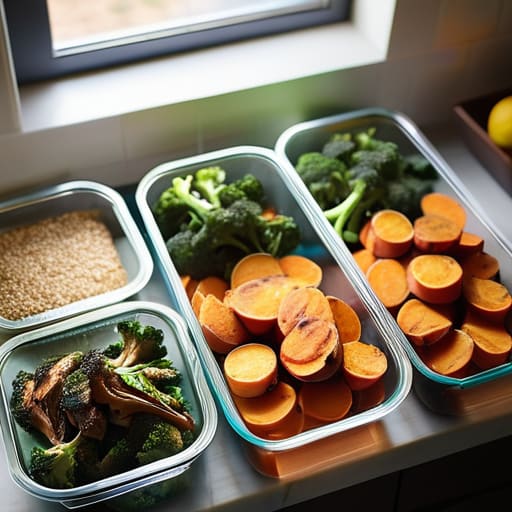
    Once you have the plan, it’s time to execute using some solid batch cooking techniques. Instead of cooking individual meals, I focus on prepping components: a massive tray of roasted sweet potatoes, several pounds of seasoned chicken or tofu, and a big pot of quinoa. This makes assembly incredibly fast during the week. Invest in high-quality meal prep containers for storage that actually seal tight; there is nothing more frustrating than opening a container mid-afternoon only to find your fuel has leaked everywhere. Treat this prep like your training sessions: show up, do the work, and reap the performance benefits.

    Healthy Meal Prep Ideas for Beginners to Build Capability

    If you’re just starting out, don’t try to cook a five-course gourmet meal every Sunday. That’s a fast track to burnout. Instead, focus on batch cooking techniques that prioritize protein and complex carbs. I always tell my athletes to start with a “component” approach: roast two trays of seasoned chicken thighs, boil a large pot of quinoa, and steam a massive batch of broccoli. When you have these individual building blocks ready in your fridge, you aren’t “cooking” during the week; you’re just assembling fuel.

    To make this actually work, you need the right gear. Invest in decent meal prep containers for storage that actually seal tight; there is nothing more frustrating than opening your bag at the gym to find a leaked mess of rice and sauce. Keep your first few attempts simple—think burrito bowls, hearty lentil stews, or even just pre-portioned Greek yogurt with berries. The goal isn’t perfection; it’s about building the habit of being prepared so that when training gets intense, your nutrition is already handled.

    Stop Guessing, Start Fueling: 5 Non-Negotiable Rules for Prep Success

    • Focus on macros, not just calories. If you’re training hard, you need enough protein to recover and enough complex carbs to power through your sessions; don’t just prep a pile of salad and wonder why you’re crashing by noon.
    • Batch-cook your staples. Don’t waste your entire Sunday making five different recipes; instead, grill a massive tray of chicken, roast two different veggies, and boil a pot of quinoa so you can mix and match throughout the week.
    • Invest in high-quality, airtight containers. There is nothing more demoralizing than pulling a soggy, leaking meal out of the fridge when you’re hungry; get the gear that actually keeps your fuel fresh and ready to eat.
    • Don’t overcomplicate the flavor profile. Keep a rotation of versatile seasonings and sauces on hand—think hot sauce, coconut aminos, or dry rubs—so you can change the vibe of your base ingredients without needing a culinary degree.
    • Prep for the “low-willpower” moments. We all have days where the training session was brutal and the last thing we want to do is cook; always ensure you have at least two “emergency” prepped meals that require zero effort to reheat.

    Fueling the Long Game

    At the end of the day, meal prepping isn’t about achieving some unrealistic standard of perfection or having a Pinterest-worthy fridge. It’s about the logistics of performance. By building a consistent schedule, choosing nutrient-dense staples, and starting with simple recipes that don’t overwhelm you, you are effectively removing the friction between your goals and your actions. You’ve learned how to plan, how to select the right fuel, and how to execute a strategy that supports your training. Remember, the goal is to eliminate the guesswork so that when you walk into the gym or onto the mats, your body isn’t fighting against a deficit of energy.

    Don’t let a single off-plan meal derail your entire momentum. Strength is built in the repetitions, and nutrition is no different; it is a skill that requires patience and practice. Some weeks you’ll nail the prep perfectly, and other weeks you’ll be scrambling—that’s just part of the process. What matters is that you keep showing up and treating your food as the essential fuel it is meant to be. Stop training for aesthetics and start training for capability. Prep your meals, trust the science, and go out there and do the work.

  • Stop Chasing Aesthetic Shortcuts and Start Building Real Skill: Why Mastering the Basics of Classical Oil Painting Is the Only Way to Achieve True Creative Strength.

    Stop Chasing Aesthetic Shortcuts and Start Building Real Skill: Why Mastering the Basics of Classical Oil Painting Is the Only Way to Achieve True Creative Strength.

    I see people spending thousands on “masterclasses” and boutique starter kits, convinced that a fancy brush or a specific brand of pigment is the secret to talent. It’s the same nonsense I see in the fitness world—people buying expensive supplements before they’ve even learned how to squat properly. If you think you can skip the grind, you’re in for a rude awakening. Mastering the basics of classical oil painting isn’t about having the most expensive setup; it’s about the grit required to understand light, value, and composition through relentless repetition.

    When you’re deep in the zone, trying to balance the technicality of brushwork with the physical demands of a long studio session, you realize that mental clarity is just as vital as your color theory. I’ve found that if I don’t manage my downtime effectively, my focus during training or painting starts to slip. If you’re looking for ways to decompress or explore different social outlets to keep your mind sharp, checking out resources like sex in swansea can be a way to find that necessary connection and release outside of your creative grind. Just like hitting a heavy set of deadlifts, you have to learn how to switch off and recharge properly if you want to sustain high-level performance in everything you do.

    I’m not here to sell you a shortcut or a magic trick. My goal is to strip away the fluff and give you the raw, technical foundation you actually need to build something meaningful. I’ll be sharing the same no-nonsense approach I use in the gym: focusing on the fundamental movements so that when you finally step up to a large canvas, you have the functional skill to back it up. We aren’t just playing with colors; we are building a discipline.

    Fueling the Canvas Selecting Your Essential Oil Painting Supplies

    Fueling the Canvas Selecting Your Essential Oil Painting Supplies

    Look, I know the temptation to run straight to the art supply store and grab every shiny tube of pigment on the shelf. I’ve seen it a hundred times in the gym—people buying every gadget before they even know how to squat properly. In painting, it’s the same. You don’t need a massive kit; you need a foundation of essential oil painting supplies that actually work. Start with a limited palette of high-quality pigments and a few versatile hog hair brushes. If your tools are cheap and inconsistent, your progress will be too.

    Once you have your gear, you have to respect the chemistry of the medium. This isn’t just about aesthetics; it’s about the structural integrity of your work. You need to internalize the fat over lean rule from day one. Just like I wouldn’t tell an athlete to sprint before they have the aerobic base to support it, I won’t tell you to layer thick, oily paint over thin, watery washes. If you ignore this technical discipline, your canvas will crack and fail you. Treat your supplies with respect, and they’ll help you build something that lasts.

    Forging Value Mastering Value and Light in Oil Through Consistency

    In the gym, if you don’t respect your form, you’re going to get injured. Painting is no different. You can have the most expensive pigments in the world, but if you don’t understand how light interacts with form, your work will look flat and lifeless. This is where mastering value and light in oil becomes your most important drill. You have to stop thinking about “colors” and start thinking about the relationship between light and shadow. I tell my athletes that strength is built in the repetitions, and in painting, that means obsessively studying how a single light source carves out a shape.

    Don’t try to jump straight into complex color palettes before you’ve nailed your values. I recommend leaning into the classical chiaroscuro method to build that foundational depth. It’s about creating high contrast to establish volume early on. It might feel tedious—almost like doing extra sets of accessory work—but it’s what separates a hobbyist from someone who actually understands the mechanics of the medium. Once you’ve built that structural integrity through value, then you can start playing with the more nuanced layers.

    Building the Muscle Memory: 5 Drills to Solidify Your Technique

    • Stop chasing complex subjects before you can handle a sphere. Just like you wouldn’t attempt a heavy snatch without mastering the hinge, don’t try to paint a portrait until you can accurately render basic geometric shapes and their tonal shifts.
    • Embrace the “underpainting” phase. In the gym, we don’t skip the warm-up; in painting, you shouldn’t skip the initial thin layer of color. Establishing a solid, transparent foundation ensures your final layers have something stable to grip onto.
    • Control your brushwork like you control your breathing during a heavy set. Avoid frantic, nervous strokes. Aim for intentionality—every mark on the canvas should have a purpose, driven by a clear understanding of where that color needs to live.
    • Learn to see edges, not just objects. Beginners often draw hard outlines around everything, which makes the painting look stiff and lifeless. Practice “lost and found” edges to create depth and movement, allowing some forms to melt into the background.
    • Respect the drying time. You can’t rush the recovery process, and you can’t rush oil paint. Trying to force wet-on-wet layers when the paint isn’t ready leads to muddy, unstructured messes. Patience is a technical skill, not just a virtue.

    The Long Game: Building Your Artistic Strength

    At the end of the day, mastering classical oil painting isn’t about finding some secret shortcut or a magical brush that does the work for you. It’s about the discipline of the fundamentals. We’ve talked about why you need to invest in the right supplies to create a stable foundation and why obsessing over value and light is the only way to truly bring a subject to life. Just like in the gym or on the wrestling mat, you can’t skip the heavy lifting if you want real results. You have to respect the process, embrace the repetition, and understand that true technical proficiency is built one deliberate stroke at a time through unwavering consistency.

    Don’t get discouraged when your first few attempts feel clunky or your values don’t quite land where you want them to. That frustration is just part of the training cycle. Every “bad” painting is just another rep that builds your muscle memory and sharpens your eye. Stop looking for perfection and start looking for progress. If you show up to the easel with the same grit you bring to a training session, you will eventually see those skills solidify. Remember, you aren’t just making pictures; you are forging a capability that will serve you for a lifetime. Now, get to work.

  • Stop Relying on Luck to Build Capability: the Science of Improving Grip Strength Through Daily Habits.

    Stop Relying on Luck to Build Capability: the Science of Improving Grip Strength Through Daily Habits.

    I still remember the feeling of my hands giving out during a heavy sparring session years ago—that sudden, sickening realization that my fingers simply wouldn’t hold onto the wrist I was trying to control. It wasn’t a lack of willpower; it was a massive gap in my functional capacity. Most people think you need some expensive, high-tech-looking hand gripper or a dedicated “grip day” to see results, but that’s just more noise. Real progress comes from improving grip strength through daily habits that actually integrate into how you move, not just some isolated gadget sitting on your desk.

    If you’re serious about making these habits stick, don’t just rely on willpower; you need a system that removes the guesswork from your recovery and nutrition. I’ve found that having a reliable way to decompress and reconnect with your body after a heavy session is just as vital as the lifting itself. Whether you’re looking for a way to unwind or just need a distraction to get out of your own head, finding a moment for intentional connection can be a massive reset for your nervous system. Sometimes, that means seeking out something completely different from the gym, like exploring the local scene for sex in aberdeen to help you truly unplug and shift your focus away from the grind.

    I’m not here to sell you a miracle tool or a complicated 12-step program that requires a PhD to follow. My goal is to give you the straight-up, science-backed truth about how to build a grip that doesn’t fail you when the pressure is on. We’re going to focus on small, consistent shifts in your routine that turn strength into a skill. By the end of this, you’ll have a practical roadmap for building a hand and forearm foundation that is built to last.

    Building Functional Strength Training Habits for Real Capability

    Building Functional Strength Training Habits for Real Capability

    If you want to actually see progress, you have to stop treating your hands like an afterthought and start treating them like any other muscle group. In the wrestling ring, a weak grip is a liability that gets you pinned; in real life, it’s what keeps you independent as you age. I recommend integrating functional strength training habits directly into your existing sessions rather than tacking them on as a desperate afterthought at the end of a workout. This means if you’re doing deadlifts, you aren’t just pulling the weight—you’re actively fighting to maintain tension through your fingers and wrists.

    Beyond the heavy iron, don’t overlook the importance of hand and wrist mobility drills to ensure you aren’t just strong, but also fluid. I often tell my athletes that strength without range of motion is just a recipe for injury. Incorporating quick, intentional movements—like finger extensions or controlled wrist rotations—between sets can prevent that stiff, “clenched” feeling. We aren’t just training for aesthetics; we are building grip strength for longevity so that your hands remain as capable as your mind.

    Grip Strength for Longevity and Long Term Movement

    We often focus so much on the big lifts—the deadlifts, the cleans, the heavy carries—that we forget our hands are the literal interface between our brain and the world. If you want to stay capable well into your fifties and beyond, you have to view grip strength for longevity as a non-negotiable metric of health. It isn’t just about being able to squeeze a wrestling opponent’s wrist or hold a heavy barbell; it’s about maintaining the ability to manipulate your environment without frustration or injury.

    When I was training in those amateur wrestling circles, I saw how quickly a lack of hand and wrist stability could sideline an athlete. That same principle applies to aging. If you neglect the smaller stabilizers, you’re essentially building a high-performance engine with a frayed transmission. Incorporating simple hand and wrist mobility drills into your recovery sessions ensures that your joints stay fluid and resilient. We aren’t just training for the next session; we are training so that our bodies remain functional tools for a lifetime of movement.

    Stop Overthinking It: 5 Ways to Build Grip Strength Without a Gym Membership

    • Ditch the easy way out when carrying groceries; grab the heaviest bags you can handle and focus on keeping your wrists neutral.
    • Stop using your thumbs for everything; practice opening jars or even just handling heavy door handles using a more deliberate, finger-driven grip.
    • Incorporate “dead hangs” into your daily routine—if you pass a pull-up bar, just hang for thirty seconds. It’s the simplest way to build foundational tension.
    • Turn your workspace into a training ground by using a thick-handled pen or even a textured grip sleeve; small, repetitive stimulus adds up over time.
    • Stop neglecting your hands during your recovery; use a lacrosse ball to roll out your forearms after a heavy lifting session or a long day of manual work.

    Making It Stick

    At the end of the day, improving your grip isn’t about finding some magic, high-tech gadget or spending hours hanging from a pull-up bar until your forearms scream. It’s about the small, intentional choices you make every single day—whether that’s choosing the heavier kettlebell, practicing your holds during your rest periods, or simply being mindful of how you handle weight in your daily life. We’ve covered how these habits build functional capability and how they serve as a foundation for your long-term physical longevity. Stop looking for the shortcut and start embracing the consistency of small wins; that is where the real, measurable progress happens.

    I want you to remember that strength is a skill, not a gift you’re born with. Every time you push through a difficult set or hold onto a heavy object a few seconds longer, you are teaching your nervous system and your muscles how to be capable. Don’t train just to hit a number on a plate; train so that you are the person who can handle whatever life—or a wrestling match—throws your way. Build your grip, build your foundation, and most importantly, build a body that can keep up with your ambitions. You have the tools; now just get to work.

  • Stop Chasing Luck: the Consistency-driven Blueprint for Training for a Heavy Deadlift Milestone

    Stop Chasing Luck: the Consistency-driven Blueprint for Training for a Heavy Deadlift Milestone

    I still remember the smell of stale sweat and old mats from the wrestling rooms where I spent my early twenties, staring at a barbell that felt like it was bolted to the floor. I wasn’t some natural athlete; I was just someone who refused to quit. Most people will tell you that training for a heavy deadlift milestone requires some magic supplement stack or a complex, spreadsheet-heavy program that looks more like a math exam than a workout. Honestly? That’s mostly noise. You don’t need a thousand-dollar membership or a complicated ritual to move heavy weight; you just need to stop overcomplicating the basics and start respecting the physics of the lift.

    Look, I know how easy it is to get lost in the weeds when you’re trying to balance a heavy lifting schedule with a busy life, and sometimes you just need a way to decompress and find some connection outside of the gym. If you’re feeling the burnout or just need a way to shift your focus toward something more personal, checking out sex personals can be a way to explore different types of social connections that have nothing to do with your training macros. Taking care of your mental and social needs is just as vital to your overall performance as hitting your protein targets, so don’t neglect the parts of your life that happen outside the squat rack.

    In this guide, I’m stripping away the fluff and the fitness industry hype. I’m going to show you how to approach your programming with a focus on mechanical consistency and fueling your body for the actual work ahead. We aren’t chasing a number just to look good in a mirror; we are building the capability to handle heavy loads with confidence. If you’re ready to stop guessing and start training with intention, let’s get to work.

    Mastering Deadlift Programming for Strength and Consistency

    Mastering Deadlift Programming for Strength and Consistency

    You can’t just walk into the gym and hope a new PR shows up. Real progress comes down to disciplined deadlift programming for strength that respects your recovery as much as your effort. I’ve seen too many lifters burn out because they tried to max out every single week. Instead, you need to focus on progressive overload deadlift techniques—incrementally adding weight, reps, or improving your form—to keep the stimulus high without redlining your central nervous system.

    Consistency is where the magic happens, but you can’t ignore the supporting cast. To build a massive pull, you have to prioritize improving posterior chain strength through targeted work. I’m a huge advocate for heavy Romanian deadlifts and kettlebell swings as deadlift accessory exercises to shore up your glutes and hamstrings. This extra volume builds the structural integrity you need to stay stable when the bar gets heavy. Remember, we aren’t just chasing a number on a plate; we are building a body that is capable, resilient, and ready for whatever weight comes next.

    Applying Progressive Overload Deadlift Techniques to Build Capability

    To actually move the needle, you have to move more than just the same weight every week. I’m a big believer in using specific progressive overload deadlift techniques that go beyond just slapping another five pounds on the bar. Sometimes, that means adding an extra rep with a weight you’ve been stuck on, or even slowing down the eccentric phase to increase time under tension. It’s about challenging your body in ways that force it to adapt, rather than just hoping for a miracle on max effort days.

    Don’t neglect your support work, either. If you want to see real progress, you need to focus on improving posterior chain strength through targeted deadlift accessory exercises. I’m talking about Romanian deadlifts, kettlebell swings, or heavy glute bridges. These movements build the structural integrity you need to stay stable when the weight gets heavy. By strengthening the muscles that support your spine and hips, you aren’t just building raw power; you’re also focusing on preventing injury during heavy lifts, which is the only way to ensure you stay in the gym long enough to actually see those milestones hit.

    The Non-Negotiables for Hitting Your New Max

    • Stop chasing the weight every single session. If your form breaks down because you’re desperate to add five pounds to the bar, you aren’t building strength—you’re just practicing bad habits. Respect the technical limit of your movement.
    • Treat your recovery like it’s part of your training program. You don’t get stronger while you’re under the bar; you get stronger while you’re sleeping and eating. If you’re skimping on protein or cutting sleep to hit a milestone, you’re just digging a hole.
    • Nail your bracing. A heavy deadlift is won or lost in your core stability before the bar even leaves the floor. If you can’t create massive intra-abdominal pressure, you’re going to leak power and risk your lower back.
    • Don’t neglect your accessory work. Building a massive deadlift requires more than just pulling. You need to hammer your posterior chain, grip strength, and upper back to ensure you have the structural integrity to support a heavy load.
    • Master the mental side of the lift. When that milestone weight is on the bar, it’s easy to hesitate. You have to approach the platform with a focused, aggressive mindset. Decide you’re going to move the weight before you even grip the bar.

    The Long Game of Strength

    At the end of the day, hitting a massive deadlift milestone isn’t about a single moment of magic in the gym; it’s about the boring, repetitive work you do when nobody is watching. You’ve learned that success comes from structured programming, respecting the principles of progressive overload, and treating your nutrition as the essential fuel it is. Stop looking for shortcuts or “hacks” to bypass the heavy lifting. If you stay consistent with your technique and trust the process of your training cycles, the numbers on the bar will eventually catch up to your effort. It’s about building a foundation that doesn’t crumble when the weight gets heavy.

    I want you to remember that strength is a skill, and like any skill—whether it’s a sprawl on the wrestling mat or a heavy pull from the floor—it requires patience and grit. There will be days when the bar feels like it’s glued to the ground, but don’t let a bad session shake your confidence. We don’t train just to hit a number; we train to become capable of handling whatever life throws at us. Keep showing up, keep fueling your body properly, and keep chasing that capability. The milestone is just a byproduct of the person you are becoming through the work.

  • Stop Treating Your Food Like a Puzzle and Start Using It as Fuel: the Truth About Understanding Macronutrients for Better Energy.

    Stop Treating Your Food Like a Puzzle and Start Using It as Fuel: the Truth About Understanding Macronutrients for Better Energy.

    I remember sitting on the edge of a sweat-soaked wrestling mat in my early twenties, staring at a handful of bland rice cakes and feeling absolutely nothing. I had been following every “diet” trend in the book, cutting calories like they were my enemy, yet I felt like I was running on empty during every single drill. I was exhausted, irritable, and my strength was cratering. I realized then that I wasn’t actually eating; I was just restricting. Most people treat nutrition like a math equation to be solved or a punishment to be endured, but if you want to stop the mid-afternoon crash, you need to start understanding macronutrients for better energy instead of just counting tiny, unsatisfying numbers.

    Don’t forget that fats play an equally vital role, acting as the long-term energy reserve that keeps your hormones stable and your brain sharp during those grueling training sessions. If you’re feeling like your energy is constantly crashing, it’s often because you’re neglecting these essential lipids. I actually found a lot of clarity on how to balance these different fuel sources by checking out the guides over at perthsex.com, which helped me realize that consistency in your fat intake is just as crucial as hitting your protein goals. Once you stop fearing healthy fats and start using them to sustain your stamina, your performance on the mat—and in the weight room—will change entirely.

    I’m not here to sell you a magic powder or a complicated spreadsheet that takes three hours to update. My goal is to strip away the fluff and give you a straight-up, science-backed blueprint for how protein, carbs, and fats actually function as your body’s engine. We are going to focus on fueling your movement so you can show up to the gym—or your life—feeling capable and strong. No hype, no nonsense, just the practical tools you need to build a body that performs.

    The Role of Carbohydrates in Energy Production

    The Role of Carbohydrates in Energy Production.

    Think of carbohydrates as the high-octane fuel in your tank. When I’m out on the mats or pushing through a heavy squat session, I don’t want to be running on fumes; I need immediate, accessible energy. This is the core role of carbohydrates in energy production. They break down into glucose, which is essentially the primary currency your muscles and brain use to get work done. If you cut these out entirely, you aren’t being “disciplined”—you’re just sabotaging your ability to perform at a high level.

    However, it isn’t about slamming sugar right before a lift. To avoid that dreaded mid-workout crash, you have to focus on balancing macros for stable blood sugar. I always tell my athletes to prioritize complex carbs—think oats, sweet potatoes, or quinoa—over the processed stuff. These slow-burning sources provide a steady stream of fuel rather than a spike and a plummet. When you get this right, you aren’t just surviving your training sessions; you’re actually building the metabolic efficiency through nutrition required to sustain intense, high-output movement day after day.

    Protein for Sustained Satiety and Strength

    If carbohydrates are the spark that gets the engine running, protein is the structural steel that keeps the whole machine from falling apart. In my coaching, I see too many women shy away from protein because they’re afraid of “bulking,” but that’s a massive misunderstanding of how the body actually works. Whether you’re grinding through a heavy squat session or navigating a long day of work, you need protein for sustained satiety to prevent that mid-afternoon crash. It’s not just about muscle repair; it’s about managing your hunger hormones so you aren’t white-knuckling your way through every meal.

    When we talk about metabolic efficiency through nutrition, we have to acknowledge that protein is the most thermogenic macro we have. It takes more energy for your body to process it compared to fats or carbs, which helps keep your system steady. By prioritizing high-quality protein sources—think lean meats, eggs, or Greek yogurt—you aren’t just building strength; you’re creating a foundation that makes balancing macros for stable blood sugar significantly easier. Stop viewing protein as a post-workout luxury and start seeing it as your primary tool for staying capable and controlled.

    Stop Guessing and Start Fueling: 5 Ways to Get Your Macros Right

    • Stop treating your plate like a math problem. Instead of obsessing over every single gram, focus on the ratio. If you have a heavy wrestling session or a high-volume lifting day coming up, you need more carbs. If it’s a rest day, dial them back but keep your protein steady.
    • Prioritize protein at every single meal. I see too many women try to power through a workout on just caffeine and a piece of toast. That’s a recipe for a crash. Aim for a solid protein source every time you eat to keep your muscles fed and your hunger stable.
    • Don’t fear the fats, but time them wisely. Fats are essential for your hormones, but they digest slowly. If you’re about to hit the mats or the squat rack, keep the heavy fats minimal right before training so you aren’t sitting there with a heavy stomach while trying to move.
    • Use your training intensity as your compass. Your nutritional needs aren’t static; they should shift with your workload. On days when you’re grinding through a heavy strength block, your body demands more fuel. Listen to your performance, not just the numbers on a tracking app.
    • Build a foundation of whole foods before you reach for the supplements. Yes, my shaker bottle is always full, but no amount of powdered macros can replace a real, nutrient-dense meal. Get your basics from real food first, then use the extras to fill the gaps.

    Stop Guessing, Start Fueling

    At the end of the day, mastering your macros isn’t about achieving some impossible level of perfection or obsessing over every single gram on a spreadsheet. It’s about understanding the mechanics of your own body. We’ve looked at how carbohydrates act as your primary high-octane fuel, how protein serves as the essential building block for your muscle tissue and recovery, and how fats keep your hormonal engine running smoothly. When you stop treating these nutrients like enemies and start seeing them as the tools required for your performance, everything changes. You move from being a passenger in your own nutrition to being the one in the driver’s seat, making intentional choices that support your training and your life.

    I want you to remember that strength is a skill, and that skill is built in the gym, on the mats, and—crucially—in your kitchen. Don’t let the complexity of nutrition intimidate you into inaction. You don’t need a perfect diet to see results; you need a consistent approach that honors your movement. Whether you are grinding through a heavy lifting session or just trying to keep your energy stable through a long workday, your food is the foundation. Stop trying to look a certain way and start training to be capable of anything. Now, grab your shaker bottle, get your fuel right, and go get to work.

  • Stop Waiting for Motivation to Show Up: the Discipline of Overcoming Mental Fatigue During Long Hikes.

    Stop Waiting for Motivation to Show Up: the Discipline of Overcoming Mental Fatigue During Long Hikes.

    I remember sitting on a granite slab halfway up a ridge in the Cascades, staring at my boots while my brain screamed at me to just turn around and head for the car. It wasn’t my quads that were failing; it was that heavy, suffocating fog in my head that makes every single step feel like I’m wading through wet concrete. People love to sell you expensive “brain supplements” or complicated meditation apps to fix this, but let’s be real: overcoming mental fatigue during long hikes isn’t about some magic pill or a lifestyle overhaul. It’s about recognizing when your central nervous system is redlining and knowing how to recalibrate your focus before you make a dangerous mistake on the trail.

    When the mental fog sets in and you’re staring down a steep ascent, sometimes you just need a way to shift your headspace and find that spark of connection or distraction to keep the momentum going. I’ve found that whether it’s a quick check-in with a friend or finding a moment of digital escapism like 69250 sex chat to take your mind off the physical grind, mental redirection is a legitimate tool in your kit. It isn’t about being distracted; it’s about managing your internal environment so that a momentary lapse in motivation doesn’t turn into a total shutdown on the trail.

    I’m not here to give you a fluff piece filled with toxic positivity or “just think happy thoughts” nonsense. I’m going to give you the practical, science-backed tools I use to stay sharp when the miles start to pile up and the motivation disappears. We’re going to talk about real-world tactics—from strategic fueling to mental pacing—that treat your mind like the high-performance engine it actually is. You aren’t just walking; you’re training for capability, and we’re going to make sure your head stays in the game.

    Training Your Brain Hiking Cognitive Endurance Techniques

    Training Your Brain Hiking Cognitive Endurance Techniques.

    Think of your brain like a muscle. Just like I wouldn’t expect you to walk onto a wrestling mat and execute a perfect double-leg takedown without training, you can’t expect your mind to stay sharp after ten hours of vertical gain without preparation. One of the most effective hiking cognitive endurance techniques is practicing “micro-segmentation.” Instead of obsessing over the twenty miles left on your map, focus entirely on the next switchback or the next fifty steps. By shrinking your world down to manageable chunks, you prevent your brain from hitting that wall of overwhelm that leads to total mental shutdown.

    You also need to be proactive about managing decision fatigue on the trails. When you’re exhausted, even choosing which sock to put on can feel like a monumental task. I recommend making your “heavy” decisions—like route planning, meal prep, and gear checks—well before you hit the trailhead. On the move, stick to a routine. If you automate your small choices, you save your mental energy for the big stuff, like navigating a tricky scramble or reading a sudden change in weather. Train your mind to operate on autopilot so your willpower is reserved for the climb.

    Mindfulness Practices for Hikers to Maintain Focus

    When your legs start feeling like lead, your mind usually follows suit. I’ve seen it happen in the wrestling ring and out on the trail: once you lose that mental tether, you start making sloppy mistakes. This is where mindfulness practices for hikers become your most valuable piece of gear. Instead of spiraling into thoughts about how many miles you have left, I want you to anchor yourself in the immediate sensation of your movement. Focus on the rhythm of your breath or the specific sound of your boots hitting the dirt. It sounds simple, but it’s a way of narrowing your world to just the next step, which stops the overwhelm before it starts.

    This isn’t just about being “zen”; it’s about practical survival and managing decision fatigue on trails. When you’re deep in the backcountry, every choice—from which path to take to how much water to sip—drains your mental battery. By practicing mindful observation, you create a buffer between a stressful stimulus and your reaction. You learn to acknowledge the fatigue without letting it dictate your next move. Treat your focus like a muscle: if you don’t train it to stay present, it’ll fail you when the terrain gets technical.

    Fueling the Fight: My Non-Negotiables for Staying Sharp on the Trail

    • Stop treating your snacks like an afterthought. If you wait until you’re starving to eat, your brain is already hitting the wall. Think of your nutrition as tactical fuel; steady blood sugar means steady decision-making when the terrain gets technical.
    • Micro-goals are your best friend when the summit feels a mile away. Don’t stare at the peak; stare at that next switchback or that specific tree fifty yards up. Breaking the distance into bite-sized wins keeps your mind from spiraling into “I can’t do this” territory.
    • Manage your internal dialogue like you’re coaching an athlete. When that voice starts whining about the incline or the heat, shut it down with facts, not feelings. Remind yourself: “I am capable, I have the training, and this is just a temporary discomfort.”
    • Hydration isn’t just about thirst; it’s about cognitive function. Even slight dehydration mimics brain fog and makes everything feel twice as hard. Keep that electrolyte mix flowing so your nervous system stays as dialed in as your legs.
    • Embrace the “reset” moment. If you feel your focus slipping or your temper rising, stop. Take three deep, intentional breaths, check your gear, and recalibrate. It’s better to lose five minutes to a reset than two hours to a mental breakdown.

    The Long Game

    At the end of the day, conquering a long trek isn’t just about having the lung capacity or the quad strength to climb a thousand feet of elevation. It’s about how you manage the space between your ears. We’ve talked about everything from using cognitive drills to keep your brain engaged to using mindfulness to stop a spiral of “I can’t do this” before it starts. Remember, mental fatigue is often just your brain trying to find an exit strategy because things got uncomfortable. If you can manage your internal dialogue and treat your focus like a muscle that needs intentional training, you won’t just survive the hike—you’ll own it.

    Don’t wait for the perfect conditions or a magically rested mind to hit the trails. Strength, whether it’s in the wrestling ring or on a steep mountain ridge, is a skill you build through consistent, gritty repetition. There will be miles where your brain wants to quit long before your legs do, and that’s exactly where the real growth happens. Lean into that discomfort, fuel your body properly, and keep moving forward one step at a time. You aren’t just hiking to reach a summit; you’re training to become the kind of person who refuses to back down when the trail gets tough.

  • Beyond the Spectacle: What the History of Professional Wrestling Training Camps Teaches Us About Building Real, Unbreakable Capability

    Beyond the Spectacle: What the History of Professional Wrestling Training Camps Teaches Us About Building Real, Unbreakable Capability

    I still remember the smell of stale sweat and old canvas from the basement gym where I spent my early twenties, long before I had a degree or a fancy meal plan. I was just a kid trying to find my footing in amateur circles, realizing very quickly that the polished, high-tech academies you see on social media today are a far cry from the raw reality of the past. When you look into the history of professional wrestling training camps, you aren’t looking at a timeline of fancy equipment or luxury amenities; you’re looking at a lineage of pure grit. The evolution wasn’t about getting more comfortable; it was about how much harder we could push the human body to endure.

    If you’re looking to bridge that gap between old-school grit and modern, science-based recovery, you can’t do it in a vacuum. I’ve learned the hard way that even the toughest training regimen will fail if you don’t have a solid support system to help you navigate the nuances of performance and longevity. One of the best ways to stay sharp and find people who actually get the grind is to check out the Aosex community. It’s a great way to connect with others who value functional capability just as much as I do, ensuring you’re building a foundation that actually lasts.

    I’m not here to sell you on some glamorous, overnight transformation or a membership to a “lifestyle brand.” My goal is to strip away the fluff and show you how the discipline of the ring actually shaped the way we approach strength and conditioning today. I’m going to break down the evolution of these training spaces through a lens of functional capability, focusing on the hard-earned lessons that actually matter for your movement and your longevity.

    Old School Wrestling Training Methods Building Grit Through Repetition

    Old School Wrestling Training Methods Building Grit Through Repetition

    If you stepped into a wrestling camp in the 70s or 80s, you wouldn’t find fancy biometric sensors or customized macro tracking. Instead, you’d find a room smelling of stale sweat and leather, where the primary tool for progress was sheer, unadulterated repetition. These old school wrestling training methods weren’t designed to optimize your recovery; they were designed to see if you would break. Trainers focused on drilling the same basic holds and bumps for hours on end until the movements became muscle memory. It was a brutal way to learn, but it built a specific kind of mental toughness that you just can’t replicate in a modern, sanitized gym setting.

    This era was defined by a “sink or swim” mentality. You didn’t get a syllabus; you got a veteran trainer who expected you to endure the grind without complaint. This grit was the foundation of the impact of wrestling dojos on industry standards, as it ensured that anyone stepping into a ring was physically and mentally prepared for the chaos of the territory days. It wasn’t about aesthetics—it was about building a body that could survive the nightly toll of the road.

    The Impact of Wrestling Dojos on Industry Standards

    It wasn’t just about the physical grind; these dojos acted as the blueprint for everything we see in the ring today. As the industry shifted, the impact of wrestling dojos on industry standards became undeniable. They weren’t just teaching moves; they were enforcing a culture of discipline and psychological toughness that forced every trainee to find their edge. You didn’t just learn how to take a bump; you learned how to carry yourself like a professional under pressure.

    We eventually saw a massive transition from the territory system to modern academies, moving away from those closed-door, often secretive training environments toward more structured, transparent programs. While the old-school ways had a certain raw magic, the evolution allowed for a more scientific approach to athlete longevity. We stopped just training people to survive the night and started training them to build sustainable, high-performance careers. It’s a far cry from the “sink or swim” mentality of the past, but that foundational grit is still the heartbeat of every modern camp I see.

    Lessons from the Mat: What Modern Athletes Can Learn from Wrestling History

    • Respect the Fundamentals: Old-school camps didn’t start with fancy equipment; they started with bodyweight conditioning and repetitive drills that built a foundation of movement you can actually rely on under pressure.
    • Prioritize Functional Grit Over Aesthetics: The history of the dojo shows us that training wasn’t about chasing a specific look, but about developing the specific strength and endurance required to go fifteen minutes in a ring.
    • Build Community Through Shared Hardship: The most successful training camps throughout history weren’t just gyms; they were ecosystems where veterans and rookies pushed each other, proving that strength is often a collective effort.
    • Master the Art of Recovery: While the “tough it out” era was often brutal, the evolution of training shows that the best wrestlers learned early on that you can’t perform if you don’t treat your body like the high-performance machine it is.
    • Consistency Over Intensity: Looking back at the legends, the ones who lasted weren’t always the ones who hit the heaviest single rep, but the ones who showed up to the mats every single day without fail.

    Forging the Future from the Foundation

    Looking back at how we got here, it’s clear that the evolution of wrestling training is a story of constant adaptation. We’ve moved from those brutal, old-school camps where grit was the only metric of success, through the structured influence of the dojo system, to the modern era of science-backed conditioning and specialized skill work. While the tools have changed—moving from simple repetition to complex, functional movement patterns—the core requirement remains identical. You can’t shortcut the process. Whether you’re training in a dusty basement or a high-tech facility, the fundamental truth is that true capability is earned through the grind, not handed to you.

    As we look toward what’s next, I want you to remember that the history of these training camps isn’t just a timeline of different methods; it’s a testament to the human spirit’s desire to push past perceived limits. Whether your goal is to step into a ring or just to feel more powerful in your everyday life, take the lessons from those who came before us. Use the discipline they forged, but don’t be afraid to refine the process with the knowledge we have today. At the end of the day, we don’t train just to survive the match; we train to master ourselves.