
I remember sitting in a humid wrestling room during my early twenties, staring at a half-empty water bottle and feeling like my entire body was made of lead. I had spent the last three days obsessing over every single calorie, trying to follow some “expert” cutting protocol that felt more like a slow starvation ritual than actual training. We’ve been sold this lie that successful wrestling nutrition for weight classes means deprivation and misery, but honestly? That’s just a fast track to hitting the mat with zero gas in the tank. If you’re treating your body like an enemy to be conquered rather than a machine to be fueled, you’ve already lost the match before the whistle even blows.
I’m not here to sell you on expensive supplements or complicated math equations that leave you lightheaded during drills. My goal is to give you the straight talk on how to manage your weight while actually maintaining your strength and explosiveness. We’re going to focus on practical, science-backed ways to handle wrestling nutrition for weight classes so you can step onto the scale with confidence and step onto the mat ready to dominate your opponent.
Table of Contents
Prioritizing Muscle Preservation During Weight Loss

When you’re cutting weight, the biggest mistake I see is athletes treating their body like a math equation where the only goal is a lower number on the scale. If you just starve yourself, you aren’t losing fat; you’re burning through the very muscle tissue you need to stay explosive on the mat. To avoid that “flat” feeling during a match, you have to prioritize muscle preservation during weight loss by keeping your protein intake high. Think of protein as the structural support for your movement; without it, your strength will tank just as fast as your weight.
Don’t get caught in the trap of extreme calorie deficits that leave you feeling brittle. Instead, focus on dialing in your macronutrient ratios for combat sports to ensure you’re getting enough amino acids to repair tissue while still hitting your target weight. It’s about being smart with your deficit, not just hungry. If you lose your power because you neglected your macros, you might make weight, but you won’t be in any position to win the match.
Optimizing Macronutrient Ratios for Combat Sports

When we talk about macronutrient ratios for combat sports, I want you to stop thinking about restriction and start thinking about functional distribution. If you’re cutting weight, the temptation is to slash everything, but that’s a fast track to hitting a wall mid-practice. You need to keep your protein intake high to support muscle preservation during weight loss, while strategically timing your carbohydrates. Carbs aren’t the enemy; they are the high-octane fuel your central nervous system needs to stay sharp when you’re grinding through a heavy drilling session.
I tell my athletes to view their macros as a sliding scale rather than a fixed rule. As you get closer to your target weight, you might lean harder into fats and proteins to manage satiety, but you should never completely zero out your glucose. Instead, focus on your pre-match fueling strategies by centering your carb intake around your most intense training windows. This ensures that even when you’re in a caloric deficit, your body has enough immediate energy to maintain the explosive power required to dominate on the mat.
Five Non-Negotiables for Making Weight Without Crashing
- Stop the “starve and sprint” cycle. If you’re cutting calories so aggressively that your training sessions feel like wading through sludge, you aren’t losing fat—you’re losing the muscle you need to actually win matches. Focus on a slow, steady descent rather than a crash diet.
- Prioritize protein as your anchor. Every single meal needs a solid protein source to protect your lean mass while you’re in a deficit. Think of it as insurance for your strength; you can’t afford to let your body cannibalize your hard-earned muscle just to hit a number on the scale.
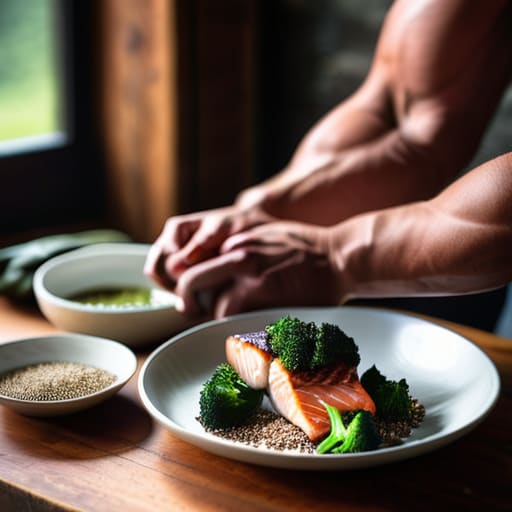
- Master your fiber intake to manage hunger. When you’re cutting weight, the hunger pangs can get loud. Load up on high-volume, low-calorie vegetables like broccoli or spinach. They keep your gut full and your digestion moving without blowing your caloric budget.
- Don’t fear the timing of your carbs. You don’t need to cut carbs entirely—that’s a recipe for a flat, lifeless performance. Instead, time them around your hardest training blocks. Use them as tactical fuel to power through your technical drilling and heavy lifting, then dial them back when you’re resting.
- Hydrate with purpose, not just volume. Dehydration is the easiest way to tank your performance, but don’t just chug plain water all day. Use electrolytes to ensure your cellular hydration is actually on point. Being “dry” is one thing, but being depleted is what leads to those mid-match cramps and mental fog.
The Bottom Line: Training for Capability, Not Just the Scale
Stop the starvation cycle; focus on high-quality nutrient density so you can maintain your power on the mat while hitting your target weight.
Prioritize protein and timing to protect your hard-earned muscle, because losing strength to make weight is a losing battle.
Consistency over perfection—treat your nutrition as fuel for your performance, not a math problem to be solved through deprivation.
## The Weight Class Trap
“If you’re cutting weight by starving your muscles, you aren’t ‘making weight’—you’re just making yourself easy to take down. Stop chasing a number on a scale and start fueling for the intensity the mat demands.”
Tamsin Broadhurst
The Bottom Line
Look, making weight isn’t about starving yourself into submission; it’s about managing your resources with precision. We’ve covered how to protect your hard-earned muscle through strategic protein intake and how to balance your macros so you aren’t hitting the mat on an empty tank. If you stop viewing food as the enemy and start seeing it as the strategic fuel required to maintain your power, everything changes. Remember, the goal isn’t just to step off the scale at a specific number—it’s to step onto the mat with enough explosive energy to actually win the match.
At the end of the day, your nutrition is just another skill in your arsenal, much like your sprawl or your takedown setup. It requires practice, discipline, and a lot of trial and error, but once you master it, you become a much more dangerous competitor. Don’t let a poorly managed diet be the reason you lose a fight you were physically capable of winning. Train hard, eat with purpose, and build a body that is as capable as it is disciplined. You’ve put in the work in the weight room; now, make sure your kitchen habits are working just as hard for you.
Frequently Asked Questions
How do I know if I'm cutting too much weight and actually losing muscle instead of just fat?
Listen to your body, not just the scale. If your strength numbers are cratering in the gym or you’re feeling lethargic during live wrestling rounds, you’ve crossed the line. Fat loss should feel like a controlled burn, not a total system shutdown. If you’re losing power on the mat or your recovery feels non-existent, you aren’t just losing weight—you’re eating away at your hard-earned muscle. Back up the calories and prioritize protein.
What should my last meal look like before a weigh-in to ensure I don't feel sluggish on the mat?
Keep it simple and avoid anything that sits like a brick in your stomach. I recommend a small, easily digestible portion of lean protein—think white fish or chicken—paired with a modest amount of simple carbohydrates like white rice or a sweet potato. Skip the heavy fats and massive amounts of fiber right before you step on the mat; they slow down digestion and’ll leave you feeling sluggish when you need to be explosive.
How can I manage my hunger levels during a weight cut without crashing my energy for training sessions?
Listen, the “starve to win” mentality is a fast track to a terrible training session and a stalled metabolism. To keep hunger at bay without crashing, focus on volume and fiber. Load up on massive amounts of leafy greens and cruciferous vegetables—they fill your stomach for minimal calories. Prioritize lean protein at every single meal to keep satiety high. If you feel a crash coming, don’t reach for sugar; grab a small hit of complex carbs right before you hit the mat.
