Blog

  • Healthy Lunch Options for Wrestlers

    Healthy Lunch Options for Wrestlers

    We’ve all been there: it’s 12:30 PM, you’re halfway through a grueling training block, and your stomach is starting to stage a protest. When you’re grinding through technical drills or heavy lifting sessions, your energy shouldn’t be a guessing game. Most people treat their midday meal as an afterthought, but if you’re serious about your performance on the mat, you can’t afford to run on fumes. Finding practical wrestling lunch ideas that actually provide sustained energy—without making you feel sluggish or bloated—is the difference between dominating your afternoon session and just trying to survive it.

    I’m not here to give you a list of complicated, gourmet recipes that take three hours to prep. You need fuel that is efficient, high-quality, and easy to digest. In this post, I’m breaking down five specific, science-backed options that I personally recommend to my athletes to keep their strength up and their focus sharp. We’re going to move past the junk and focus on building real capability through smart, intentional nutrition. Let’s get into what you should actually be eating to power your grind.

    Table of Contents

    The Classic Chicken and Quinoa Bowl

    The Classic Chicken and Quinoa Bowl.

    When I was grinding through double sessions in my early wrestling days, I learned pretty quickly that you can’t survive on empty calories. This bowl is my go-to because it hits that sweet spot of complex carbs and lean protein without making you feel heavy or sluggish. I like to batch-cook my quinoa and chicken on Sundays so that when midday hits, I’m not scrambling for something subpar at a vending machine.

    Turkey and Avocado Power Wraps

    Turkey and Avocado Power Wraps in wrap.

    If you’re someone who is constantly on the move between the gym and the mat, you need something portable that doesn’t require a fork and knife. A high-quality whole-grain wrap stuffed with turkey, avocado, and plenty of crunchy veggies is a total lifesaver. I always tell my athletes that fat is fuel, and the healthy fats from the avocado are essential for keeping your hormones balanced and your brain sharp during technical sessions.

    Cold Soba Noodle Salad

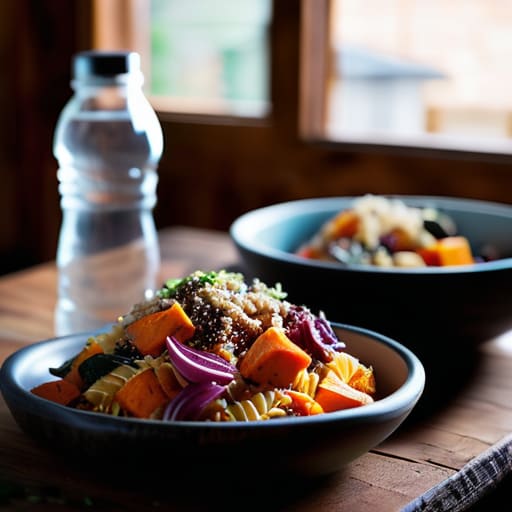
    Refreshing Cold Soba Noodle Salad bowl.

    Sometimes, after a particularly intense morning of wrestling, the last thing I want is a heavy, steaming meal that sits in my stomach like a brick. That’s where a cold soba noodle salad comes in clutch. Buckwheat noodles are a fantastic source of complex carbohydrates, and because they’re served cold, they are incredibly easy on the digestion when your appetite might be a little suppressed from training.

    Tuna and Chickpea Smash

    We need to talk about protein density. If you aren’t getting enough, your recovery is going to suffer, and you’ll start feeling more beat up than you actually are. A tuna and chickpea smash is a powerhouse option that you can prep in five minutes. I skip the heavy mayo and instead use a little Greek yogurt or avocado to bind it, which keeps the protein count high and the unnecessary fats low.

    Beef and Broccoli Stir-Fry

    For the days when you really feel like you’ve emptied the tank, you need something a bit more substantial. A beef and broccoli stir-fry is my favorite way to get iron and zinc back into my system after a heavy lifting session. Iron is absolutely critical for oxygen transport in your blood, which is something every wrestler needs to keep their conditioning levels high during those grueling third periods.

    The Bottom Line for Your Midday Fuel

    Stop treating lunch like an afterthought; view it as the essential bridge between your morning grind and your afternoon training session.

    Prioritize a balance of complex carbs and high-quality protein to keep your energy stable and prevent that mid-afternoon crash.

    Focus on consistency over perfection—finding a few reliable, easy-to-prep meals is better than trying to engineer a perfect menu every single day.

    Fueling the Grind

    Stop treating your midday meal like an afterthought or a chore; your lunch is the fuel that determines whether you’re dominating your next practice or just surviving it.

    Tamsin Broadhurst

    Fueling the Long Game

    At the end of the day, these lunch options aren’t about perfection or following a strict, rigid diet; they are about functional utility. Whether you’re grabbing a quick chicken and quinoa bowl or prepping a hearty turkey wrap, the goal is to avoid the mid-afternoon crash that kills your afternoon drilling sessions. We’ve looked at how prioritizing lean proteins, complex carbs, and healthy fats can keep your energy stable and your focus sharp. Remember, the best meal is the one that actually gets eaten and provides the sustained energy your body needs to recover from the mats and get back to work tomorrow.

    I know how easy it is to let nutrition slide when you’re exhausted from a heavy weight cut or a grueling practice, but I need you to treat your food with the same respect you treat your technique. You wouldn’t show up to a match without warming up, so don’t show up to your training sessions running on empty. Strength is a skill, and that includes the skill of fueling yourself properly. Stop viewing food as a chore or a puzzle to solve and start seeing it as the essential foundation for everything you want to achieve in the ring. Now, go get after it.

    Frequently Asked Questions

    How do I balance my lunch macros if I have a heavy technical drilling session right after eating?

    If you’re heading straight into technical drilling, you need to prioritize easily digestible carbs and moderate protein. Avoid heavy fats or massive amounts of fiber right before you hit the mats—they sit like a brick in your stomach while you’re moving. Think of it as timing your fuel: aim for a mix that provides steady energy without the bloat. Keep it clean, keep it simple, and make sure it’s actually fueling your movement.

    What are some good ways to prep these meals on a Sunday so I'm not scrambling during a busy training week?

    Don’t try to cook everything from scratch every single night; you’ll burn out before your first session. Spend your Sunday batch-cooking your proteins—think grilled chicken, lean ground turkey, or even seasoned tofu—and roasting a massive tray of veggies. Store them in individual containers so you can just grab, heat, and go. Having those building blocks ready means you’re fueling for performance, not just grabbing whatever is fastest when you’re exhausted.

    If I'm trying to stay in a specific weight class, how much can I adjust the portion sizes without losing my energy for practice?

    Listen, don’t go slashing your portions blindly. If you drop your calories too fast, your technical work in practice will suffer, and that’s when injuries happen. Aim for a modest deficit—maybe 200 to 300 calories below maintenance. Instead of just eating less of everything, prioritize your macros. Keep the protein high to protect your muscle and time your carbs around your hardest training sessions. We’re training for capability, not just a number on the scale.

  • Choosing Calorie Dense Foods for Mass Gain

    Choosing Calorie Dense Foods for Mass Gain

    I remember sitting on the edge of a wrestling mat in a humid, poorly ventilated gym, staring down a Tupperware container of plain chicken and steamed broccoli. I was trying so hard to “eat clean” that I was actually starving my progress into a standstill. People love to preach about pristine, voluminous meals, but when you’re trying to pack on lean mass, forcing down massive amounts of low-calorie fiber is a one-way ticket to feeling bloated and exhausted. If you aren’t strategically managing your caloric density for bulking, you aren’t fueling your strength; you’re just making yourself tired.

    I’m not here to sell you on expensive, processed “mass gainers” or some complicated macro-tracking ritual that takes up your entire life. My goal is to strip away the noise and show you how to make your food work as hard as you do in the weight room. I’m going to give you the straight truth on how to use nutrient-dense fats and concentrated fuel sources to hit your targets without feeling like you’re constantly fighting a losing battle against your own stomach. We’re training to be capable and strong, so let’s start eating like it.

    Table of Contents

    Strategic Macronutrient Balance for Bulking Without the Guesswork

    Strategic Macronutrient Balance for Bulking Without the Guesswork

    When you’re trying to move the needle on the scale, it’s easy to fall into the trap of just eating everything in sight. But if you want to build actual functional strength—not just a layer of fluff—you need to respect your macronutrient balance for bulking. I tell my athletes all the time: calories are the fuel, but macros are the blueprint. If you’re hitting your surplus but ignoring your protein intake, you’re essentially building a house with nothing but sawdust. You need that amino acid foundation to repair the tissue you’re breaking down in the gym.

    Since we’re focusing on efficiency, I suggest leaning into energy dense foods for athletes that pack a punch without making you feel like you need a three-hour nap. Think nut butters, avocados, and fatty fish. If you find yourself struggling to sit down to another massive plate of rice and chicken, don’t fight your biology—work around it. Incorporating liquid calories for muscle building, like a homemade shake with oats, hemp seeds, and Greek yogurt, is a total game-changer. It’s much easier to sip on 600 calories than it is to chew them.

    Using Energy Dense Foods for Athletes to Power Performance

    Using Energy Dense Foods for Athletes to Power Performance.

    When you’re grinding through a heavy lifting session or a grueling wrestling practice, your body isn’t just looking for calories; it’s looking for high-quality fuel. The mistake I see most often is people trying to hit their goals by eating massive volumes of low-density foods like plain steamed broccoli or huge salads. You’ll end up feeling bloated and lethargic before you’ve even come close to your target. To actually support your performance, you need to prioritize energy dense foods for athletes—think nut butters, avocados, and fatty fish. These provide the concentrated fuel necessary to power through those heavy sets without making you feel like you’re constantly fighting a food coma.

    If you find yourself struggling to eat enough during a busy training block, don’t fight against your appetite; work with it. This is where I swear by liquid calories for muscle building. It is much easier to sip on a smoothie packed with oats, protein, and almond butter than it is to chew through another plate of chicken and rice. Integrating these denser options helps you maintain a healthy surplus for weight gain without the mental exhaustion of feeling like you’re constantly forced to eat.

    Five Ways to Scale Up Your Fuel Without Feeling Overstuffed

    • Don’t fear the fats. If you’re struggling to hit your numbers, start adding healthy fats like avocado, olive oil, or nut butters to your existing meals. They pack a massive caloric punch without adding much volume to your plate.
    • Liquidate your calories. When you’re too tired or too full to chew another meal, drink it. A homemade smoothie with oats, protein powder, and peanut butter is a lot easier to get down than a mountain of dry chicken and rice.
    • Prioritize nutrient density over “empty” calories. I’m not talking about junk food; I’m talking about foods that actually serve your training. Think dense starches like sweet potatoes or quinoa rather than just filling up on processed sugar.
    • Stop skipping the “small” stuff. A handful of almonds or a bit of cheese between training sessions might seem insignificant, but those little caloric windows add up fast when you’re trying to build serious mass.
    • Use your training as the guide. On heavy lifting days or intense wrestling sessions, your caloric needs spike. Don’t be afraid to lean harder into those energy-dense foods when you know you’ve got a massive workload ahead of you.

    The Bottom Line for Your Gains

    Stop treating food like a math problem and start treating it like fuel; prioritize calorie-dense whole foods to hit your targets without feeling constantly stuffed.

    Consistency beats intensity every single time, so focus on hitting your daily caloric surplus steadily rather than trying to make up for missed meals with one massive feast.

    Train for capability, not just aesthetics, by ensuring your nutrition supports both your heavy lifting sessions and your recovery so you can actually perform the work you’re putting in.

    Stop Fighting Your Appetite

    “Bulking isn’t about forcing down massive, soul-crushing plates of food that leave you feeling sluggish; it’s about being smart with your fuel. If you’re struggling to hit your numbers, stop trying to eat more volume and start choosing foods that pack more punch in every bite. We train to move, not to spend our entire lives feeling bloated and stuck.”

    Tamsin Broadhurst

    Making It Stick

    Making It Stick: Strategic Bulking Nutrition

    At the end of the day, bulking isn’t about mindless eating or just trying to hit a number on a scale; it’s about being smart with your fuel. We’ve talked about why macronutrient balance matters and how to use energy-dense foods to ensure you aren’t just feeling bloated, but actually powering your performance in the gym. By prioritizing foods that pack a punch without requiring you to eat massive, unmanageable volumes, you take the guesswork out of your recovery. Stop treating your nutrition like a chore and start seeing it as the strategic foundation for every heavy lift and every intense training session you tackle.

    Remember, the progress you make under the bar is a direct reflection of the work you do in the kitchen. There will be days when the scale doesn’t move or the weights feel heavy, but that is where the discipline kicks in. Don’t get discouraged by the slow grind; strength is a skill that requires patience and the right ingredients. Focus on being consistently capable rather than chasing perfection. Pack your meals, hit your targets, and show up to your training ready to work. You have the tools—now go out there and build the strength you know you’re capable of.

    Frequently Asked Questions

    How do I make sure I'm actually gaining muscle and not just adding unnecessary body fat while increasing my caloric density?

    To keep the gains lean, you have to respect the stimulus. If you’re bumping up your caloric density but not pushing your intensity in the weight room, you’re just fueling fat storage. Focus on progressive overload—make sure those extra calories are being used to move heavier loads or more volume. Also, keep your protein high to support repair. If the scale is moving too fast and your strength is stalling, dial the density back slightly.

    If I'm feeling too full to finish my meals, what are some easy ways to sneak more calories into my current routine?

    Listen, I’ve been there—staring at a plate of rice and chicken feeling like I’m about to burst. If you’re hitting a wall, stop trying to eat bigger meals and start making your current ones more efficient. Drizzle olive oil over your veggies, stir nut butter into your oats, or add avocado to everything. It’s about increasing the fuel without increasing the volume. Don’t fight your satiety; just make every bite count.

    Can I still use high-density foods if I have a sensitive stomach or struggle with digestion during heavy training blocks?

    Absolutely. A sensitive stomach shouldn’t be a barrier to your gains, but you have to be strategic. If heavy meals feel like a brick in your gut during training, stop trying to force massive, one-off feasts. Instead, lean into liquid calories like smoothies or focus on easily digestible fats like nut butters. Small, frequent, nutrient-dense hits are often way easier on your digestion than one giant, heavy meal that leaves you feeling sluggish.

  • Managing Caloric Intake for Muscle Growth

    Managing Caloric Intake for Muscle Growth

    I still remember being in a cramped, humid wrestling room in my early twenties, staring at a plate of bland chicken and rice while my coach yelled about “making weight.” Back then, the idea of eating more felt like a betrayal of the discipline I was trying to build. Most fitness influencers will try to sell you some complicated, expensive ritual involving specific “superfoods” or precise micro-gram tracking just to achieve a caloric surplus for muscle growth. Honestly? It’s exhausting and, frankly, a total waste of your time. You don’t need a PhD or a boutique supplement subscription to get stronger; you just need to stop treating food like an enemy and start treating it like the fuel it actually is.

    I’m not here to give you a math equation that requires a calculator and a prayer. Instead, I’m going to show you how to eat for capability, drawing on everything I’ve learned from years on the mats and in the weight room. We’re going to strip away the fluff and focus on a no-nonsense approach to fueling your body so you can actually move heavy weight and see the results you’ve earned.

    Table of Contents

    Calculating Tdee for Muscle Growth With Intent

    Calculating Tdee for Muscle Growth With Intent

    Calculating TDEE for muscle growth with intent

    Before you start adding extra plates to the bar, you need to know your baseline. You can’t build a house without a foundation, and in this case, your Total Daily Energy Expenditure (TDEE) is that foundation. I see so many people guessing their way through a surplus, either eating way too little and stalling out, or eating everything in sight and just feeling sluggish. To get this right, you need to account for your basal metabolic rate plus every single movement you make—from your heavy lifting sessions to your walks between classes or work.

    Once you have that number, you need to decide on your optimal calorie surplus amount. I’m a firm believer in lean bulking vs dirty bulking; if you want to be able to actually use that new muscle in a wrestling match or a heavy squat session, you don’t want to be carrying unnecessary fat that slows you down. Aim for a modest surplus—maybe 250 to 500 calories above your maintenance. This keeps the focus on fueling your movement rather than just chasing a number on the scale.

    Finding Your Optimal Calorie Surplus Amount for Strength

    Finding Your Optimal Calorie Surplus Amount for Strength

    Once you’ve got your TDEE figured out, the next question is how much extra energy to actually add to the plate. I see so many people swing between two extremes: they either eat nothing extra and wonder why they aren’t gaining strength, or they go full “dirty bulking” and end up feeling sluggish and heavy. In my experience, especially when you’re balancing high-intensity training like wrestling or heavy lifting, aim for a modest increase. I usually recommend a surplus of about 250 to 500 calories above maintenance. This helps you find that sweet spot of lean bulking vs dirty bulking, allowing you to build tissue without excessive fat gain that makes you feel uncomfortable in your own skin.

    It isn’t just about the total number, though; it’s about the quality of the fuel. To maximize muscle protein synthesis nutrition, you need to ensure that those extra calories aren’t just coming from empty sugars. You want a steady stream of amino acids to repair the damage we do in the gym. Keep your protein high, but don’t ignore your fats and carbs—they are what actually drive your performance during a heavy session.

    Stop Guessing and Start Fueling: My Top 5 Rules for a Productive Surplus

    • Prioritize protein, but don’t ignore the rest. While protein is the building block, you need carbohydrates to fuel those heavy lifting sessions and fats to keep your hormones in check. Think of it as a complete toolkit, not just a single hammer.
    • Focus on nutrient density over empty calories. I’m not saying you can’t have a burger, but if you try to hit a massive surplus solely through processed junk, you’re going to feel sluggish and heavy in the ring or the gym. Aim for real food that actually supports recovery.
    • Monitor your strength gains, not just the scale. If the number on the scale is going up but your lifts are stalling, you might just be adding unnecessary fat. A true surplus should translate into more weight on the bar and more power in your movements.
    • Don’t fear the scale fluctuations. Between salt intake, hydration, and inflammation from a hard training session, your weight will bounce around. Look at the weekly averages rather than obsessing over a single morning’s reading.
    • Listen to your digestion. There is no point in forcing down massive amounts of food if it makes you feel bloated and miserable. If you can’t hit your targets with whole foods, try adding more frequent, smaller meals or liquid calories like a homemade smoothie to make it easier on your gut.

    The Bottom Line on Fueling for Strength

    Stop treating a surplus like a math problem to solve and start treating it like fuel for your performance; if you aren’t eating enough to support your training intensity, you aren’t building capability.

    Aim for a moderate, consistent surplus rather than extreme spikes in calories, as steady fuel leads to sustainable muscle growth without making you feel sluggish or heavy during your sessions.

    Listen to your body’s feedback over the spreadsheet; if your strength is stalling or your recovery feels sluggish, it’s time to bump up the intake, regardless of what the initial calculation said.

    Stop Treating Food Like the Enemy

    You can’t build a powerhouse on a deficit. If you want to actually move heavy weight and see real progress in the gym, you have to stop viewing extra calories as a setback and start seeing them as the raw material for your strength.

    Tamsin Broadhurst

    Building Your Foundation

    Building Your Foundation through caloric surplus.

    At the end of the day, mastering a caloric surplus isn’t about chasing perfection on a tracking app or obsessing over every single macro. It’s about the math we’ve covered: finding your TDEE and then adding that intentional, controlled surplus that allows your body to actually repair and rebuild the tissue you’re breaking down in the gym. If you find yourself feeling sluggish or stalling on your lifts, don’t be afraid to nudge those numbers up. Remember, we aren’t just eating to hit a number; we are eating to provide the raw materials necessary for consistent, tangible progress.

    I know that for a lot of women, the idea of eating “more” can feel counterintuitive or even intimidating. But I want you to shift your mindset. Stop viewing food as something to be restricted and start seeing it as the essential fuel that powers your capability. Whether you’re looking to dominate on the wrestling mat or just want to move through life with more power, you cannot build a skyscraper without enough bricks. Trust the process, stay consistent with your training, and fuel your strength. You’ve got this.

    Frequently Asked Questions

    Will eating in a surplus make me feel too heavy or sluggish during my wrestling sessions?

    If you’re doing it right, no. If you feel like a lead weight on the mats, you’ve likely swung too hard into a massive surplus or you’re leaning too heavily on processed junk. I’ve been there—trying to bulk up for a tournament and feeling completely sluggish during drills. Focus on high-quality fuel and a modest surplus. You want to feel powerful and primed, not bloated and slow. Eat to perform, not just to hit a number.

    How do I tell the difference between actual muscle growth and just gaining unnecessary body fat?

    Look at the mirror and your performance, not just the scale. If your lifts are going up and you’re feeling powerful in the gym, you’re building muscle. If the scale jumps ten pounds in a week and your strength stalls, you’re likely just adding fat. It’s about the trend, not the daily number. Aim for slow, steady progress. We’re training for capability here, so let the strength gains be your primary compass.

    Do I really need to track every single gram of protein, or can I just focus on hitting my total calorie goal?

    Look, I get it—tracking every single gram can feel like a full-time job you didn’t sign up for. If you’re already hitting your total calorie goal, you’re halfway there. But if you want to actually build muscle rather than just moving the scale, protein needs to be a priority. Don’t obsess over the decimal points, but aim for a solid protein source at every meal. Focus on the big picture first, then tighten up the macros once the habit sticks.

  • Strengthening the Hips for Wrestling

    Strengthening the Hips for Wrestling

    I still remember the smell of stale sweat and mat cleaner in that basement gym where I spent my early twenties, feeling completely helpless as I got snapped down time and time again. It wasn’t because I lacked cardio or grit; it was because my base was non-existent. I used to think I could just “out-work” a lack of stability, but you can’t out-hustle physics. If you’re struggling to hold your position or finding yourself getting tossed every time someone gets under your center of gravity, you don’t need more conditioning drills—you need real hip strength for wrestling.

    I’m not here to sell you on some complicated, overpriced supplement stack or a “secret” mobility hack that takes six months to see results. We’re going to skip the fluff and get straight to the mechanics of building a functional base. I’m going to show you exactly how to train your hips to be an unshakeable anchor, focusing on movements that actually translate to the mat. We aren’t training for aesthetics here; we are training to make you undeniably capable when the whistle blows.

    Table of Contents

    Strengthening Hips for Takedowns and Explosive Power

    Strengthening Hips for Takedowns and Explosive Power

    If you want to stop getting tossed, you have to stop treating hip strength like an afterthought and start training it like the skill it actually is. When you’re shooting for a double leg or defending a sprawl, your hips are the engine room. You aren’t just looking for raw muscle; you need strengthening hips for takedowns that can transition from a defensive crouch to an explosive drive in a split second. This is where many grapplers fail—they have the cardio, but they lack the neuromuscular snap required to finish a shot when the resistance gets heavy.

    To bridge that gap, your programming needs to prioritize wrestling explosive power exercises that mimic the chaos of the mat. I’m talking about heavy kettlebell swings, lateral bounds, and explosive goblet squats. These movements teach your glutes to fire rapidly, building the kind of lower body stability for combat sports that keeps you upright when a heavy opponent tries to drive through your center. We aren’t training for aesthetics here; we are training to make sure that when you initiate contact, you are the one dictating the force.

    Dynamic Hip Movements for Wrestlers Who Value Movement

    Dynamic Hip Movements for Wrestlers Who Value Movement

    If you’re just sitting on a machine doing leg extensions, you’re missing the point. Wrestling isn’t a static sport; it’s a constant, chaotic flow of weight shifts and level changes. To keep up, you need to prioritize dynamic hip movements for wrestlers that mimic the actual demands of the mat. I’m talking about movements that force you to stabilize your pelvis while your limbs are moving through different planes of motion. Think lateral lunges or Cossack squats—exercises that challenge your lower body stability for combat sports by forcing you to control your descent and explode back to center.

    Don’t mistake being “flexible” for being functional. You can have all the range of motion in the world, but if you can’t control that range under tension, you’re going to get snapped down. Incorporating rotational work, like medicine ball rotational throws or single-leg Romanian deadlifts, ensures that your hip mobility for grapplers is backed by actual muscular control. We aren’t just stretching to feel loose; we are training your hips to be resilient anchors that can absorb force and redirect it instantly during a scramble.

    Stop Neglecting Your Hips: 5 Ways to Build Real Mat Strength

    • Stop chasing the pump and start chasing stability. If you’re just doing isolated leg extensions, you’re wasting time. You need compound, multi-planar movements like lateral lunges that force your hips to stabilize under load—that’s how you stay upright when someone’s trying to snap your level.
    • Prioritize posterior chain integration. A strong hip isn’t just about the joint; it’s about how your glutes and hamstrings work together to drive you through a shot. If your glutes aren’t firing, your hips are just dead weight during a takedown attempt.
    • Train for “reactive” strength, not just slow lifting. Wrestling is chaotic. You need to incorporate plyometrics or kettlebell swings that teach your hips to snap from an eccentric load into an explosive movement. If you can’t move fast, you can’t defend.
    • Don’t sleep on hip mobility. There is a massive difference between having “strong” hips and “usable” hips. If your hip flexors are perpetually tight from sitting or overtraining, you’ll lose that deep, aggressive stance that makes you a nightmare to wrestle.
    • Treat recovery as part of the training protocol. I see too many athletes grinding through hip impingement or tendonitis because they think “toughing it out” is the way. Use restorative yoga or targeted soft tissue work to keep the joint healthy so you can actually apply that strength when it counts.

    The Bottom Line: Building a Foundation That Doesn't Break

    Stop treating hip stability as a “bonus” and start seeing it as your primary defense; if your hips are weak, you’re essentially inviting your opponent to dictate every single movement on the mat.

    Prioritize functional, multi-planar strength over aesthetic isolation; we aren’t training for a bodybuilding stage, we’re training to ensure you can explode into a shot and hold your ground when the pressure hits.

    Consistency is your only real shortcut—you won’t build mat-ready power from one heavy session a week, but you will build it by making these movements a non-negotiable part of your training ritual.

    ## The Foundation of the Mat

    “In wrestling, your hips are your engine and your anchor. If they’re weak, you’re just a passenger in someone else’s match; if they’re strong, you dictate exactly where the fight goes.”

    Tamsin Broadhurst

    Putting the Work into Practice

    Putting the Work into Practice training.

    At the end of the day, building hip strength isn’t about checking off a list of random exercises or chasing a pump in the weight room. It’s about integrating heavy, foundational lifts with the dynamic, multi-planar movements that actually translate to the mat. Whether you are focusing on explosive power for that initial shot or working on stability to prevent getting turned, remember that consistency is your only real edge. You can’t expect to have a bulletproof base if you only train your hips when you feel like it. Treat your hip mobility and strength as non-negotiable components of your training cycle, just like your technical drilling.

    I know how exhausting it is to balance a lifting program with a heavy practice schedule, but don’t let the complexity of it all paralyze you. You don’t need a perfect, thirty-step protocol to see results; you just need to show up and do the work with intention. Strength is a skill, and just like a perfect double-leg, it’s something you earn through repetition and grit. Stop training just to look a certain way and start training to be the most capable version of yourself on the mat. Now, grab your electrolytes, get your head right, and go get after it.

    Frequently Asked Questions

    How do I know if my hip weakness is the reason I'm getting stuck in certain positions or losing my shots?

    If you feel like you’re “stalling out” mid-shot or getting pinned against the edge because you can’t drive through a sprawl, that’s your hips talking. Watch for these red flags: if your hips feel heavy or “disconnected” when you transition from a shot to a finish, or if you find yourself losing leverage the second someone gets underneath your center of gravity, you don’t have a technique problem—you have a stability problem.

    Can I build this kind of hip power without spending hours on a lifting platform every single day?

    Look, I get it. You don’t have all day to live under a squat rack. The short answer is yes. You don’t need endless volume to see results; you need intent. If you spend twenty minutes doing high-quality, explosive movements like kettlebell swings or lateral lunges with focus, you’ll get more out of that than an hour of mindless reps. It’s about quality over quantity. Train hard, train smart, and get back to your life.

    Is there a way to train for hip explosiveness without wrecking my joints before a big tournament?

    Look, I get it. You can’t afford to blow out a hip or grind down your joints right before a tournament. The secret is shifting from max-effort heavy lifting to high-quality, controlled velocity. Focus on plyometrics with a soft landing and resisted movements—think banded sprawls or medicine ball slams. You want to train your nervous system to fire fast without the bone-on-bone impact of heavy, grinding reps. Train for speed, not just sheer load.

  • Developing Better Presence on the Mat

    Developing Better Presence on the Mat

    I can still smell the stale sweat and industrial disinfectant from the basement gym where I spent my early twenties. I remember staring at the worn-out vinyl, feeling completely invisible while the guys around me commanded every inch of the room without even trying. Back then, I thought mat presence was something you were either born with or you weren’t—a mystical aura reserved for the natural athletes. I spent years thinking I needed more gear, better supplements, or a more intimidating physique to finally belong in that space.

    I’m here to tell you that most of that “aura” is just noise. You don’t need a magic pill or a fancy training program to command respect when you step into the circle; you need a foundation of mental and physical readiness. In this post, I’m stripping away the fluff to show you how to build a genuine mat presence through disciplined movement and psychological grit. We aren’t chasing aesthetics here; we are building the capacity to show up, hold your ground, and execute when the pressure is on.

    Table of Contents

    Managing Combat Anxiety Through Steady Breath

    Managing Combat Anxiety Through Steady Breath.

    When you’re mid-scramble and your heart is hammering against your ribs, it’s easy to let panic dictate your movement. That spike in cortisol doesn’t just make you tired; it clouds your judgment and kills your technical precision. I’ve been there—staring at an opponent, feeling that frantic urge to just explode without a plan. This is where managing combat anxiety becomes a mechanical skill, just like a sprawl or a takedown. You have to learn to use your breath as a physiological reset button. By focusing on slow, rhythmic exhales even when the pressure is mounting, you signal to your nervous system that you aren’t actually in mortal danger.

    This isn’t just about staying calm; it’s about maintaining grappling composure and control when the weight of another person is trying to crush the air out of you. If you’re gasping for air, you’re reactive. If you’re breathing deeply, you’re proactive. When you control your breath, you stabilize your core and steady your vision, allowing you to see the openings that panic usually hides. Don’t let your lungs dictate your technique. Control the breath, and you control the pace of the match.

    Tactical Positioning and Awareness Under Pressure

    Tactical Positioning and Awareness Under Pressure.

    When the pressure ramps up and you’re stuck in a scramble, your brain wants to go into survival mode—panicked, frantic, and reactive. But that’s exactly when you need to lean into grappling composure and control. Tactical positioning isn’t just about where your limbs are; it’s about how you occupy space. If you’re constantly shrinking away or playing defensively, you’re giving your opponent the initiative. You have to learn to stay heavy, even when you’re tired, and use your frame to dictate the terms of the engagement rather than just reacting to theirs.

    This is where you start imposing physical presence in combat. It’s a subtle shift in how you carry your weight and how you interact with your opponent’s center of gravity. You aren’t just moving through space; you are claiming it. By maintaining structural integrity and keeping your hips active, you signal to your opponent that you aren’t an easy target. This kind of awareness turns a chaotic scramble into a calculated sequence of movements, allowing you to stay ahead of the game instead of just trying to survive it.

    Five Ways to Own Your Space When the Pressure Hits

    • Stop reacting and start responding. When you’re stuck in a bad position, your instinct is to scramble, but scrambling leads to mistakes. Instead, freeze for a split second, assess where your center of gravity is, and make one intentional move. Control the chaos by slowing your internal clock.
    • Master your peripheral vision. If you’re hyper-focused on your opponent’s hands or face, you’re missing the setup for the next shot. Train yourself to see the whole mat, not just the immediate threat. Awareness is the difference between being hunted and being the hunter.
    • Use your weight as a tool, not a burden. Mat presence isn’t just about being loud or aggressive; it’s about how you occupy space. If you’re underneath someone, don’t just lie there—drive your hips, create tension, and make every inch of your body feel heavy and difficult to move.
    • Check your ego at the door. You’re going to get taken down. You’re going to get caught in bad spots. The people who actually develop presence are the ones who don’t let a mistake turn into a mental spiral. Shake it off, reset your stance, and get back into the fight immediately.
    • Fuel the engine before you step on the mat. You can’t maintain mental focus if your blood sugar is crashing or you’re dehydrated. If you’re running on fumes, your “presence” will evaporate the moment you get tired. Treat your nutrition like the tactical prep it is so your brain stays sharp when your muscles want to quit.

    The Bottom Line: Owning Your Space

    Stop letting the chaos of a match dictate your movement; use your breath and tactical awareness to dictate the pace instead.

    Mat presence isn’t a feeling you wait for—it’s a skill you build by staying disciplined when the pressure is on.

    Treat your physical conditioning and mental focus as two sides of the same coin; you can’t have one without the other if you want to be truly capable.

    ## Beyond the Physical Grind

    Mat presence isn’t about how much weight you can move or how many reps you can grind out; it’s about the quiet, steady ability to stay centered when the world around you is trying to force you into chaos.

    Tamsin Broadhurst

    Taking it Off the Mat

    Taking it Off the Mat with composure.

    At the end of the day, mat presence isn’t some mystical state of being that you either have or you don’t; it is a practical skill set that you build through repetition. We’ve talked about using breath to keep your nervous system from redlining and how tactical awareness keeps you from getting caught in reactive, sloppy movements. When you combine intentional breathing with a sharp eye for positioning, you stop being a victim of the chaos and start becoming the one who controls it. It’s about moving from a place of pure reaction to a place of calculated, composed action, whether you’re in the middle of a heavy scramble or just trying to hold your ground in a high-pressure drill.

    Don’t get discouraged if you feel scattered during your next session. Even the most seasoned athletes have days where their focus slips and the noise gets too loud. The goal isn’t perfection; the goal is consistency and resilience. Every time you catch yourself panicking and bring your focus back to your breath or your stance, you are winning. Strength is built in those small, disciplined moments of recalibration. So, stop waiting for the perfect headspace to show up and just get back on the mat. The presence you’re looking for is waiting for you in the work.

    Frequently Asked Questions

    How do I maintain mat presence when I'm physically exhausted halfway through a training session?

    When the lungs are burning and your limbs feel like lead, that’s when the real work starts. Stop trying to fight the fatigue; instead, narrow your focus. Don’t worry about the next ten minutes—just win the next thirty seconds. Lean into your technical fundamentals. When your gas tank is empty, your mechanics have to take over. Focus on your posture, reset your breath, and stay intentional. Fatigue is just a signal to sharpen your discipline.

    Can I use specific strength training drills to help improve my situational awareness during live wrestling?

    Absolutely. You can’t just lift heavy and expect it to translate to the mat if you’re staring at the ceiling during your sets. Stop doing mindless reps. Incorporate reactive drills—like partner-resisted movements or unilateral stability work—that force you to adjust your center of gravity mid-rep. I use heavy kettlebell flows to mimic the constant shifting of a scramble. If you train your body to stabilize under unpredictable tension, your situational awareness will follow.

    Is there a way to practice this mental focus outside of the gym so it becomes more intuitive when I'm actually on the mat?

    Absolutely. You can’t just flip a switch when you step onto the mat; you have to build the muscle memory elsewhere. Try practicing “micro-focus” during mundane tasks. When you’re walking through a crowded street or even just washing dishes, practice maintaining steady, rhythmic breathing while staying acutely aware of your surroundings. If you can maintain composure and spatial awareness during a chaotic commute, staying grounded during a heavy scramble becomes second nature.

  • Recovery Methods for Wrestlers

    Recovery Methods for Wrestlers

    I remember sitting on the edge of a sweat-soaked mat in a dimly lit high school gym, my joints screaming and my lungs feeling like they’d been scraped with sandpaper. I was convinced that if I just bought that $200 massage gun or tried some expensive, neon-colored supplement, the crushing fatigue would finally lift. But looking back at those years in the amateur wrestling circuit, I realize most of the “magic” solutions being sold to us are just noise. We don’t need more gadgets; we need to understand that real wrestling recovery techniques are about managing the physiological load we put on our bodies, not just chasing the latest wellness trend.

    I’m not here to sell you a lifestyle or a complicated ritual that takes an hour you don’t have. My goal is to strip away the fluff and give you the science-backed basics that actually work when you’re staring down a heavy training block. We are going to focus on the pillars of movement, nutrition, and sleep—the stuff that turns recovery from a guessing game into a reliable skill. Let’s get to work on making your body as resilient as your mindset.

    Table of Contents

    Fueling the Machine Protein Intake for Muscle Synthesis

    Fueling the Machine Protein Intake for Muscle Synthesis

    If you’re treating your body like a high-performance engine but fueling it like a junker, you’re leaving gains on the mat. After a grueling session of drilling or live wrestling, your muscle fibers are essentially riddled with micro-tears. This is where protein intake for muscle synthesis becomes non-negotiable. I see too many athletes skip the post-training meal because they’re “too tired” or trying to make weight, but that’s a fast track to burnout and injury. You need those amino acids to actually repair the damage and build back stronger.

    Don’t just aim for a random snack; aim for quality and timing. I recommend hitting a solid dose of complete protein within an hour or two of finishing your session. Whether it’s a chicken breast, Greek yogurt, or a quick shake, that steady stream of nutrients is what turns recovery from a passive state into an active process. Think of it this way: you aren’t just eating to satisfy hunger; you are providing the raw materials necessary to ensure you can step back onto the mats tomorrow without feeling like you’re made of glass.

    Hydration Strategies for Athletes Who Demand More

    Hydration Strategies for Athletes Who Demand More

    If you’re waiting until you feel thirsty to reach for your water bottle, you’ve already lost the battle. In wrestling, your sweat rate can skyrocket during a heavy drilling session, and even a tiny percentage of dehydration can tank your reaction time and cognitive focus. I see it all the time in the gym: athletes hitting a wall mid-practice not because they lack grit, but because their cells are parched. Implementing proactive hydration strategies for athletes isn’t just about quenching thirst; it’s about maintaining the fluid balance necessary for joint lubrication and temperature regulation.

    Don’t just settle for plain water if you’re pushing through high-intensity bouts. You need to replace the sodium, potassium, and magnesium you’re dumping onto the mats. I never leave my house without my shaker bottle—it’s loaded with electrolytes to ensure my recovery starts the second I stop moving. Think of it as a preventative measure for combat sports injury prevention; a hydrated muscle is a resilient muscle, whereas a dehydrated one is brittle and prone to cramping. Treat your fluid intake with the same discipline you apply to your technique.

    Beyond the Mat: 5 Non-Negotiables for Real Recovery

    • Prioritize sleep like it’s your most important training session. You can nail your macros and hit your lifting numbers, but if you aren’t getting seven to nine hours of quality shut-eye, your nervous system isn’t recovering, and your performance will tank.
    • Don’t sleep on active recovery. On your off days, don’t just rot on the couch; go for a light walk or hit a restorative yoga flow. Keeping the blood moving helps flush out metabolic waste without adding more systemic stress to your body.
    • Master the art of soft tissue work. Whether it’s a foam roller, a lacrosse ball, or a professional massage, you need to address those tight spots in your hips and lats. If you ignore the knots now, they’ll turn into injuries that keep you off the mat later.
    • Use temperature therapy with intention. I’m a huge fan of contrast therapy—alternating between heat and cold. It’s not just about the “buzz” you feel; it’s about using that thermal stress to stimulate blood flow and calm down your sympathetic nervous system.
    • Listen to your body’s biofeedback. If your resting heart rate is spiked or your grip strength feels weak during your warm-up, you’re likely under-recovered. Don’t try to “tough it out” through a bad recovery cycle; adjust your intensity so you can stay consistent in the long run.

    The Bottom Line: Making Recovery Non-Negotiable

    Stop treating rest as a luxury; if you aren’t prioritizing sleep and active recovery, you’re essentially sabotaging the hard work you put in on the mats.

    Nutrition isn’t just about hitting macros; it’s about providing your body with the specific building blocks it needs to repair tissue and keep you moving through heavy sessions.

    Consistency beats intensity every single time—building a resilient, capable body requires a disciplined approach to both your training and your downtime.

    Recovery is a Skill, Not a Break

    Stop treating your rest days like a lapse in discipline; if you aren’t prioritizing recovery with the same intensity you bring to the mat, you aren’t training—you’re just breaking yourself down.

    Tamsin Broadhurst

    The Work Doesn't End on the Mat

    The Work Doesn't End on the Mat.

    At the end of the day, effective recovery isn’t about finding some magic supplement or a high-tech gadget; it’s about the fundamentals. We’ve talked about hitting your protein targets to repair the damage from those heavy lifting sessions and the non-negotiable importance of staying hydrated to keep your brain and muscles firing. Whether you are implementing active recovery like my favorite restorative yoga flows or just making sure you aren’t skimping on sleep, these habits are what bridge the gap between burning out and actually progressing. If you ignore the physiological needs of your body, you aren’t being “tough”—you’re just being inefficient.

    Remember, the hours you spend recovering are just as vital as the minutes you spend drilling takedowns or grinding through a squat set. Strength is a skill, and like any skill, it requires the right environment to grow. Don’t view rest as a sign of weakness or a lapse in discipline; view it as the essential foundation of your performance. You train to be capable, to be resilient, and to show up ready to compete. Treat your recovery with the same intensity you bring to the mat, and your body will reward you with the longevity you need to keep winning.

    Frequently Asked Questions

    How much sleep do I actually need to see a difference in my recovery between heavy wrestling sessions?

    Look, if you’re grinding through heavy wrestling sessions, seven hours isn’t your target—it’s your bare minimum. To actually see a shift in how you recover and how much power you bring to the mat, aim for 8 to 9 hours. This is when your body does the heavy lifting of repairing tissue and regulating hormones. Treat your sleep like a scheduled training session; if you skip it, you’re leaving gains on the table.

    Should I be using foam rolling and mobility work every single day, or is that overkill?

    It’s not overkill, but you have to be smart about it. If you’re treating foam rolling like a punishment, you’re doing it wrong. I use mobility work daily because it keeps my joints from feeling like rusted hinges after a heavy lifting session or a hard mat day. However, don’t mistake “feeling it” for “fixing it.” Use light, restorative movement on rest days and save the intense tissue work for when you actually need to flush out the tension.

    Is there a way to manage muscle soreness without relying on anti-inflammatories that might mess with my training adaptations?

    Look, I get it. You want to feel better, but you don’t want to blunt the very signals that tell your muscles to grow. If you’re constantly popping NSAIDs, you’re essentially muting your body’s ability to adapt to the stress of training. Instead, lean into active recovery. Keep the blood moving with light mobility work or a restorative yoga flow. It’s about increasing circulation to flush out waste without shutting down the inflammatory process we actually need for progress.

  • Essential Nutrients After Strength Training

    Essential Nutrients After Strength Training

    I remember sitting on a sweat-soaked mat in a cramped wrestling gym, my lungs burning and my muscles trembling, staring at a shelf of neon-colored, overpriced recovery shakes that promised “miracle” results. Back then, I thought I needed some magic potion to make the soreness go away, but all I really needed was a real meal and some common sense. The fitness industry loves to turn post workout nutrition into this complicated, expensive puzzle designed to keep you reaching for a supplement bottle instead of a fork. Honestly? Most of that hype is just noise designed to separate you from your hard-earned money.

    I’m not here to sell you a lifestyle or a proprietary blend of powders. My goal is to strip away the marketing fluff and give you the straightforward science of how to actually fuel your body. We’re going to talk about practical, repeatable strategies that support your strength and help you stay capable for your next session. I’ll show you how to master your post workout nutrition using real food that works, so you can stop overthinking your plate and start focusing on your performance.

    Table of Contents

    Decoding the Anabolic Window Explained for Real Results

    Decoding the Anabolic Window Explained for Real Results

    You’ve probably heard the hype: if you don’t slam a protein shake within thirty minutes of your last set, you’ve basically wasted your entire session. I used to believe that too, especially back when I was grinding through double sessions in the wrestling room. But let’s clear the air on the anabolic window explained in a way that actually makes sense for your life. While there is a physiological period where your body is primed for repair, it isn’t a narrow, frantic race against a stopwatch. It’s more of a wide door that stays open for several hours.

    The real magic happens when we focus on protein synthesis after exercise through consistent, quality intake rather than panic-eating a protein bar in the locker room. Instead of obsessing over the exact minute you finish your lifting session, I want you to focus on the quality of your fuel. Aim for a balance that supports muscle repair and replenishes your glycogen stores. If you’ve just finished a heavy strength block or a grueling grappling session, your priority should be getting a solid dose of amino acids and some complex carbs to kickstart that recovery process.

    Optimal Macronutrient Ratios to Fuel Your Next Session

    Optimal Macronutrient Ratios to Fuel Your Next Session

    Stop obsessing over perfect math and start looking at the big picture. When we talk about optimal macronutrient ratios, I’m not interested in you weighing every single blueberry on a scale. I want you to focus on the synergy between your macros. You need a solid hit of high-quality protein to trigger protein synthesis after exercise, which is essentially the biological “on switch” for repairing the muscle tissue you just broke down in the gym. But if you’re only hitting protein and skipping carbs, you’re leaving performance on the table.

    Carbohydrates aren’t the enemy; they are your primary fuel source for replenishing glycogen stores. If you’ve just come off a heavy wrestling session or a high-volume lifting block, your body is screaming for glucose to bounce back. I aim for a balance that prioritizes a complete amino acid profile for recovery alongside enough complex carbs to stabilize your energy. Think of it as building a foundation: the protein repairs the structure, while the carbs provide the energy to keep the construction crew moving. Don’t just eat to fill a gap; eat to build a more capable version of yourself.

    Stop Guessing and Start Fueling: 5 Non-Negotiables for Recovery

    • Prioritize protein, but don’t obsess over the exact gram. Aim for a solid dose of high-quality protein—like Greek yogurt, chicken, or a clean whey shake—to give your muscles the building blocks they need to repair after a heavy session.
    • Don’t fear the carbs. If you’ve just finished a grueling wrestling drill or a heavy lifting block, your glycogen stores are tapped out. Refuel with complex carbs or even some fruit to replenish that energy so you aren’t dragging through your next workout.
    • Hydration goes beyond just water. If you’ve been sweating heavily, you’ve lost more than just fluid; you’ve lost electrolytes. Grab my shaker bottle and mix in some sodium, potassium, and magnesium to keep your nervous system and muscles functioning properly.
    • Keep it simple and accessible. You don’t need a gourmet, five-star meal prep to recover effectively. A quick tuna pouch and some rice cakes or a protein smoothie works just fine. Consistency beats perfection every single time.
    • Listen to your body’s hunger cues. There’s a difference between “I need fuel” and “I’m eating because the clock says so.” If you’re feeling depleted and shaky, eat. If you feel fine, just ensure your next scheduled meal is nutrient-dense.

    The Bottom Line for Your Recovery

    Stop stressing over the exact minute you eat; focus on getting quality protein and carbs into your system within a couple of hours of training to keep your recovery on track.

    Prioritize nutrient density over calorie counting—treat your food as the fuel that allows you to hit your next heavy session with intention.

    Consistency beats perfection every single time, so if you miss a meal or grab something quick, just get back to your baseline and keep moving forward.

    Fueling for Capability

    Stop treating your post-workout meal like a math problem to solve and start treating it like the recovery tool it is; you aren’t just eating to hit a number, you’re eating so you can show up and lift even heavier tomorrow.

    Tamsin Broadhurst

    Fueling the Long Game

    Post-workout nutrition: Fueling the Long Game.

    At the end of the day, post-workout nutrition isn’t about chasing perfection or obsessing over every single gram of a macro profile. It’s about understanding that your body needs specific tools—protein for repair, carbs for replenishment, and electrolytes to stay balanced—to recover from the work you just put in. Whether you’re hitting a heavy squat session or grinding through a wrestling drill, the goal is to stop the breakdown and start the rebuilding process. Don’t let the complexity of “optimal timing” paralyze you; just focus on getting quality fuel into your system so you aren’t running on empty when your next session rolls around.

    Remember, the work you do in the gym is only half the battle. The other half happens in the kitchen and during your recovery hours. We don’t eat just to hit a number on a scale; we eat to build a body that is resilient, capable, and ready for anything. Strength is a skill that requires patience and a steady foundation. Treat your nutrition with the same discipline you bring to your training, and I promise you’ll see the results in your performance. Now, grab your shaker, get some food in you, and get ready to show up even stronger tomorrow.

    Frequently Asked Questions

    Do I really need to eat immediately after training, or can I wait until my next scheduled meal?

    Look, if you aren’t starving or feeling completely wiped, you don’t need to sprint to the kitchen the second you drop the barbell. The “immediate” window is more of a guideline than a law. If your next meal is coming up within an hour or two, you’re fine. But if you’re heading into a long stretch without food, grab something quick. Just don’t leave your body hanging; fuel is what keeps you capable of showing up tomorrow.

    Is it better to focus on protein alone for recovery, or do I actually need carbs to see results?

    Look, if you’re only chasing protein, you’re leaving performance on the table. I see this all the time in the gym. Protein is your building block for muscle repair, sure, but carbs are the actual fuel that gets you through a heavy session or a grueling wrestling practice. Without them, your intensity drops and your recovery stalls. Don’t just rebuild; refuel. You need both to stay capable and keep showing up.

    How much should I be adjusting my post-workout intake on rest days versus heavy lifting or wrestling days?

    Listen, your nutrition should mirror your output. On heavy lifting or wrestling days, you need to be aggressive with your fuel—prioritize those carbs and proteins to kickstart recovery and replenish glycogen. On rest days, don’t just slash everything. Keep your protein high to support muscle repair, but scale back the carbohydrates since you aren’t burning through them as fast. Think of it as adjusting the volume to match the intensity of your work.

  • Maintaining Hand and Finger Health for Grapplers

    Maintaining Hand and Finger Health for Grapplers

    I still remember the sting of a torn callus and that dull, throbbing ache in my knuckles after a particularly heavy session in my early twenties. I’d spent more time than I care to admit sitting on the edge of the wrestling mats, staring at swollen joints and wondering why my grip felt like it was failing me mid-sprawl. Most people will try to sell you some overpriced, specialized “recovery gadget” or a complex regimen of expensive supplements to fix the issue, but let’s be real: those are just distractions. True grappling hand health isn’t about buying your way out of a problem; it’s about building functional resilience into the very tendons and small muscles you use every single day on the mats.

    I’m not here to give you a list of “hacks” or fluff that sounds good in a marketing brochure. My goal is to give you the actual, science-backed protocols I use with my own athletes to ensure their hands remain assets rather than liabilities. We are going to focus on purposeful movement, smart mobility, and the kind of strength that actually translates to the clinch. You’re going to learn how to treat your hands like the precision tools they are, so you can stop worrying about injury and start focusing on the work.

    Table of Contents

    Strengthening Finger Pulleys Through Consistent Load

    Strengthening Finger Pulleys Through Consistent Load.

    If you want to stay on the mats long-term, you have to stop treating your hands like they’re invincible. Most people think grip strength is just about how hard you can squeeze, but for us, it’s about structural integrity. Strengthening finger pulleys isn’t about explosive, max-effort hangs that leave you feeling broken; it’s about progressive, controlled loading that teaches your connective tissue to handle the tension of a heavy collar tie or a tight sleeve grip.

    I always tell my athletes that consistency beats intensity every single time when it comes to tendon health. Instead of crushing a heavy gripper once a week and hoping for the best, I recommend integrating low-intensity, high-frequency movements into your routine. Think about using specialized tools or even just controlled isometric holds that mimic the specific demands of your sport. This approach is a cornerstone of effective jiu jitsu finger injury prevention, ensuring that your pulleys can actually withstand the sheer force of a scramble without snapping or fraying. We aren’t training for a grip contest; we’re training to be unbreakable during live rounds.

    Jiu Jitsu Finger Injury Prevention via Intentional Movement

    Jiu Jitsu Finger Injury Prevention via Intentional Movement

    If you only ever use your hands to crush a gi or snap a wrist, you’re asking for trouble. Most people approach their training as a series of static holds, but real-world movement is dynamic. To get serious about jiu jitsu finger injury prevention, you have to move your joints through their full range of motion outside of a heavy grip. If you spend all your time on the mats with your fingers locked in a tight fist, your tendons are going to tighten up, leaving you brittle and prone to strains.

    I want you to start incorporating active hand mobility exercises for martial arts into your warm-ups. This isn’t just about stretching; it’s about teaching your nervous system how to control your digits in space. Think about finger extensions, controlled spreads, and rotational movements that mimic the unpredictability of a scramble. We aren’t just building tension; we are building resilient, adaptable movement patterns. When you prioritize how your hands move—not just how hard they can squeeze—you’re training to stay on the mats longer, rather than just training harder.

    5 Non-Negotiables for Keeping Your Hands in the Game

    • Stop neglecting your mobility; if your knuckles are stiff, your grip is already compromised. Spend five minutes after every session working on active finger extensions and wrist circles to flush out that tension.
    • Treat your recovery like part of your training. If you’ve been drilling heavy grips all week, don’t just jump into another session; use contrast baths—alternating between warm and cold water—to manage inflammation and keep the blood flowing.
    • Fuel your connective tissue properly. Tendons and ligaments don’t have the same blood supply as your muscles, so you need to be intentional with collagen-rich foods and staying hydrated so your hands don’t feel like brittle glass mid-roll.
    • Watch your “death grip” habits. I see so many people white-knuckling every single collar tie or sleeve grip, which just burns out your nervous system and wears down your joints. Learn to use the minimum effective tension required to control your opponent.
    • Listen to the “niggles” before they become injuries. If you feel that dull ache in your palm or a sharp twinge in a joint, that’s your body telling you to scale back the intensity. Pushing through a genuine injury isn’t “tough”—it’s just bad programming that will keep you off the mats for months.

    The Bottom Line for Your Hands

    Stop treating hand health as a reactive fix for when things hurt; start treating it as a proactive training discipline like any other lift.

    Focus on progressive, intentional loading to build resilient pulleys and tendons rather than relying on luck to keep you injury-free on the mats.

    Use movement as your medicine by integrating specific, purposeful mobility work into your routine so your grip stays functional, not just strong.

    ## Stop Treating Your Hands Like Afterthoughts

    Your hands are the most important tools in your arsenal, not just an extension of your arms. If you aren’t training your grip with the same intentionality you give your deadlifts, you’re leaving your progress to chance—and in grappling, luck eventually runs out.

    Tamsin Broadhurst

    Protecting Your Most Vital Tools

    Protecting Your Most Vital Tools: Hand Health

    At the end of the day, hand health isn’t some mysterious thing you either have or you don’t; it’s a physiological adaptation that you have to earn. We’ve talked about why you can’t skip the small stuff—from building up those finger pulleys with progressive loading to being intentional about how you move during a live roll. If you treat your hands like an afterthought, your body will eventually remind you of that mistake through an injury that sidelines you for months. Remember, consistency is the only way to build the structural integrity needed to handle the high-tension demands of grappling. Don’t wait for a pop or a sharp ache to start taking your grip work seriously.

    I want you to stop viewing strength training and injury prevention as separate chores and start seeing them as part of your combat readiness. Every extra set of hangs or every mindful mobility drill is an investment in your ability to stay on the mats and keep evolving. We don’t train just to look a certain way; we train so we can be capable of doing the work we love for as long as possible. So, grab your electrolytes, get your hands right, and go build the kind of strength that lasts.
    Frequently Asked Questions

    How can I tell the difference between simple training soreness and a genuine pulley strain that needs actual rest?

    Listen, there’s a massive difference between “I worked hard” and “something is wrong.” Training soreness is usually a dull, generalized ache that fades after a warm-up. A pulley strain, though? That’s sharp, localized, and feels like a specific “pop” or a stinging sensation right at the base of your finger. If the pain persists even when you aren’t gripping anything, or if there’s swelling around a single joint, stop training immediately. Don’t push through it.

    Are there specific mobility drills I should do before hitting the mats, or is it better to just focus on warming up my wrists?

    Don’t just default to wrist circles and call it a day. If you only warm up your wrists, you’re leaving your forearms and even your elbows out of the equation. I like to incorporate some active finger extensions and controlled wrist eccentric loading to get the blood flowing. Think of it as priming the entire kinetic chain from your fingertips to your elbows. You want your joints feeling loose and ready to absorb tension, not just “warm.”

    If I'm already feeling some stiffness in my fingers, should I push through it to maintain my grip strength or back off the heavy lifting?

    Listen, I’ve been there—trying to grind through a session when your hands feel like rusted hinges. But here’s the reality: stiffness is your body’s way of flagging a problem before it becomes a tear. Don’t be a hero and push through sharp or nagging pain; that’s how you end up sidelined for months. Back off the heavy, high-intensity gripping for a few days. Switch to mobility work and blood flow drills instead. Train smart, not just hard.

  • Maintaining Shoulder Health for Wrestlers

    Maintaining Shoulder Health for Wrestlers

    I still remember the exact sound of my own joint popping during a heavy sprawl in a local gym years ago—a dull, sickening thud that signaled my season was effectively over. It wasn’t because I lacked “fancy” mobility tools or expensive recovery gadgets; it was because I had neglected the foundational stability required to actually handle the chaos of a match. Most people treat wrestling shoulder health like a checklist of stretches you do right before practice, but that’s a total lie. You can’t just stretch your way out of a joint that isn’t structurally prepared for the sheer force of a double-leg takedown or a heavy clinch.

    I’m not here to sell you a subscription to a “biohacking” app or a complicated sequence of movements that takes forty minutes to complete. Instead, I’m going to give you the no-nonsense blueprint for building shoulders that are actually resilient. We’re going to focus on purposeful, strength-based stability and movements that translate directly to the mat. My goal is to help you move past just “surviving” your training sessions so you can focus on what matters: becoming a more capable athlete.

    Table of Contents

    Mastering Shoulder Stability for Combat Sports

    Mastering Shoulder Stability for Combat Sports training.

    If you’re spending your afternoons drilling shots or fighting for underhooks, your shoulders are taking a beating. You can’t just rely on luck to keep them intact; you need to prioritize shoulder stability for combat sports if you want to stay on the mat long-term. I see too many athletes ignore the small, stabilizing muscles in favor of just chasing heavy bench press numbers. That’s a recipe for disaster. If you aren’t training the rotator cuff and the serratus anterior to work in harmony, you’re essentially asking for trouble when a heavy opponent puts weight on your limb.

    A huge part of this is addressing movement patterns early. I often see scapular dyskinesis in athletes who have spent years overtraining their pecs while neglecting their mid-back. When your shoulder blade doesn’t move correctly, you’re inviting impingement and chronic pain. To combat this, I integrate specific, controlled movements into my programming—think face pulls, band pull-aparts, and single-arm carries. We aren’t just doing these to check a box; we are building a foundation of resilience so your joints can actually handle the chaos of a live scramble.

    Dynamic Warmups for Wrestlers Fueling Movement Not Just Stretching

    Dynamic Warmups for Wrestlers Fueling Movement Not Just Stretching

    If you’re still showing up to the mat and doing nothing but static stretching, you’re leaving your joints vulnerable. Static stretching is fine for cooling down, but before you start shooting for takedowns or engaging in heavy hand fighting, you need to wake up the nervous system. I always tell my athletes that dynamic warmups for wrestlers should be about priming the specific movement patterns you’re about to use. We aren’t just moving limbs; we are preparing the muscles to stabilize the joint under sudden, unpredictable loads.

    Instead of holding a pose, focus on movements like controlled shoulder dislocations with a PVC pipe or banded face pulls. These exercises promote active blood flow and help address issues like scapular dyskinesis in athletes before they turn into something more serious. You want to move through a full range of motion with intent. By integrating these rhythmic, controlled movements, you aren’t just “warming up”—you are building a foundation of shoulder stability for combat sports that keeps you on the mat and out of the training room.

    Five Non-Negotiables for Bulletproofing Your Shoulders

    • Stop neglecting your scapular stability. If your shoulder blade isn’t moving correctly, your rotator cuff is going to take the brunt of every takedown and sprawl, and that’s a fast track to a labrum tear.
    • Prioritize eccentric loading in your accessory work. Don’t just move the weight; control the descent. Slow, controlled movements build the kind of structural integrity you need when an opponent is trying to torque your arm mid-shot.
    • Treat your thoracic mobility like your life depends on it. If your mid-back is locked up, your shoulders will overcompensate to find range of motion, and that’s exactly where injuries start to creep in.
    • Integrate unilateral strength training. Wrestling is rarely a symmetrical sport; you’re constantly fighting from awkward, one-sided angles. If you only train with barbells, you’re leaving your stabilizers vulnerable to those off-balance moments.
    • Fuel the repair process. You can’t out-train a bad diet when it comes to connective tissue health. Make sure you’re getting enough protein and micronutrients to actually rebuild the collagen and muscle you’re breaking down on the mat.

    The Bottom Line: Building Shoulders That Last

    Stop treating mobility like a checkbox; focus on building functional stability so your shoulders can actually handle the chaotic, unpredictable loads of a live wrestling match.

    Prioritize strength over aesthetics by implementing purposeful, science-based movements that turn your upper body into a reliable tool for both offense and defense.

    View your recovery and nutrition as non-negotiable components of your training, ensuring you have the fuel necessary to repair tissue and stay consistent on the mat.

    ## Capability Over Aesthetics

    “In wrestling, your shoulders aren’t just for show; they are your primary tools for control and defense. If you aren’t training them to be stable under tension, you aren’t just risking an injury—you’re leaving your performance on the mat.”

    Tamsin Broadhurst

    Protecting Your Most Vital Asset

    Protecting Your Most Vital Asset: shoulders.

    At the end of the day, keeping your shoulders healthy isn’t about checking a box on a workout plan; it’s about the integration of stability work, dynamic movement, and smart recovery. We’ve talked about why you can’t skip that stability protocol and why a static stretch isn’t going to cut it when you’re preparing to hit the mat. If you want to stay on the mats and out of the physical therapist’s office, you have to treat your shoulder health as a non-negotiable part of your training cycle. It’s about building a foundation that can actually handle the chaotic, high-impact reality of wrestling.

    Don’t let a preventable injury sideline your progress or rob you of the sport you love. Remember, strength is a skill, and that includes the skill of resilience. You aren’t just training to win matches; you are training to build a body that is capable, durable, and ready for whatever the next season throws at you. Stop looking for shortcuts and start putting in the consistent, purposeful work required to protect your movement. Build for capability, train for longevity, and show up ready to work.

    Frequently Asked Questions

    How can I tell the difference between simple muscle soreness and an actual injury that needs more than just rest?

    Listen, I’ve been there—staring at a sore shoulder wondering if I can push through or if I’m actually damaged. Here’s the rule of thumb: DOMS (muscle soreness) usually feels like a dull ache that eases up once you’re warm. An injury, though? That’s sharp, localized, and often keeps you from moving through a full range of motion. If it’s a stabbing pain or if your strength suddenly drops, stop. Don’t gamble with your capability.

    Are there specific strength exercises I should prioritize to protect my rotator cuff during heavy shots or scrambles?

    You need to stop thinking about the rotator cuff as a separate entity and start training it as part of a functional unit. Prioritize face pulls and external rotations to build that foundational stability, but don’t skip the heavy stuff. I want to see you hitting heavy kettlebell presses and eccentric loaded carries. These movements teach your stabilizers to fire under pressure, ensuring your shoulders don’t buckle when you’re mid-scramble or driving through a heavy shot.

    Should I be focusing more on mobility work or actual stability training to keep my shoulders from feeling unstable on the mat?

    Look, if your shoulders feel unstable on the mat, you don’t need more passive stretching; you need stability. Mobility is great for your range of motion, but stability is what keeps your joint in place when someone is trying to turn you. Stop chasing flexibility for the sake of it and start building strength at the end-ranges of your movement. We need to train your muscles to control that space so you’re actually capable under pressure.

  • Importance of Carbohydrates for High Intensity Wrestling

    Importance of Carbohydrates for High Intensity Wrestling

    I still remember the heavy, suffocating feeling of hitting the third period during a tournament, my legs feeling like lead and my brain turning into fog. Back then, I was following every “lean and mean” diet trend in the book, terrified that a single extra spoonful of rice would ruin my weight class. I was wrong. I was trying to fight through grueling matches on an empty tank, and honestly, it was exhausting and ineffective. People love to complicate things with restrictive macros and expensive supplements, but when it comes to high carb wrestling, the truth is much simpler: you cannot build explosive power on an empty engine.

    I’m not here to give you a complicated math equation or a list of “superfoods” that cost a week’s paycheck. Instead, I’m going to show you how to use carbohydrates as the essential fuel your body needs to stay powerful on the mat. We’re going to strip away the noise and focus on practical, science-based ways to time your intake so you can train harder and recover faster. My goal is to help you stop viewing food as an enemy and start treating it as the foundation of your strength.

    Table of Contents

    Mastering Your Wrestling Carbohydrate Loading Strategy

    Mastering Your Wrestling Carbohydrate Loading Strategy

    You can’t just eat a massive bowl of pasta the night before a tournament and expect magic to happen. A real wrestling carbohydrate loading strategy is about timing and quality, not just volume. I tell my athletes to focus on complex carbohydrates for combat sports—think sweet potatoes, oats, or brown rice—in the 24 to 48 hours leading up to a big meet. This builds a steady foundation of energy rather than a quick spike that leaves you crashing mid-second period.

    Once you’re actually on the mat, the goal shifts to maintaining that engine. You need to be eating things that are easy on the gut but quick to process. If you’ve just finished a grueling session or a heavy bout, don’t wait hours to eat. Prioritize post-match glycogen recovery by getting some fast-acting carbs and protein into your system immediately. This isn’t about “cheating” on a diet; it’s about replenishing the tank so you aren’t walking into tomorrow’s matches feeling like a hollowed-out shell.

    Complex Carbohydrates for Combat Sports and Sustained Power

    Complex Carbohydrates for Combat Sports and Sustained Power

    If you’re only reaching for sugary gels and white bread, you’re missing the point of long-term performance. While simple sugars have their place for a quick hit, you need to lean heavily into complex carbohydrates for combat sports to maintain your engine. Think about it: a wrestling match isn’t just one explosive burst; it’s a series of high-intensity scrambles punctuated by grinding, isometric struggles. If your blood sugar spikes and then crashes halfway through the second period, you’re going to feel like lead on the mat.

    I always tell my athletes to prioritize slow-burning fuel like sweet potatoes, oats, and quinoa. These foods have a lower glycemic index for athletes, meaning they release energy steadily rather than all at once. This stability is what allows you to maintain your technique when the fatigue starts to set in. By focusing on these dense, nutrient-rich sources, you aren’t just filling your stomach; you’re building a reservoir of energy that keeps you powerful through the final whistle.

    Practical Ways to Fuel Your Performance

    • Stop treating carbs like an afterthought; time your largest intake around your hardest training blocks to ensure that energy is actually available when you’re hitting the mats.
    • Focus on liquid carbs during intense sessions—a quick sip of a high-carb drink can be the difference between finishing a drill strong and hitting a wall mid-match.
    • Don’t fear the scale when you increase your intake; muscle glycogen holds water, and that extra weight is often just the fuel your body needs to stay explosive.
    • Prioritize easy-to-digest starches like white rice or pasta in the hours leading up to a weigh-in or a heavy lifting session to avoid that heavy, sluggish feeling in your gut.
    • Consistency beats perfection every time; it’s better to have a steady, moderate carb intake every day than to try and “make up” for a deficit with a massive binge right before a tournament.

    The Bottom Line: Fueling for the Mat

    Stop treating carbs like the enemy; they are the primary fuel source that keeps your intensity high when you’re deep in the third period.

    Prioritize complex carbs for your foundation, but don’t be afraid of simple sugars right before a match to get that immediate explosive energy.

    Consistency beats perfection every single time—focus on steady fueling patterns rather than trying to fix your entire diet in one night.

    Fueling the Intensity

    Stop treating carbs like the enemy and start treating them like the engine. If you’re trying to maintain high-intensity shots and heavy hand fighting through the third period, you can’t expect to run on empty; you need that glycogen to stay explosive when the match gets gritty.

    Tamsin Broadhurst

    Fueling the Finish Line

    Fueling the Finish Line with strategic carbs.

    At the end of the day, managing your carb intake isn’t about restriction or following a rigid, clinical protocol; it’s about strategic preparation. We’ve talked about why complex carbs are your best friend for sustained energy and how to time your intake to avoid that dreaded mid-match crash. Remember, the goal is to move away from the “math problem” mentality and toward a system where you view food as the direct engine for your performance. When you master the balance between complex slow-burn fuels and the quick-hitting glycogen needed for high-intensity scrambles, you stop fighting your own body and start working with it to dominate the mat.

    Wrestling is one of the most demanding sports on the planet, and you can’t expect to perform at an elite level on an empty tank. Don’t let a lack of nutritional structure be the reason you gas out in the third period. Treat your fueling with the same discipline and respect that you bring to your drilling and your strength sessions. You aren’t just eating to survive; you are training to be unstoppable. Build your foundation on consistency, fuel your movement with intention, and go out there and show them what you’re made of.

    Frequently Asked Questions

    How do I balance a high-carb intake without feeling sluggish or bloated during live wrestling sessions?

    The secret is timing and fiber management. If you’re hitting the mats for live wrestling, avoid massive, fiber-heavy meals right before you step on the mat—that’s a recipe for feeling heavy and bloated. Instead, aim for your largest complex carb meals a few hours out, then switch to simpler, easily digestible sources closer to training. Think of it as a strategic hand-off: slow-burning fuel for the build-up, and quick-access energy for the grind.

    Should I be timing my carb intake specifically around my hardest training blocks, or is it more about my daily total?

    It’s both, but if you’re looking for the biggest bang for your buck, prioritize the timing. Think of your daily total as your baseline for recovery and hormonal health, but your peri-workout carbs are your tactical advantage. On those heavy drilling days or intense wrestling blocks, you need to flood the system when the demand is highest. Don’t just hit a number; time your fuel to meet the intensity of the grind.

    If I'm cutting weight for a tournament, how do I manage my carbs without crashing my energy levels on the mat?

    This is the toughest part of the grind. When you’re cutting, you can’t just go zero-carb; you’ll hit a wall mid-match and leave your performance on the table. Focus on timing. Keep your carbs concentrated around your training windows—eat them right before you hit the mat or immediately after. This ensures the glucose goes straight to your muscles when you need it most, rather than just sitting there, helping you maintain that explosive power even while the scale is moving down.